The European Union is considering contingency plans in the event that its long-time opponent, Hungarian Prime Minister Viktor Orbán, secures another term in office, based on a report by POLITICO.
Citing ten diplomats familiar with the discussions, the outlet reports that EU member states are exploring several strategies to prevent Orbán, and potentially other disruptive leaders, from obstructing the bloc’s decision-making processes. The options under review range from procedural changes to more severe political measures, including the possibility of suspension or even expulsion.
One of the key proposals involves expanding the use of qualified majority voting (QMV), which typically requires the support of 55 percent of member states. This mechanism could be extended to sensitive areas that currently require unanimous agreement, such as foreign policy and elements of the EU’s long-term budget, known as the Multiannual Financial Framework (MFF).
Another option is to make broader use of flexible formats, including informal coalitions of willing countries or enhanced cooperation among smaller groups of member states, allowing them to move forward without being blocked by a single government.
The EU is also considering stricter enforcement tools, such as withholding funding. According to POLITICO, European Council President António Costa has suggested that Hungary’s blocking of financial assistance to Ukraine may violate Article 4(3) of the EU treaties, which obliges member states to act in “sincere cooperation.” A senior European Commission official indicated that invoking this provision could trigger infringement procedures, potentially leading to financial penalties if upheld by the EU’s top court.
A fourth option under discussion is the suspension of voting rights. The European Parliament activated Article 7 proceedings against Hungary in 2018, a mechanism that allows for the suspension of a member state’s voting rights if it is found to be in breach of EU values.
Finally, EU officials are also considering the possibility of expulsion, although this is widely seen as the most drastic and least realistic scenario. No country has ever been expelled from the EU, and the issue remains largely taboo within the bloc.
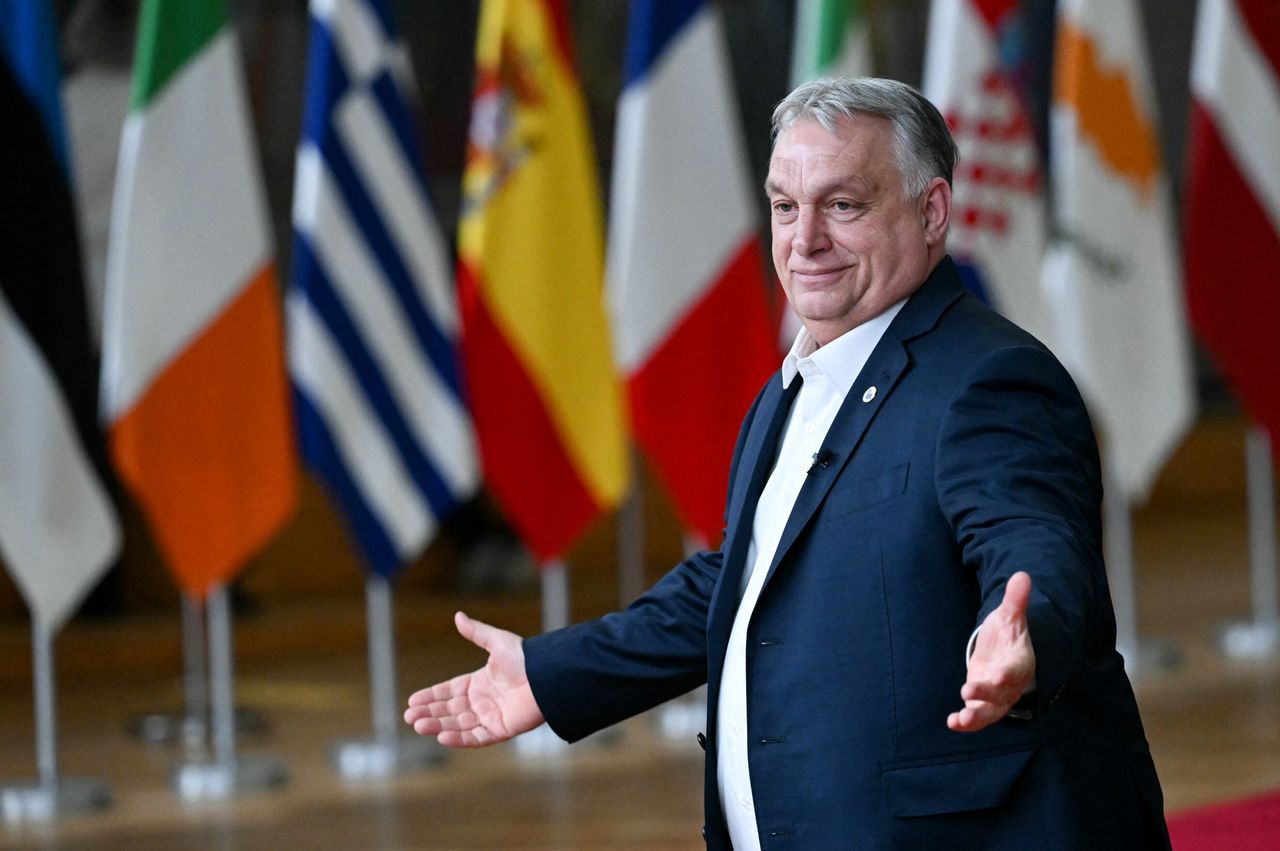
Header image: Hungary’s Prime Minister Viktor Orbán is pictured at an EU leaders’ summit in Brussels, on March 19, 2026. | Nicolas Tucat/AFP via Getty Images