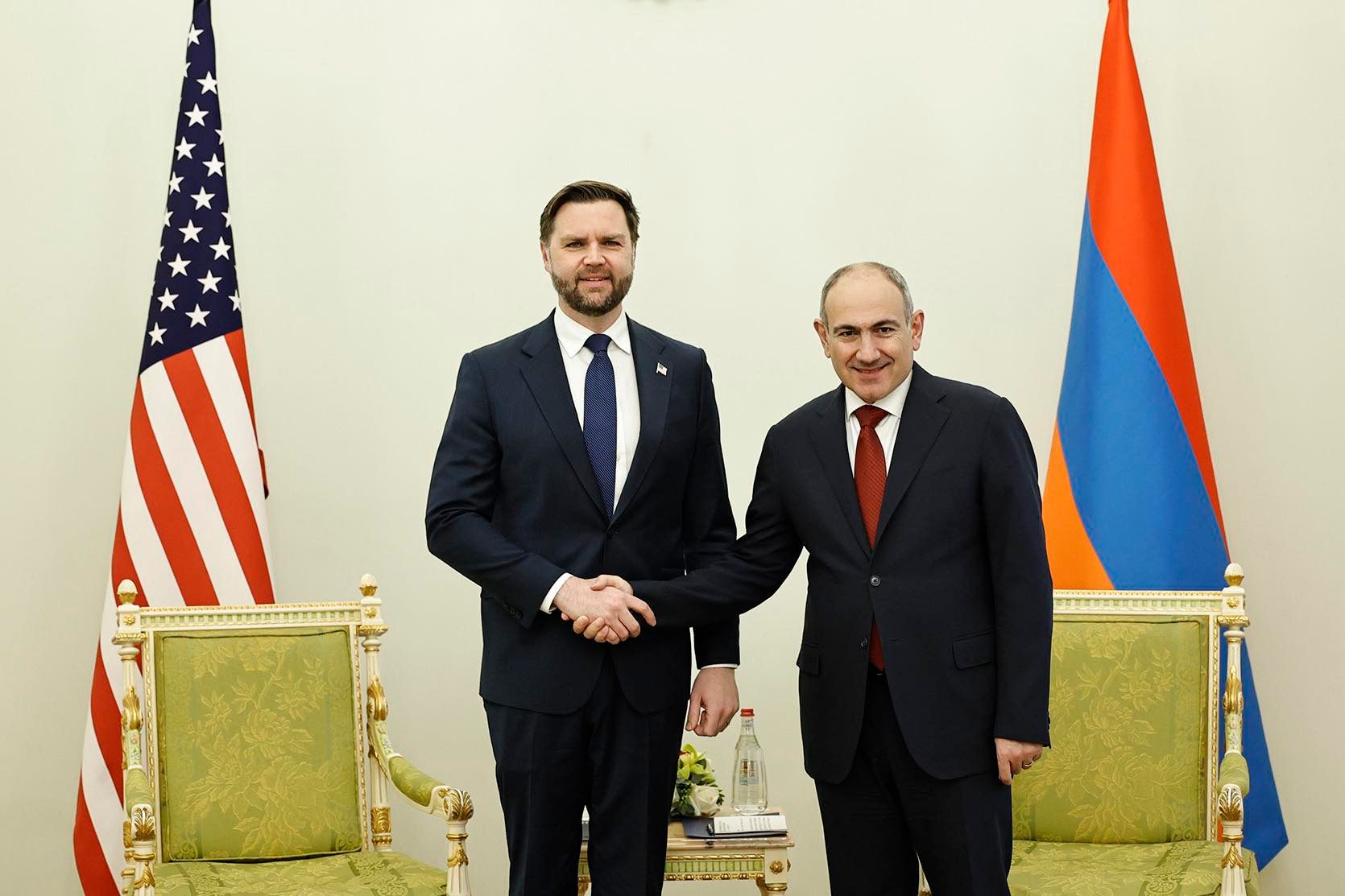
The visit of the US vice president to Armenia has been widely described by Armenian officials as historic, marking an unprecedented level of political engagement between Washington and Yerevan and delivering concrete outcomes in energy cooperation, diplomacy, and regional connectivity.
“What is happening here today is historic. I am proud to be the first US vice-president to visit this country,” JD Vance said.
During high-level meetings in Yerevan, the US vice president held talks with Armenian Prime Minister Nikol Pashinyan, signaling Washington’s intent to deepen strategic ties with Armenia at a time of shifting geopolitical dynamics in the South Caucasus.
The visit was notable not only for its symbolism but also for tangible results, most notably the announcement that the United States and Armenia have completed negotiations on an agreement governing peaceful nuclear energy cooperation.
Often referred to as a “123 Agreement,” the framework is a prerequisite for US involvement in civil nuclear projects and could pave the way for American technology, fuel, and services to play a role in Armenia’s long-term energy strategy, including plans to replace or modernize its aging nuclear infrastructure.
US officials emphasized that the agreement is intended strictly for civilian purposes and reflects Washington’s broader goal of supporting Armenia’s energy security while promoting high international safety and non-proliferation standards. Armenian authorities, in turn, presented the deal as a strategic step toward diversifying the country’s partnerships and reducing long-standing dependence on a single external supplier in the energy sector.
“We have approved the sale of $11m worth of reconnaissance drones to Armenia. We are confident that the peace that needs to be established will be sustainable,” JD Vance said.
Prime Minister Nikol Pashinyan, for his part, stressed that V-BAT drones had already proven their effectiveness, adding that they would make a significant contribution to strengthening Armenia’s defense capabilities.
Prime Minister added that the United States and Armenia also intend to develop mutually beneficial cooperation in other areas, including the “extraction and supply of critical minerals and rare earths”.
Beyond nuclear cooperation, the visit also focused on regional stability and economic integration. US officials framed their engagement with Armenia as part of a broader push to encourage peace and normalization in the South Caucasus, particularly in the context of ongoing efforts to stabilize relations between Armenia and Azerbaijan. Washington underscored that sustainable peace could unlock economic benefits, including new trade routes, infrastructure development, and increased foreign investment, positioning Armenia as a key link in emerging regional connectivity projects.
The vice president’s visit was also seen as a strong political signal at a sensitive moment for Armenia, following internal political strains and wider regional uncertainty. Armenian leaders welcomed the visit as evidence of growing US support for Armenia’s sovereignty, democratic trajectory, and reform agenda, while analysts noted that such high-level engagement reflects Washington’s interest in expanding its role in a region traditionally influenced by other major powers.
The Corruption Perceptions Index and democratic governance issues were not formally on the agenda, but international observers noted that the visit comes amid broader Western scrutiny of governance and rule-of-law trends across the region. In that context, the trip reinforced US messaging that closer political and economic cooperation is tied to long-term stability, institutional resilience, and openness.
As the US vice president departed Yerevan, both sides characterized the visit as a turning point in bilateral relations. While many of the initiatives announced will take time to materialize, Armenian officials stressed that the combination of symbolic recognition and concrete agreements made the trip historic in substance as well as in form, setting the stage for a deeper US–Armenia partnership in the years ahead.
Image source: JAM news