The past week in Russia’s war against Ukraine was marked by intense strikes on both sides, continued grinding battles along the frontline, and high stakes diplomacy in Europe. Russian forces maintained pressure on multiple axes in eastern Ukraine, including around Donetsk, while Kyiv emphasized that attacks, even if persistent, have not produced decisive territorial gains for Moscow.
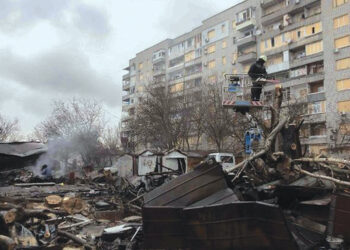
In the Kyiv region, a major Russian missile and drone assault killed at least four civilians and wounded around 15, according to Ukrainian officials. President Volodymyr Zelensky said Russia had launched roughly 430 drones and 68 missiles in that wave of attacks, telling reporters, “We see a large intensity of strikes against civilians and infrastructure.” He also pointed to the stark cost imbalance in modern air warfare, noting that many of the Iranian designed Shahed type drones used by Russia cost as little as $20,000 to $50,000 each to produce, while the air defense missiles used to intercept them can cost anywhere from $300,000 to over $1 million per shot, depending on the system. “This is a war of resources,” Zelensky said, arguing that Ukraine and its partners must scale up cheaper interception methods and increase production of air defense systems. He warned that relying solely on high cost interceptors against relatively inexpensive drones creates an unsustainable dynamic. Russia’s defense ministry, for its part, attributed the strikes to military targets, claiming its operations were aimed at Ukrainian energy and logistics infrastructure.
Along the frontline itself, both sides reported localized shifts in positions but no major breakthroughs. Russia reiterated claims of advancing near urban areas such as Sloviansk and Kostiantynivka in Donetsk, while Ukraine said it was stabilizing key sectors and repelling assaults near Kupiansk and other contested zones. Independent verification of gains remains difficult in the fog of war, with officials on each side offering differing accounts of tactical developments.
In a demonstration of Ukraine’s growing ability to project force far beyond its front lines, Ukrainian drones struck the 123rd Aircraft Repair Plant in Staraya Russa in Russia’s Novgorod region overnight on 17 March, hitting a facility responsible for servicing Il 76 and Il 78 transport aircraft and other military aviation assets. According to military reporting, the strike came just a day after Ukrainian forces hit the Aviastar aircraft plant in Ulyanovsk, which produces and maintains key Russian transport and aerial refueling planes.
Russian aviation monitoring channels reported that two A 50 airborne early warning aircraft, among Moscow’s rare “eyes in the sky,” were at the Staraya Russa facility, though it is not yet independently confirmed whether they were damaged or were even operational at the time of the attack. The plant is located about 650 kilometers from Ukraine’s frontline and roughly 200 kilometers from St. Petersburg and the Estonian border, underscoring how Ukraine’s long range drones are increasingly targeting the logistical and maintenance infrastructure that keeps Russian aircraft flying.
On the diplomatic front, President Zelensky’s visit to the United Kingdom brought fresh emphasis to Ukraine’s ties with Western allies. Addressing the UK Parliament, he said, “The trust in the United Kingdom is among the highest of all Ukraine’s partners. Ukrainians never forget who stayed,” underlining Ukraine’s reliance on sustained Western military and financial backing. UK Prime Minister Sir Keir Starmer responded by reaffirming Britain’s commitment to Ukraine’s security and warned that tensions in other regions could not become “a windfall for Putin.”
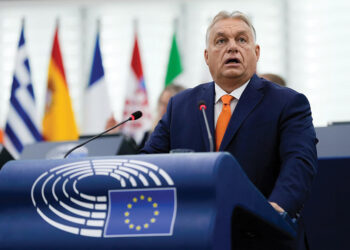
European leaders, meanwhile, are struggling to maintain unified pressure on Russia through both sanctions and financial support for Kyiv, even as divisions within the bloc have complicated progress. At a summit in Brussels this week, much of the focus was on a long planned €90 billion loan for Ukraine to cover its budget needs in 2026 and 2027, a package that leaders had agreed in principle at the end of 2025 but that has been stalled by political disagreements. Hungary’s Prime Minister Viktor Orbán has repeatedly used his veto power to link approval of the loan to energy concerns, insisting that repairs to the Soviet era Druzhba oil pipeline, damaged in fighting, must be completed before he will support the measure. Other leaders, including European Commission President Ursula von der Leyen, argued that blocking the aid would send the wrong signal to both Kyiv and Moscow, with von der Leyen’s office saying the loan is “a crucial contribution to achieve a just and lasting peace for Ukraine.”
Those same divisions have spilled over into efforts to expand sanctions on Russia. A planned 20th sanctions package designed to tighten restrictions on Russian energy, finance and logistics has been blocked by both Hungary and Slovakia, according to EU diplomats, highlighting how internal disputes can undercut unity on key policy decisions. EU foreign policy chief Kaja Kallas expressed regret at the setback, telling reporters that failing to adopt new measures “is a message we didn’t want to send” on the anniversary of Russia’s full scale invasion.
In parallel with financial and sanctions discussions, EU capitals and London have been intensifying cooperation on defense production, particularly in areas shaped by lessons from the battlefield. At Zelensky’s visit to the United Kingdom this week, British and Ukrainian leaders agreed to promote joint drone technology abroad and to deepen collaboration on unmanned systems and artificial intelligence in defense, with British Prime Minister Sir Keir Starmer pledging support that includes funding for a new AI center in Ukraine and cooperation on joint sales to third countries. Starmer emphasized that continued focus on Ukraine was essential, saying the UK and its partners must not take actions that would economically benefit Russia.
European Commission proposals and initiatives such as the Readiness 2030 framework also reflect a push to strengthen defense industrial cooperation across the bloc, aimed at increasing strategic autonomy and investment in advanced technologies including drones and counter drone systems. Analysts say this reflects an understanding that future conflicts will be shaped by scalable, technology driven capabilities rather than traditional platforms alone.
Diplomatic efforts toward a negotiated settlement remain stalled, with peace talks delayed and global attention increasingly drawn to crises in the Middle East. Ukrainian officials expressed concern that shifts in international focus could affect the consistency of military support, especially for air defense systems they deem essential in protecting both military and civilian targets.
As the conflict settles deeper into its fifth year, the intertwining of heavy bombardments, extended strategic strikes, and complex international diplomacy underscores both how intractable the fighting has become and how central external support remains to Kyiv’s resilience.
Compiled by Ana Dumbadze