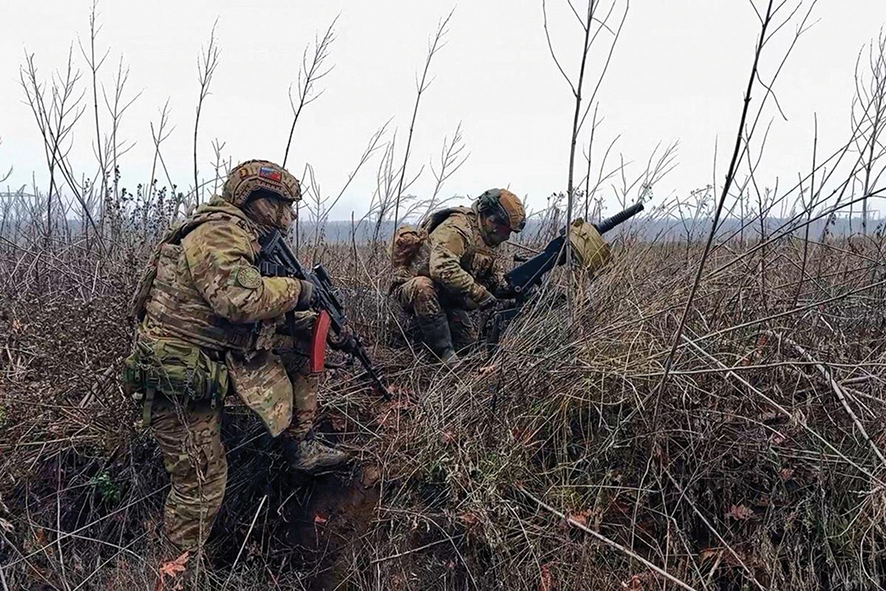
Russia has declared that it now has full control over Ukraine’s eastern Luhansk region, calling it a key milestone in its military campaign. While Moscow presents the claim as a major achievement, the broader battlefield remains largely unchanged, with heavy fighting continuing across multiple fronts and both sides sustaining losses.
The Russian Defense Ministry said its forces had secured the last areas of Luhansk still under Ukrainian control, consolidating authority over territory largely occupied since 2022. Analysts note that more than 99% of the region was already under Russian control, meaning the announcement is more symbolic than militarily decisive. Ukrainian officials have not confirmed the claim and continue to reject Russia’s annexation, insisting that Luhansk, along with Donetsk, Kherson, and Zaporizhzhia regions, remains part of sovereign Ukraine under international law.
The fiercest fighting persisted in neighboring Donetsk region, particularly around Chasiv Yar, the outskirts of Avdiivka, and west of Bakhmut. Russian forces pressed forward slowly, relying on sustained artillery fire and infantry assaults. Ukrainian troops held their positions and conducted localized counterattacks aimed at slowing Russian advances. Gains were often small, measured in incremental shifts, but the ongoing pressure continues to strain Ukrainian defenses.
In southern Ukraine, Kyiv focused on disrupting Russian logistics rather than mounting large-scale offensives. Ukrainian strikes hit ammunition depots, fuel storage, and transport routes in occupied Zaporizhzhia and Kherson regions. Long-range drone operations targeted railway hubs essential for Russian military supply chains.
Aerial warfare intensified during the week. Russia launched multiple missile and drone attacks on Ukrainian cities, including key energy infrastructure, causing temporary power outages in several regions. Ukrainian authorities reported that repair efforts were increasingly effective. The strikes appear aimed at undermining morale and disrupting daily life.
Ukraine has also escalated its drone operations, targeting sites inside Russia and occupied territories. Oil depots, refineries, and industrial facilities linked to Russian military operations were among the targets. While these attacks do not immediately change the battlefield, they reflect Kyiv’s strategy of increasing pressure on Moscow’s logistics and economy.
Human Impact of the Conflict
Civilian casualties continued to mount. Ukrainian officials reported dozens killed or injured in missile and drone strikes on residential areas and infrastructure, while emergency services responded to fires and damaged buildings. Russian border regions and occupied territories also reported civilian casualties from Ukrainian drone strikes, though independent verification is limited.
Beyond immediate casualties, the war has caused widespread displacement. An estimated 3.8 million people are internally displaced within Ukraine, while over 5.3 million have fled abroad. More than 12.7 million people inside Ukraine now require urgent humanitarian assistance, including food, shelter, medical care, and other essential services.
The conflict has also severely affected hospitals, clinics, and maternity units. UN agencies report at least six UN-supported medical facilities were damaged or disrupted in recent months, putting patients and medical staff at risk and straining emergency response. Repeated attacks on energy infrastructure have caused power outages, heating failures, and water shortages, compounding the hardship for civilians, especially the elderly, children, and those in conflict-affected regions.
Psychological trauma is another profound impact. Constant shelling, drone attacks, and missile strikes on civilian areas, including homes, schools, and public spaces, have created long-term stress for residents. Children face disrupted education and a lack of normal routines, while adults contend with the daily uncertainty of safety and basic needs.
Energy infrastructure remains a central focus of the war. Russia’s attacks on Ukraine’s power grid aim to weaken morale and economic stability, while Ukrainian strikes on Russian oil and fuel facilities seek to disrupt supplies supporting military operations.
Diplomatic efforts have made little progress. Negotiations remain stalled, with Ukraine demanding full territorial restoration and Russia insisting on its annexation claims. International leaders continue to express concern, but no new mediation efforts have emerged.
Western support for Ukraine continues. Several countries announced additional military aid, including air defense systems, ammunition, and financial assistance. Discussions on longer-term security guarantees for Ukraine also continue, though political disagreements slow decisions.
The European Union will provide an additional €80 million (around $92 million) to Ukraine, funded from profits generated by frozen Russian assets, EU High Representative Kaja Kallas said on March 31 during a visit to Kyiv. Speaking alongside Ukrainian Foreign Minister Andrii Sybiha, Kallas emphasized the EU’s ongoing commitment, noting her visit coincided with the anniversary of the Bucha massacre.
“The way to end this war is to confront Moscow, not reward it. Not to loosen sanctions, but to harden them,” Kallas said. She also announced that the EU is preparing its 20th sanctions package against Russia, aiming to “tighten the net even further.”
Russia’s claim over Luhansk has reignited debate over the legitimacy of territorial annexations. Western governments continue to refuse recognition of any land seized by force, reaffirming that Luhansk remains part of Ukraine under international law. For now, Moscow’s announcement carries more symbolic weight than practical impact on the battlefield, while civilians continue to bear the heaviest consequences of the conflict.
Compiled by Ana Dumbadze