
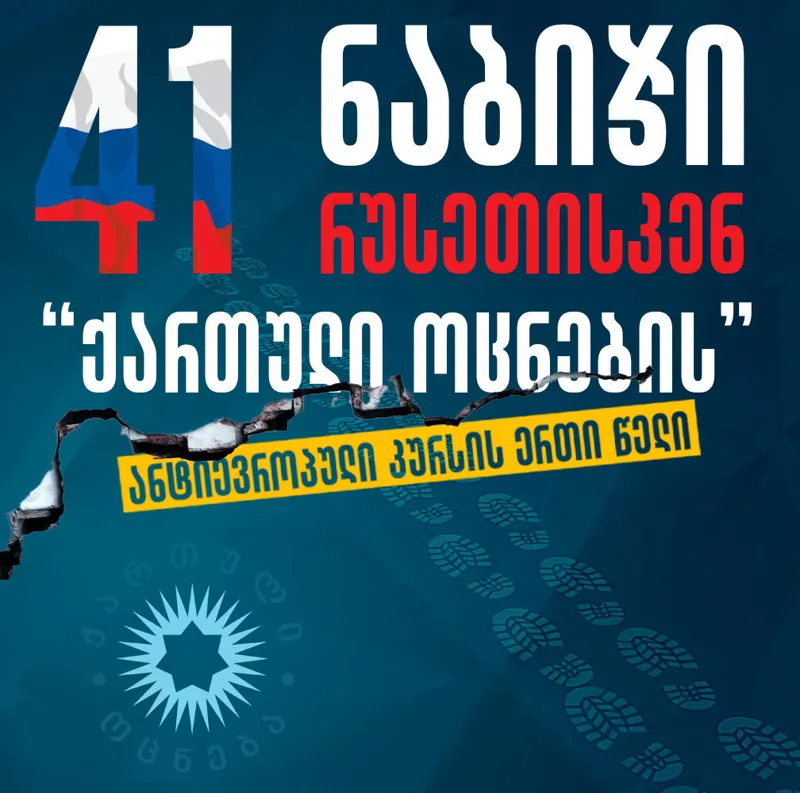
Transparency International Georgia has published a report titled “41 Steps Towards Russia – One Year of Georgian Dream’s Anti-European Course,” outlining what it describes as a systematic shift away from Europe and toward Russia by the ruling Georgian Dream over the past year.
The organization says Georgia’s European integration process has effectively stalled, democratic development has been seriously undermined, and the very idea of state independence has been put at risk.
The report recalls November 28, 2024, when Prime Minister Irakli Kobakhidze announced that opening EU accession negotiations would be removed from the government’s agenda. Transparency International Georgia says this decision violated the Constitution and contradicted the will of the majority of Georgian society, marking a turning point that halted EU integration and accelerated democratic backsliding.
The NGO argues that since the disputed parliamentary elections of October 26, 2024, the ruling party has taken deliberate steps to consolidate power and maintain political control, even at the cost of severing ties with Western partners. Based on the report, these actions serve the goal of keeping Bidzina Ivanishvili and Georgian Dream in power.
Key findings of the report
Electoral manipulation: The 2024 parliamentary elections were neither free nor fair, with intimidation, vote-buying, misuse of state institutions, and violence, as documented by international observers including OSCE/ODIHR.
Suppression of protests: Peaceful demonstrations in late 2024 were violently dispersed, with allegations of torture, excessive force, and the use of chemical agents. No officials have been held accountable.
Political repression: The emergence of prisoners of conscience, imprisonment of opposition leaders, and criminal cases opened against political opponents on charges of crimes against the state.
Attacks on media and civil society: Journalists have faced widespread violence and harassment, NGOs have been targeted through surveillance, frozen bank accounts, and restrictive “foreign agents” legislation.
Anti-democratic legislation: Laws restricting assemblies, freedom of expression, media independence, and NGO activity have been repeatedly tightened, including the introduction of imprisonment for protest-related offenses.
Institutional dismantling: The abolition of key democratic and oversight bodies, including the National Security Council, Anti-Corruption Bureau, Special Investigation Service, Civil Service Bureau, and NATO and EU Information Center.
Judicial and parliamentary rollback: Reduced transparency in courts and the effective elimination of parliamentary oversight over the executive branch.
Foreign policy shift: Suspension of the strategic partnership with the United States, refusal of Western financial assistance, withdrawal from European platforms, and the expansion of Russian and Chinese economic influence.
Russian-style governance: The report points to increased trade and tourism ties with Russia, the growing share of Russian capital in Georgia’s economy, and the creation of what it calls a Russian-style anti-Western propaganda system.
Transparency International Georgia concludes that the cumulative effect of these 41 steps represents a deliberate departure from Europe and a convergence with Russian governance practices, warning that the consequences for Georgia’s democracy, sovereignty, and international standing are already visible.