Luxury, for Anastasia Udalova, is not defined by square meters or location, but by silence, fresh air, and distance from constant urban pressure. As CEO of Tbilisi Hills, she has spent the past decade building a residential concept centered on space, community, and a slower rhythm of life outside Tbilisi. Her path to this role, however, has been anything but conventional: from criminal and medical law and executive leadership in Latvia’s state infrastructure sector to academic business training at the Stockholm School of Economics in Riga, and navigating the realities of post-Soviet markets, where theory often gives way to crisis. Today, she sees leadership as less about strategy and more about endurance in uncertainty.
Tbilisi Hills has been developing for more than a decade. Looking back, what are you most proud of today?
I was CEO of Tbilisi Hills from the beginning, and have held the role for four years. After COVID, I moved to the supervisory board and back to Latvia, and now I have returned to the CEO position.
What I am most proud of is that we have stayed true to the main goal of the development: building a community. We defined luxury as fresh air, a clean and free environment, and a place where you can move and be active before it became a global trend. The FIABCI Prix d’Excellence Gold Award, the most recognized real estate award in Europe, validates that what we build is not a local standard. It is a global benchmark, delivered in Georgia.
Today, this idea is widely recognized as a new form of luxury, and I am proud we understood it 10 years ago. I’m also proud that Tbilisi Hills is now a time-tested project in Georgia. People have known us in the market for over 10 years, and we have never broken our promises.
We were never focused on maximizing profit quickly; we develop thoughtfully, considering what we build and what we deliver to residents. Consistency over more than a decade is the hardest thing to build, and that is what makes me proudest.
Many residential projects focus on selling square meters. Tbilisi Hills often speaks about lifestyle and community. Why is that important?
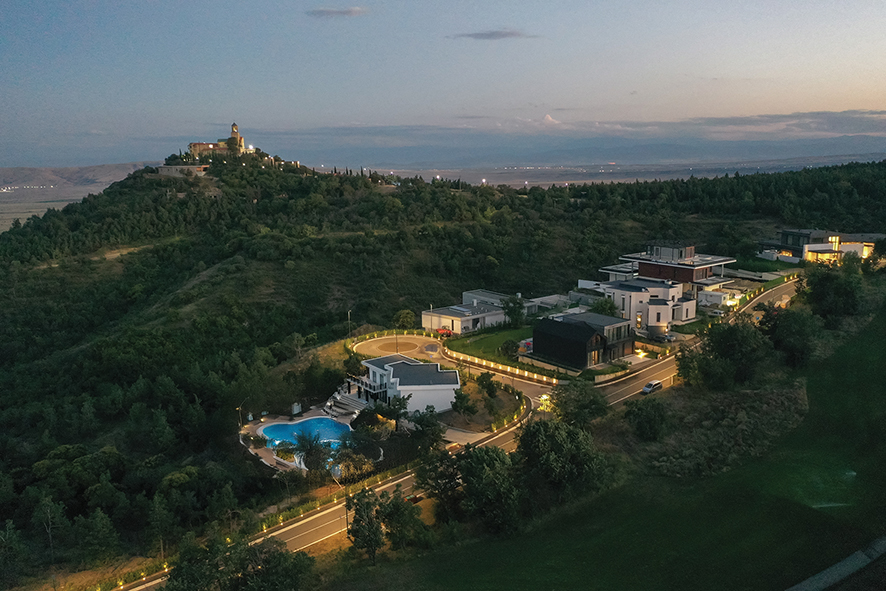
My first visit to Georgia was 11 years ago, and my first view of Tbilisi was from Tbilisi Hills. I went there straight from the airport and saw the city from there. It was breathtaking.
Even today, driving through Krtsanisi or within the project, I still find the view of Tbilisi impressive. The city is vibrant and dynamic, and from Tbilisi Hills you feel a different rhythm: more relaxed and slower.
Tbilisi residents spend around 700 hours a year in traffic. When we started, Krtsanisi was underdeveloped, and many questioned who would come here. But this also meant less traffic and a 25-minute drive to Liberty Square, which is a luxury in itself.
At Tbilisi Hills, life slows down. People can focus on themselves, walk, run, cycle, and feel more present. The environment encourages movement and wellbeing. The golf course and community create a more peaceful lifestyle, and that is why I believe this is true luxury in Georgia.
How has the concept of premium living changed in Georgia over the last ten years?
Georgia has changed significantly in terms of business, lifestyle, and energy. But for me, Georgia is not only Tbilisi: the country’s greatest value is its nature and ecosystems.
Globally, people first move to city centers during early economic growth. The next stage of development is moving outside the city, where luxury is no longer material, but linked to mental wellbeing, space, and rehabilitation.
This is a global real estate pattern: business and offices remain in city centers, but premium residential development moves outside. That is why we believe projects outside cities represent the next stage of luxury.
We are not in a rush. We carefully select residents and see them as neighbors, because shared values matter most in our community.

What makes Tbilisi Hills relevant not only today, but for the next generation?
We remain one of the largest, most developed, and most premium projects in Georgia and the Caucasus. Most importantly, we keep our word: we are present, stable, and committed.
We survived COVID-19 and global geopolitical instability. That consistency makes us a trusted partner for future generations.
We are essentially a “city within a city,” with our own infrastructure: electricity lines, roads, gas systems, water reservoirs, irrigation systems, and a golf course. This independence is not only about comfort; it means the community can grow resiliently over decades. This long-term ownership model ensures sustainability, regardless of external changes.
How many residents live in Tbilisi Hills?
More than 100 families currently live there. Over 100 more homes are under construction or already sold, and around 100 additional families will move in within the next 12 months.
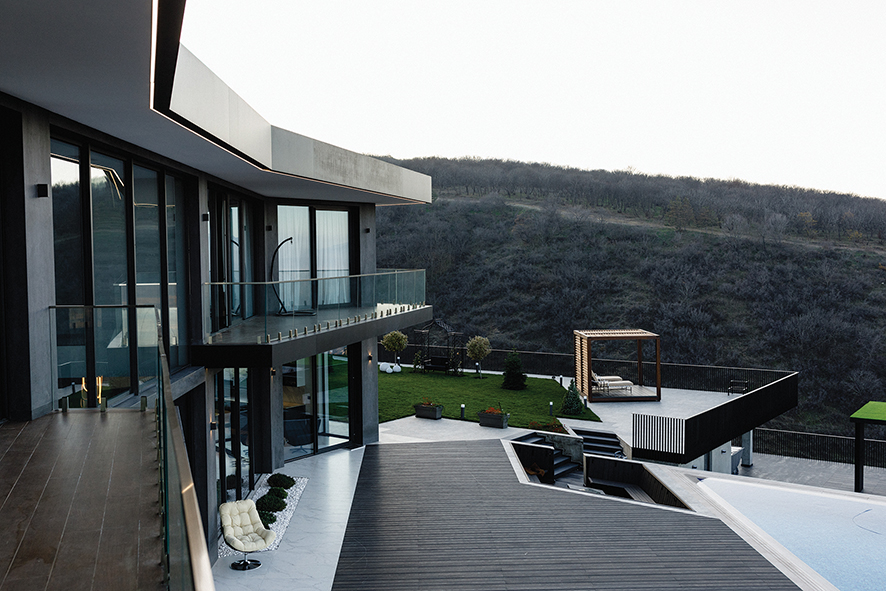
We have completed 130 new apartments, surrounded by parks and green spaces. We aim to be as green as possible, planting trees and greenery across the project.
What matters to us is not only the number, but who those families are. The families who live at Tbilisi Hills tend to be people who value time, air and community more than status. For them, the independent infrastructure and the scale of the masterplan are a kind of insurance: they know this will not become just another dense neighbourhood.
By the end of the year, we expect more than 200 families to be living in Tbilisi Hills. Our long-term vision is for it to become the “lungs of Tbilisi.” And with only around 10% of the residential land developed so far, the most exciting chapter is still ahead – one that will continue to meet the expectations of both current and future residents of Tbilisi Hills.
The recent partnership with Mira Developments has attracted significant attention. What does this collaboration mean for the future of Tbilisi Hills?
We signed an agreement with Mira Verde, and, like every resident and partner, they share commitments aligned with our vision.
They chose Tbilisi Hills because our values are the same, and we see the projects in parallel. This partnership reflects a shared understanding of what the development represents.
What does success mean to you today compared to ten years ago?
Success means having two quiet hours in the morning for myself. It means being able to spend time in nature, breathe fresh air in the evening, hear silence, and wake up with birds instead of cars.
Has your leadership style evolved over the years, and what role has being a woman played in shaping it?
I manage several projects. Tbilisi Hills is my core project, but I also have a factory in Latvia and sit on the management board of a group operating in 22 countries.
Leadership has changed significantly over the last 10 years. You must work differently with Gen Z, millennials, and other generations. Earlier, business was mainly about salaries. Today, it is about creating emotional engagement and a sense of belonging.
A leader today must provide energy and motivation. In a world of constant social media distractions, you must continuously regain people’s attention and focus. This only works if the leader is fully engaged: people feel it and reflect it. Leadership energy is contagious.
What advice would you give to young women who want to build businesses and lead teams?
Do not lose yourself and do not try to be someone else. Trust yourself. Mistakes are normal: you only avoid them if you do nothing. What matters is being ready to fix them.
Women in leadership often face higher expectations. They must constantly prove they are good enough, and are often judged differently in negotiations and decision-making.
That is why solidarity among women is important. I try to support and appoint as many women to executive roles as possible.

Could you tell us about the projects you are currently managing abroad?
After COVID began, I returned to Latvia. One of our heritage brands, Dzintars, had gone bankrupt, and I reinvented it. Today, it is again an international brand selling in Georgia, GCC countries, the UK, Poland, and Uzbekistan, producing over 10 million units annually. We are also bringing part of production to Georgia.
I also serve on the supervisory board of a rolling stock company producing trams and railway equipment across 22 countries.
In Georgia, we operate a hydro power station on the Kintrishi River and work with Georgian Railway and Tbilisi Metro on repair and supply projects.
I am truly inspired to lead Tbilisi Hills as Georgia is a country where ambition and patience are both rewarded. You can still build something large-scale and human-scale at the same time. As a group, we value the business environment here, and especially the importance of personal relationships.
What are your key plans and priorities moving forward?
We plan to expand our hydro power station and continue its development. We also plan to build a school and a hotel within Tbilisi Hills.
We are currently in negotiations with a European school and hope to open a branch within the project. Once the number of residents reaches a sufficient level, we will begin construction.
We are also open to new investments and projects if they align with our long-term vision.