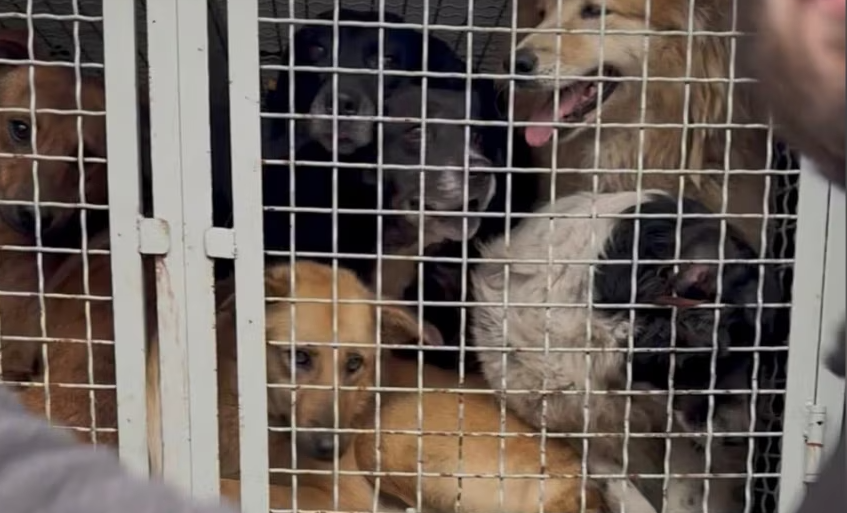
Stray dogs have been rounded up in the western Georgian city of Zugdidi and transported to a municipal shelter in Kutaisi, raising concerns among animal rights activists that the animals may never be returned to their original locations.
In recent weeks, activists across Georgia have reported a growing pattern of stray dogs disappearing from urban areas. They claim that the animals are being taken away and not brought back. Some fear the dogs are being abandoned in remote areas or, in the worst cases, euthanized.
Georgia has long struggled with a large population of stray animals, with tens of thousands of dogs and cats living on the streets. Many are considered potentially dangerous or carriers of disease. To address the issue, the National Food Agency has been implementing a nationwide program involving the sterilization, castration, and vaccination of up to 36,000 animals. While activists generally support the program, they strongly criticize how it is being carried out.
Zugdidi-based activist Salome Partsvania said she was alerted early in the morning by a neighbor who noticed dogs being taken from the streets. When she could no longer find the dogs she had been caring for near her home, she rushed to the city center.
“I left my children at home, including my four-month-old baby,” she said.
At the Zugdidi City Hall, she encountered a vehicle filled with dozens of dogs. Partsvania claims that the animals were all sterilized and tagged, and regularly cared for by volunteers. She said municipal officials, including Deputy Mayor Giorgi Khvichia, were present at the scene.
“I was crying and asking them not to take at least the tagged dogs. I wanted to check if my dogs were inside the vehicle, but they wouldn’t let me,” she said.
Partsvania added that officials assured her the dogs would undergo procedures and would not be harmed. However, she remains skeptical.
“They told me the dogs were being taken to the Kutaisi municipal shelter and would be returned in a week or maybe a month—but not to crowded areas. They said the dogs would be released into nature instead,” she said.
She believes that among the removed animals was a dog she had raised “like her own child.”
“They took our vaccinated, gentle dogs and are not bringing them back. All the dogs from our street have disappeared,” she said.
Zugdidi City Hall says the operation is being carried out by the National Food Agency and that the municipality is not directly involved.
The National Food Agency, for its part, stated that the dogs collected from central Zugdidi would be returned to the city after undergoing veterinary procedures.
Despite these assurances, animal rights defenders continue to hold weekly protests in front of the Government Administration, demanding the return of animals taken from cities.
Activists have also drafted a petition citing a new government decree (No. 412), which prohibits returning dogs to areas near schools, kindergartens, clinics, markets, and food establishments—essentially locations where animals are often fed. They argue that the regulation is vague and ineffective, warning that removing dogs from such areas will simply create space for other stray animals to take their place.
Among their key demands are legislative amendments to ensure that animals transferred to shelters are returned to their original habitats, with photo or video evidence made publicly accessible. They also call for stricter limitations on transferring animals to shelters unless absolutely necessary, proposing that already sterilized animals be vaccinated and registered on-site instead.
Additionally, activists insist that the National Food Agency provide caretakers and concerned citizens with official, documented information on the whereabouts of any removed animal.
Image: Video grab