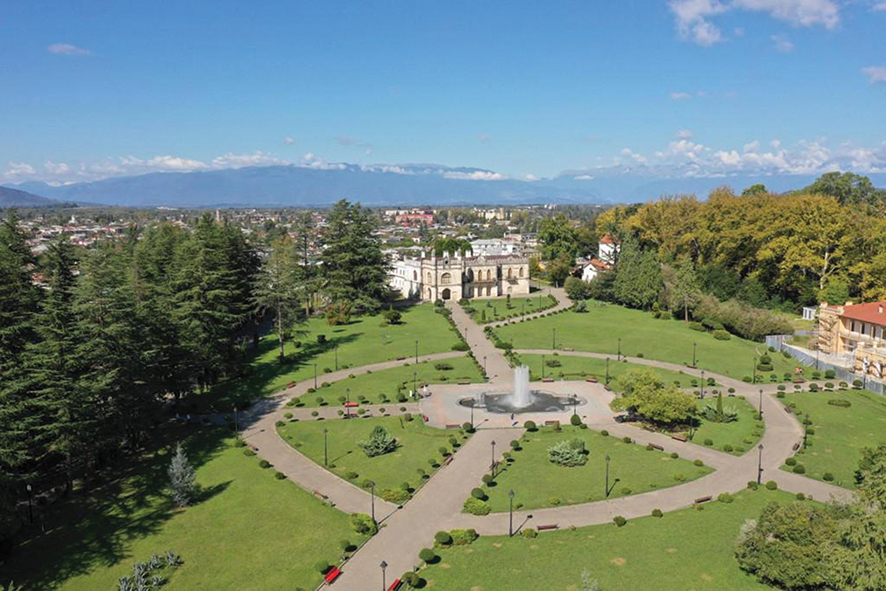
In the heart of Samegrelo, Zugdidi Municipality is emerging as a promising destination for rural and eco-tourism, thanks to an ambitious new initiative led by the International Center of Scouts of Samegrelo.
Their program, “Megzuri” (The Guide), is designed to equip locals with the knowledge, tools, and skills to transform villages, farms, and natural landscapes into sustainable tourism opportunities.
This project is implemented in partnership with Action Against Hunger South Caucasus and Zugdidi Local Action Group (LAG), and is supported by the Austrian Development Agency (ADA) through the FORWARD project, which promotes inclusive rural development in Georgia.
Giorgi Tchezhia, Vice President of the Georgian Organization of the Scout Movement and project lead, said, “The Samegrelo Scouts are leading this initiative from start to finish. Five of our leaders are actively working on the project, and the guide itself was authored by Tinatin Mosiashvili and myself. We are proud to show how Scouting can support the development of our local community.”
When asked about his personal motivation, Tchezhia explained, “I am a tourism manager by profession. I felt the need for initiatives like this to support our community, so I decided to create this social project and present it to the Zugdidi Local Development Group. My goal is to develop the local community through the popularization of tourism.” He added, “I am confident this project will have a lasting impact, strengthen our team’s credibility, and allow us to launch future self-funded initiatives in school tourism, adventure tourism, and cognitive tourism.”

Based on the Scouts’ experience, two strategic priority areas have been identified: rural tourism, which highlights local traditions, farms, crafts, and culinary experiences, and eco-tourism, which promotes nature-based activities, hiking, and environmental education. Tchezhia said, “We wanted to focus on these areas because they reflect our community’s strengths and the types of tourism that can be sustainable and profitable for local people.”
To stimulate these types of tourism, the team has designed six key activities: creating the guidebook “How to Get Involved in Rural Tourism,” workshops with current and potential rural tourism beneficiaries, training sessions for anyone interested in rural tourism, launching the online platform “Megzuri – Zugdidi Municipality Tourist Route,” a four-day eco-camp for local youth, and the “Megzuri” Guides Club for ongoing community-led tourism initiatives. Tchezhia emphasized, “Each activity is designed to equip people with practical knowledge and skills, from creating tourism products to managing visitors and promoting their services online.”
Regarding the guide itself, Tchezhia explained, “We designed the guide to be very approachable. It breaks down key concepts so anyone curious about rural tourism can follow along. We will print 100 copies and also make it available online as a PDF.” The guide covers basic tourism concepts, hospitality standards, starting a tourism activity, using social media and digital tools, photography, content creation, and writing a business plan. “Many people don’t realize that they already have everything they need for tourism: the land, traditions, and culture. The guide helps them turn these assets into real opportunities,” he said.

Workshops are open to residents and entrepreneurs in rural areas of Zugdidi Municipality.
“Our trainers show participants how everyday activities like farming, cooking, or crafts can become tourism products. Many locals don’t realize that tourism is a viable economic activity, so we focus on giving practical skills and confidence to make it happen.” Participants gain competencies in tour operation, guiding, hospitality management, and digital engagement, and they receive certificates to provide credibility as emerging tourism professionals.
The Megzuri online platform serves as a central knowledge hub and promotional space. Tchezhia explained, “Forty participants from rural tourism and forty from eco-tourism contribute content, share experiences, and promote our attractions. We post videos, vlogs, articles, and tourism insights, and in the future, the platform will include digital maps, booking options, and organized routes.” He added, “It’s a way to highlight hidden gems and help local businesses gain visibility.”
A four-day eco-camp will train local youth in camping, hiking, field cooking, first aid, guiding, and tour operation. “These young people will become eco-tourism ambassadors,” Tchezhia said. “By involving youth, we are building a foundation for long-term, community-led tourism growth and environmental awareness.”
After the project, Guide Club members will generate business ideas, apply for grants, and collaborate on projects such as marking hiking trails and creating digital content. “The goal is to create a self-sustaining system where knowledge, experience, and opportunities continue beyond the life of the project,” Tchezhia explained.
The Scouts of Samegrelo operate under the Georgian Organization of the Scout Movement, founded in the 1990s after Georgia’s independence. Affiliated with the World Organization of the Scout Movement, Georgian Scouts are coeducational and emphasize leadership, life skills, outdoor education, and community service. In Zugdidi, the Megzuri Guide project merges Scouting principles with community development and sustainable tourism. “Our work ranges from supporting the Red Cross during COVID-19 to promoting outdoor engagement and cultural preservation,” said Tchezhia.
Zugdidi Municipality is on the verge of a rural tourism renaissance. “Through workshops, digital platforms, and youth engagement, we are showing locals that tourism is not just a hobby, it is a real, sustainable economic opportunity,” Tchezhia said. “With the right guidance and support, Zugdidi’s villages can become shining examples of rural tourism in Georgia, where culture, tradition, and nature come together to create unforgettable experiences.”
The Scout Movement of Samegrelo is a non-profit, non-political, educational organization that has been operating in the Samegrelo-Zemo Svaneti region since 2014. You can find out more about the organization on the website scoutsofsamegrelo.com
By Katie Ruth Davies