
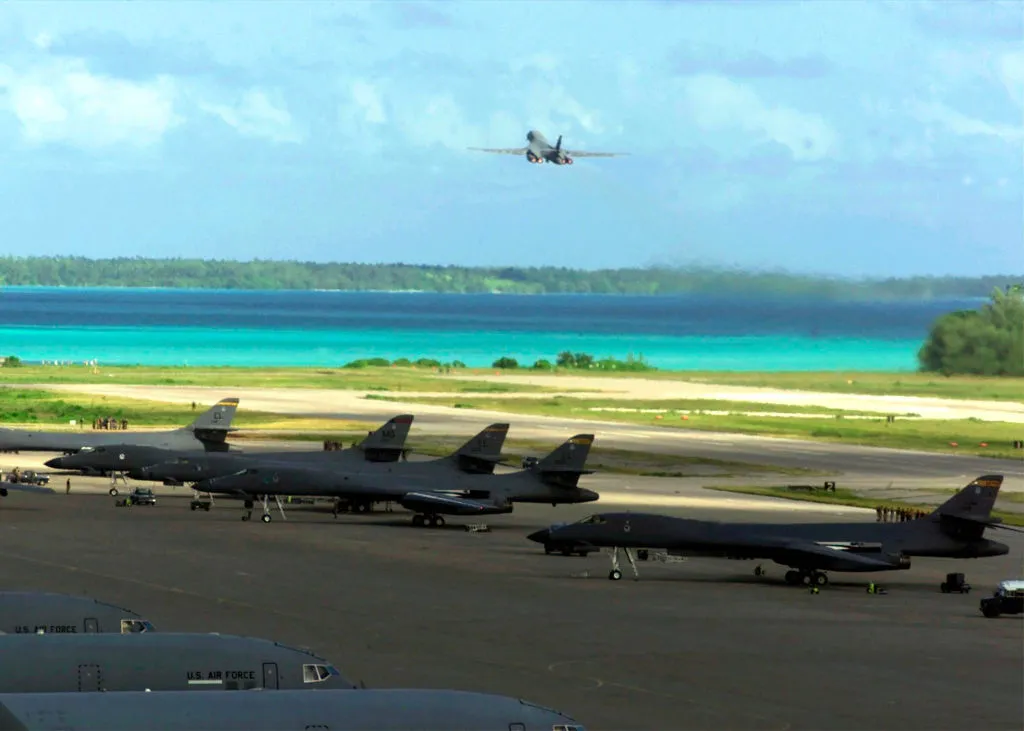
The United Kingdom has not granted permission for the United States to launch potential airstrikes against Iran from British territory, including the strategic Diego Garcia base and RAF Fairford in Gloucestershire, based on the reports by Sky News and The Times.
Sky News reports that US military planners had been considering the use of facilities on Diego Garcia — a joint UK-US military base in the Indian Ocean — as well as RAF Fairford, where American heavy bombers are currently deployed. However, under longstanding bilateral defense agreements between London and Washington, the Pentagon cannot initiate operations from British bases without prior approval from the UK government.
Sources cited by The Times indicate that London has so far declined to authorize any potential strikes on Iran, amid concerns that such an operation could breach international law and further destabilize the Middle East.
Diego Garcia is one of the most strategically significant overseas military facilities jointly operated by the UK and the US. Located in the Chagos Archipelago, it has played a key role in major US military operations, including campaigns in Iraq and Afghanistan. Its remote location allows long-range bombers to operate across the Middle East and South Asia.
Meanwhile, RAF Fairford serves as a forward operating base for US strategic bombers in Europe. The airfield frequently hosts B-52 and B-1 bombers and has been used in previous NATO and US-led missions.
Under UK-US defense arrangements, American forces stationed in Britain must secure British government consent before conducting offensive operations from UK soil. The reported refusal reflects London’s caution amid heightened tensions with Tehran and concerns about international legal frameworks governing the use of force.
British officials have not publicly confirmed a formal rejection but have emphasized the importance of adherence to international law and regional stability. The issue is particularly sensitive given recent escalations in the Persian Gulf and ongoing diplomatic efforts aimed at curbing Iran’s nuclear ambitions.
US President Donald Trump stated yesterday that a decision regarding Iran could be announced within the next ten days.
“We may have to take the next step, or maybe not. We might reach an agreement. You’ll probably hear within the next 10 days,” Trump said, adding that “with strong leadership, nothing is impossible.”
He warned that Iran must choose whether to join what he described as a constructive path forward. “It’s now Iran’s time to join us on the path of fulfilling what we’re doing. If they do, that would be great. If they don’t, that would also be fine — but it will be a very different path. They cannot continue threatening the stability of the entire region. A deal must be made. Bad things will happen if it doesn’t.”
Tensions between Washington and Tehran have intensified in recent weeks, amid disputes over Iran’s regional activities, missile program, and nuclear development. While the US has not officially confirmed imminent military action, the movement of heavy bombers to forward bases has fueled speculation of contingency planning.
The UK’s reported hesitation highlights a potential divergence in approach between the two close allies. Britain has traditionally supported diplomatic engagement alongside deterrence measures and has been wary of actions that could trigger broader regional conflict.
As diplomatic channels remain active, attention now turns to Washington’s next move — and whether military pressure will give way to negotiations, or escalate into confrontation.
Header image: The Diego Garcia military facility. Source: Pictures from History/Universal Images Group Editorial/Getty Images