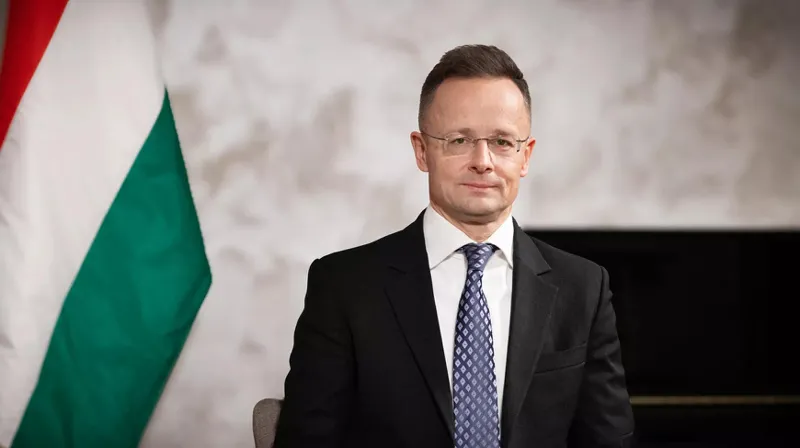
Hungarian Foreign Minister Péter Szijjártó stated that the 28-point peace plan represents a significant opportunity to end the war in Ukraine, yet “some Western European leaders are attempting to block it.” Szijjártó published the statement on X, urging EU politicians to endorse the proposal without hesitation.
“Our position is clear: it is the duty of every European politician to fully and unconditionally support this plan, because it is the rational and humane choice,” the minister wrote.
The 28-point peace plan — initiated through recent discussions involving Ukraine, the United States, and key European partners — outlines a framework intended to create conditions for negotiations and a sustainable end to Russia’s full-scale invasion. Although the full text of the plan has not been officially released, it is understood to include:
-
Security guarantees for Ukraine
-
Restoration of Ukrainian territorial integrity based on international law
-
Reinforced military, financial, and political support from Western partners
-
Steps toward post-war reconstruction
-
Mechanisms to prevent renewed Russian aggression
-
Humanitarian measures, including prisoner exchanges and protection of civilians
The plan has become a central topic in diplomatic talks during recent weeks, particularly as Ukraine faces intensified military pressure and uncertainty surrounding long-term Western assistance.
While several Central and Eastern European governments express readiness to support the framework, some Western European leaders reportedly oppose elements of the plan or question the timing of its implementation. Their hesitation stems from concerns that:
-
Moscow may interpret the plan as Western fatigue
-
Premature negotiations could freeze the conflict, not resolve it
-
Ukraine may be pressured into making concessions
Despite these disagreements, high-level consultations between Kyiv, Washington, and European capitals continue in an accelerated 24/7 format, as Ukrainian President Volodymyr Zelensky insists that any peace proposal must protect Ukraine’s dignity, sovereignty, and freedom.
The coming weeks are expected to be key in determining whether the 28-point framework can evolve into a unified Western position and form the basis for future negotiations.