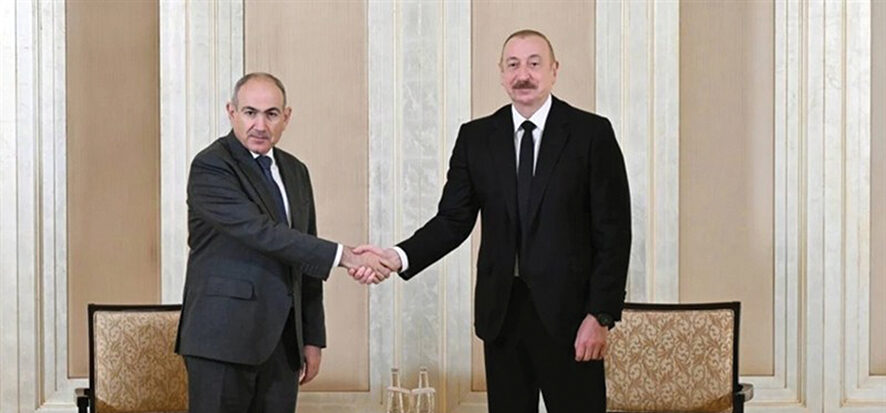
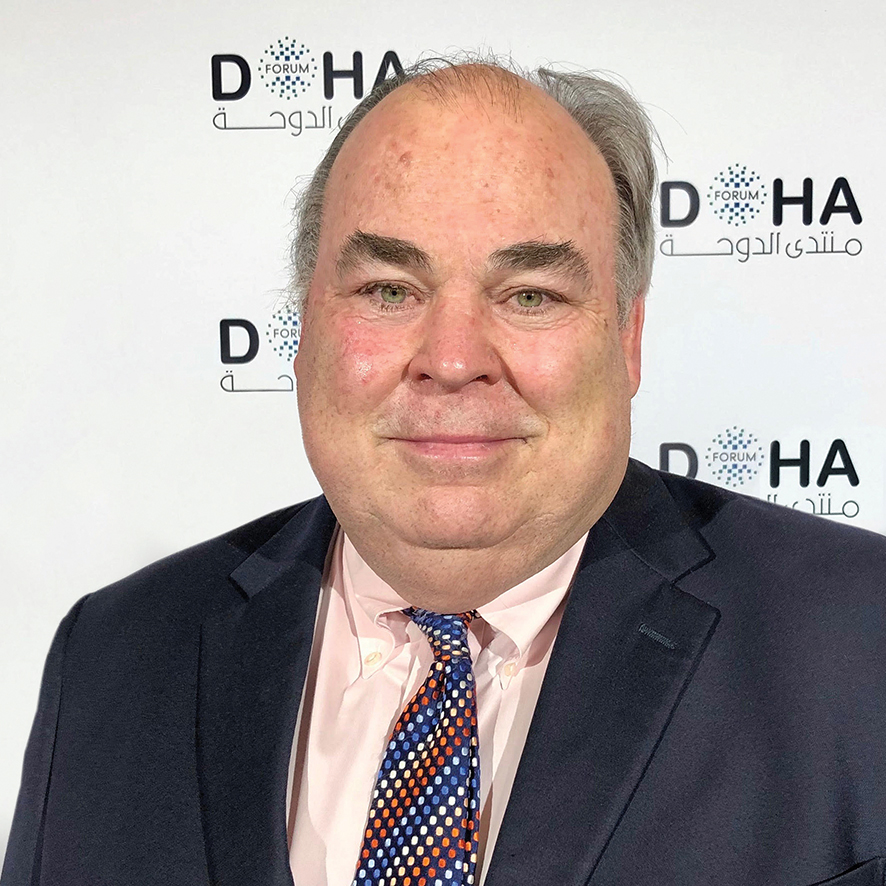
Retired US Ambassador Carey Cavanaugh—who served as the US co-chair of the Minsk Group from 1999–2001 and helped lead the 2001 OSCE peace talks on Nagorno-Karabakh—reflects in this interview with Radio Free Europe/Radio Liberty’s Georgian Service on the rapidly shifting dynamics of the Armenia–Azerbaijan peace process and the role of outside powers, especially the United States under President Trump. He calls the current moment “a sign of hope,” but cautions that “there’s no peace deal until there’s a change in Armenia’s Constitution,” and warns that spoilers such as Russia and Iran may move to complicate or undermine progress.
Where are we now with Armenia–Azerbaijan peace prospects? And what could the implications be for the South Caucasus if durable peace is achieved?
Pope Leo said this is a sign of hope, that both parties are now meeting directly and talking about peace, about a future where they cooperate.
The United States’ influence has waxed and waned, but now it’s more involved, engaged in the Caucasus, and looking for creative solutions. At this point it’s all about deposits; it’s not a peace deal. It’s a commercial arrangement that could help cement economic ties and maybe bring the United States in economically in a greater way. But a true peace still requires a lot of other things—questions about the return or potential return and safety of the over 100,000 people who fled Karabakh in 2023; questions about protection of cultural monuments; questions about POWs; questions about border demarcation; the question of the Zangezur corridor. All those things still stand. And there’s no peace deal until there’s a change in Armenia’s Constitution, which would require a national referendum. It’s very hard to say right now where the Armenian people would stand on that.
A more immediate hurdle might be elections in Armenia next year. How much hinges on those elections?
Sadly, talk and promise of aggression is usually more welcomed in elections than peace efforts. My hope is that the effort undertaken in Washington helps both sides argue that we need to bring this to an end. We need to lift the blockades. We need normal diplomatic and economic relations. And I think President Trump got excited about that prospect, and he also got excited about the economic prospect. We talked about potential trade corridors back in the 2000s. This was a factor. It’s not an easy thing to accomplish—build, establish, let alone defend.
How durable or constructive will the Trump administration be in actually establishing an American presence in the region and seeing this project through?
It’s not fully clear yet. I think the view is an economic one. We would lease the land for 99 years. President Trump joked that if we want another 99, you’ll agree to that too. But should there be a renewal of hostilities—especially regarding the Zangezur corridor—nothing I saw coming out of Washington said the United States is prepared to put military forces there, and it’s clear military force is something neither Russia nor Iran would be comfortable with. So that’s a very vague area, because nobody said who would be responsible in practice for ensuring security, who will carry out border and customs checks, etc. That was one of the biggest disputed points between Yerevan and Baku. And now it seems the US is taking care of that, probably through an independent intermediary.
You underline that this is a commercial endeavor first and foremost, which would attract the president. Does that mean American investment is sure to follow?
Yeah, but how much commerce will there be? I don’t imagine the United States is going to collect transit fees from goods from Azerbaijan going to Nakhichevan, which is also Azerbaijan. I don’t think it will collect fees for goods going from northern Armenia to southern Armenia along this transit corridor, or goods going into and out of Iran. So commercial only in the sense of how that road gets used. It’s expensive to build down there—very expensive—and I heard no mention of construction costs. There are ways not to construct something significant, but then it becomes potentially less profitable and harder to secure, right?
Let’s look at external actors—neighbors especially. Who are the winners and losers?
When it comes to peace, we never like to talk about winners; we say peace has no losers, only winners and winners. So instead of losers, I’d point at potential spoilers—those who, if they’re unhappy with the outcome, have the ability to bring pressure to make this nonfunctional. Iran is one—they already announced they’re opposed to this. Russia said this was a positive step, and I believe Putin sees it that way because any stability in the South Caucasus is in Russia’s interest right now, as it’s very preoccupied elsewhere, particularly in Ukraine. But do they welcome it? Would they welcome it if there were security guarantees? I’m not sure. Even if there is stability in the South Caucasus, wouldn’t that mean Russia’s influence erodes?
If Armenia and Azerbaijan mend their relationship, doesn’t that reduce Russia’s leverage?
Arguably yes, but Russia also has trade that could pass through here. Turkey has trade that could pass through here to go into Armenia. But there won’t be trade until there’s a sign of a definitive peace agreement.
Does that involve Turkey opening trade with Armenia as well?
Turkey will open it as soon as Baku says it’s fine. If things keep moving forward, then there should probably be a message from Baku to Ankara—from Aliyev to Erdogan—saying “let’s open the border, lift the blockade.” But I’d be surprised to see that happen if he’s demanding a change in Armenia’s Constitution first.
Speaking of spoilers, what can Russia and Iran do in terms of retaliation?
There are potential steps they could take to make this corridor difficult to operate—spoil the construction, spoil the progress, spoil the peace agreement. There are always diplomatic and economic levers. Azerbaijan and Armenia have both moved further from Russia, so I think Russia’s leverage is diminished. Armenia, however, because of the existing blockade, still depends on trade with Iran. If there’s risk to that trade, how would it be replaced? The situation in Georgia is not politically settled—probably the politest way to put it. That raises questions too. Armenia has a few routes to the outside, and none are in great shape. Is it going to rely on a new route not yet established? If the two major regional hegemons oppose it, what costs and risks would follow?
Let’s look at Georgia. What does potential Armenia–Azerbaijan peace mean for Georgia and its transit potential?
I don’t expect anything detrimental to the existing infrastructure. You’re not going to reroute pipelines already going through Georgia. They’re productive and functioning. Georgia has a whole bunch of other challenges it needs to address—domestic instability first, then its issues with the breakaway regions. If there’s peace in the region, there’s a great incentive to help export Central Asian energy in that direction. But that’s not something that will be done under President Trump, or even under his successor. These are long-term endeavors. Georgia’s challenge is to fix things in the short term so it’s in a better position. It’s moved away from the West, but it’s not getting much love from Russia either. So I wouldn’t say it’s found a happy middle ground where it gets what it needs.
President Trump said “we should fully unlock the South Caucasus’ potential.” Is that possible without Georgia?
I don’t think so. There’s enormous potential for greater trade between Turkey and Georgia, especially if things open up with a new corridor. That would open more trade with Central Asia. Some of that would logically go south, but some could go across the top of Azerbaijan into Georgia on other routes. And Georgia has seaports—something Armenia does not—which can be valuable in a variety of ways.
Interview by Vazha Tavberidze