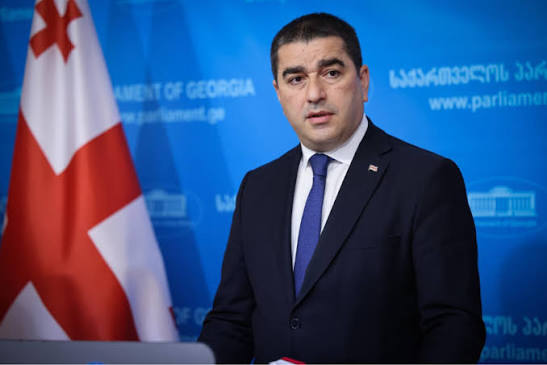
“Georgian Dream” has launched work on a fully revised Election Code, Parliament Speaker Shalva Papuashvili announced at today’s briefing. He claimed that one of the key changes will require Georgian citizens — including those residing abroad — to vote in parliamentary elections exclusively on the territory of Georgia, mirroring the rule already applied in local self-government elections.
Papuashvili said the current Election Code, adopted in 2011, has been amended more than 100 times, creating a text that is difficult to navigate, full of duplications and transitional norms that are no longer functional. The new draft, he noted, will systematize and streamline procedures, eliminate overlaps, and produce “a unified, clear, and technically coherent” legal framework. He stressed that most changes are technical but “significantly improve the normative basis of the electoral process.”
A more substantive amendment concerns non-resident citizens and voting procedures. Papuashvili underlined that electoral rights remain unchanged — Georgian citizens abroad will still be fully eligible to vote — but they will need to cast their ballots in Georgia.
He justified the decision with constitutional grounds, citing Article 24, which obliges the state to ensure the free expression of voters’ will and protect elections from external interference. According to him, foreign meddling has become an increasing global concern, with allegations emerging in the US, EU member states, and “clearly” during Georgia’s 2024 parliamentary elections.
Papuashvili argued that Georgians living abroad are particularly vulnerable to external influence, as they are under foreign jurisdiction and exposed to political pressures the Georgian state cannot prevent. He also claimed they face a higher risk of informational manipulation because their knowledge about domestic conditions relies heavily on media filters and limited personal interaction with Georgian society.
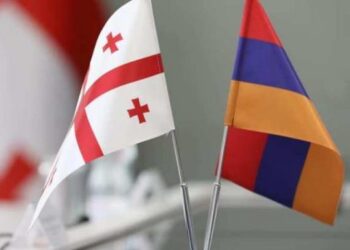
“Requiring voting to take place on Georgian territory strengthens the resilience of elections, reduces external interference, and ensures more informed decision-making,” Papuashvili said, adding that similar models exist in Ireland, Malta, Israel, and Armenia.
He emphasized once more that the rights of citizens abroad remain intact: “Every Georgian citizen will have the full right and opportunity to vote. The only requirement is that once every four years, they come to the homeland and vote in Georgia.”