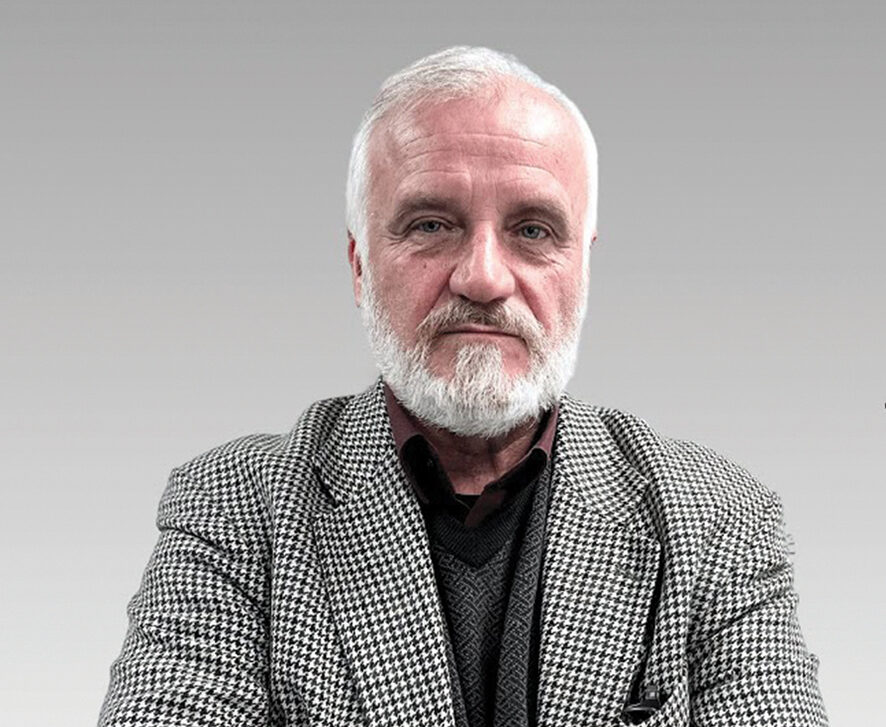
It was what I call ‘Operation Provocation,’ – Robert Pszczel, Senior Fellow at the Casimir Pulaski Foundation tells Radio Free Europe’s Georgian Service. According to Pszczel, who is a former NATO official who headed the NATO Information Office in Moscow until 2015, the recent drone incursion into Polish airspace was deliberate, and was designed to test air defenses, political unity, and Alliance cohesion. ,
He praises NATO’s swift operational response, but explains that deterrence depends as much on political will as on military capability. He also warns that strengthening NATO’s eastern flank and considering bold measures such as a partial no-fly zone over Ukraine may now be necessary to curb Russian aggression.
The drone incident in Poland — What happened, and where do we find ourselves now?
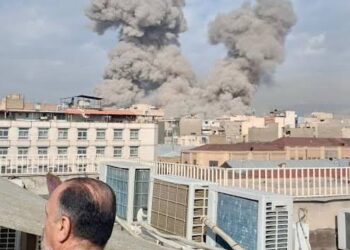
What we know is that a group of drones from Russia, though from the direction of Belarus, entered Polish airspace. There are still many details emerging, but one thing we can say for certain is that, contrary to President Trump’s suggestion that this might have been a mistake, it was not. It was what I call Operation Provocation. Mistakes, of course, happen, but we are not talking about a single stray drone. This was a significant number, following a set path and pursuing specific objectives.
And because Poland is a NATO member, we were not dealing with the situation alone. Assets allocated to SACEUR were activated: Dutch fighter planes, Polish F-16s, Italian jets from another nearby ally, tankers from the Netherlands, plus German Patriots. This was a NATO defense operation — which already makes it extremely serious.
Some experts have ventured as far as calling this the biggest test NATO has faced this century. Is such framing justified?
There was even a suggestion that this was the first time NATO had militarily engaged Russia. That is not correct: about 10 years ago, two Russian fighter planes were shot down over Turkey — a NATO member state. With the full backing of the Alliance.
So, in that sense, this is not the first time. But back then we did not have the biggest war in Europe since 1945. We do now. Let us leave it to historians to decide whether this is indeed NATO’s greatest test, but it certainly is a test. And in Poland at least, there is no doubt as to the purpose of this operation.
The first aim was to provoke and to test our air defense response. The second was to test the unity of Poland’s political leadership. Ours is a democratic country, and it is no secret that our political scene is highly polarized. But on this issue there was no disunity — quite the opposite. And the third aim was to test NATO’s unity, and they failed there too.
Is there also a kind of sacral aspect to it, in the sense that the psychological barrier has crumbled — that it would be unthinkable for Russia to dare attack a NATO country, yet here it is?
In a sense, yes. But again, it depends on whom you ask. For those of us who, in a professional capacity, have been dealing with the Russian threat for years, this comes as no surprise. It is the Kremlin’s modus operandi. Ordinary people, of course, are worried.
And if you look at the Russian response, they don’t seem unduly concerned. They look almost nonchalant. So the entire deterrence architecture does not seem to be deterring Russians very much at this point
If we are talking about deterrence with a capital D, then my answer is: no, I do not believe Russia is ready to launch an outright attack on a NATO country.
Yes, the recklessness, the detachment from reality inside Putin’s head — and among those around him who simply parrot his words or follow his orders — is growing. We could have a long discussion about the mental state of a dictator who still thinks he can win this war, who views everything through the lens of “I will prevail.” This is a KGB brain, a Chekist brain, where everything is black and white.
I believe that the time has come to revisit an idea which is not new: a partial no-fly zone
But look at his behavior during Covid: this was a man who forced even his closest associates into week-long quarantines before meeting him, for fear of “contamination.” That is not the behavior of someone with suicidal instincts. And an outright attack on NATO would be suicidal: Putin is well aware of that.
But if you go one level down — to provocations, to hybrid warfare — things become far trickier.
Here, unfortunately, his calculations about the stance of NATO’s strongest member, the United States, come into play. The reluctance of this administration to impose truly severe sanctions has been noted in Moscow — I’ve lost count of how many deadlines were missed, but I am sure the Russians are keeping track. Then came the Alaska Summit, which will go down as a blemish in US history. You should not welcome an indicted war criminal with red carpets and handshakes.
This kind of behavior emboldens Putin. He wants to test the limits further. If you look at the bigger picture, Russia is a predator. This regime does not want to stop the war. One could argue it cannot stop, because it fears for its own survival. The only obvious conclusion is that Russia must be forced to stop. And that requires a united front, and the full use of all available levers.
If you were Putin, looking at the NATO response to this incident, would you feel deterred or emboldened?
If we are talking about NATO’s reaction as an institution, then no, I do not think anyone can complain — on the contrary, NATO acted swiftly and efficiently.
But was Putin deterred? Had that response been amplified by a forceful US stance, then yes, I would say Putin would have been deterred. But deterrence is not just about capabilities — it is also about signaling intentions. And in this case, the lack of communication, the ambiguity, has likely given Putin hope that he can get away with things like these.
All allies are equal, of course — but it would be ludicrous to pretend that the US is not primus inter pares.
And the Russians are obsessed with the “big guys.” The absence of a clear statement from President Trump, and instead remarks that only muddied the waters, probably made the Russians happy. And that is not good, as it will embolden them further.
How worried should we be about the Suwałki Corridor being his next potential target? Could that be a point of vulnerability for Poland and NATO?
It’s an issue which requires special attention, because one only needs to look at the map. This region is one of the most militarized regions in Europe. It’s like one huge, unsinkable aircraft carrier. So, of course, one needs to take it seriously. And the Russians are the Russians. So we are where we are. And of course, this issue is included in any defensive plans. But one could also recall a reply given to this question by the former Chief of the Polish Armed Forces, General Rajmund Andrzejczak. Back then, when he still held the position, he was asked, “how worried should we be? What would you do?” And his answer was, in essence: “Look, if a real war started, we would bomb the hell out of the Kaliningrad region. All the military installations, everything would become a target.” And we can do that.
It is not a bad message, not because we are some kind of war-obsessed, aggressive nation, but because it just makes sense if you take a look at the map. In other words, it is an issue which always has to be written into our calculations. And, therefore, one needs to beef up the line of defense, particularly in the Baltic countries, even more than is the case today, which was, by the way, one of the recommendations issued by SACEUR as a response to this “operation provocation”.
So what should NATO’s next steps be to make sure these kind of things don’t happen again, or are met with more backlash?
Two parts. First is beefing up the presence and the strength on the Eastern flank — we’re talking about air assets, perhaps naval assets, anti-drone assets, perhaps some more troops. But the second part, I believe that the time has come to revisit an idea which is not new. It was already suggested, I recall, in 2022, by Ukrainians and others. Actually, even some people in Poland were suggesting this, but there was no political climate to implement it, but now there is: a partial no-fly zone. It’s a Ukrainian proposal, so I guess they would agree, obviously, that with Ukrainian permission, we shoot down the drones and missiles that are going to enter our airspace, we would be able to shoot them down in Ukrainian airspace — at least, for example, in the western or perhaps southern part of Ukraine. And obviously that would have to be done from Polish, perhaps Romanian territory, perhaps even from the Baltic countries. This is about protecting our space. Secondly, it would obviously help Ukrainians in the immediate sense of augmenting their defense capabilities. And this would not mean that NATO would enter the war. Per the UN Charter, it is a right of self-defense. What reinforces my belief that this would be the right answer, is that the Russians are terrified of this possibility. They clearly felt very uncomfortable, because they started calling it escalation and provocative — which means they are afraid of it. So it reinforces the view that this is exactly the path you should take, because that is precisely what the Kremlin is afraid of.
Russia is a predator. This regime does not want to stop the war. It fears for its own survival
So the challenge is real, but at the same time, the picture is not pessimistic, because we have the tools. We have allies, we have partners, we have our own defense-industrial base. And compared to Russia — this is the last point — this was the case during the Cold War, and this is perhaps even more the case today. Russia cannot match, in any meaningful sense, in any meaningful term, Western technological capabilities, as long as we put our resources and focus on the issue. So they cannot win this race, period.
Interview by Vazha Tavberidze