
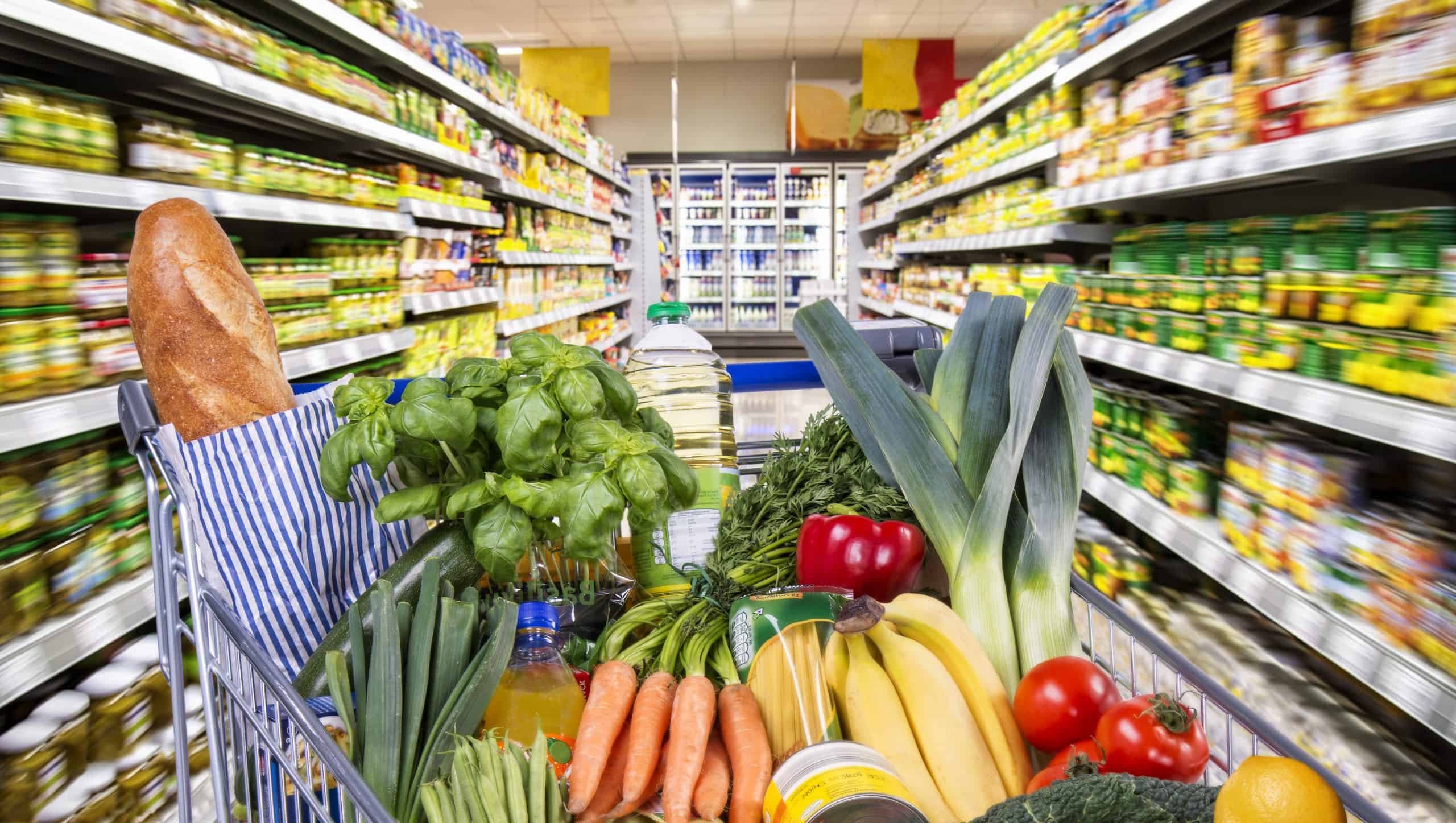
Georgia’s Minister of Economy and Sustainable Development, Mariami Kvrivishvili, said that fees and charges imposed by large supermarket chains are a major factor driving up food prices in the country, outweighing the impact of state taxes.
Speaking on Rustavi 2 during a televised debate on food price formation, Kvrivishvili said the government’s analysis shows that while the state applies six types of taxes, chain supermarkets impose up to nine additional charges, costs that are ultimately passed on to consumers.
The minister said that a detailed review of the pricing chain revealed that around 86% of price increases occur after goods cross the border and before they reach store shelves. She said nine distinct cost components within this segment of the supply chain contribute directly to higher retail prices.
Kvrivishvili emphasized that the government’s analysis was conducted transparently and involved all stakeholders, including importers, distributors, retailers and producers.
She also noted that the financial burden created by supermarket charges negatively affects local producers, reducing the presence of Georgian-made products in major retail chains. The minister mentioned that additional fees imposed by supermarkets make it more difficult for domestic producers to compete with imported goods.
“The discussion correctly highlighted that these extra charges restrict access for Georgian products,” Kvrivishvili said.
The minister stressed that improving affordability for consumers remains a top government priority. She said the administration wants to engage in open and balanced dialogue with market participants to identify solutions that would help lower food prices while supporting the development of local production.
“Our objective is to make food more affordable and ensure that more Georgian-made products are available in chain supermarkets,” Kvrivishvili said.