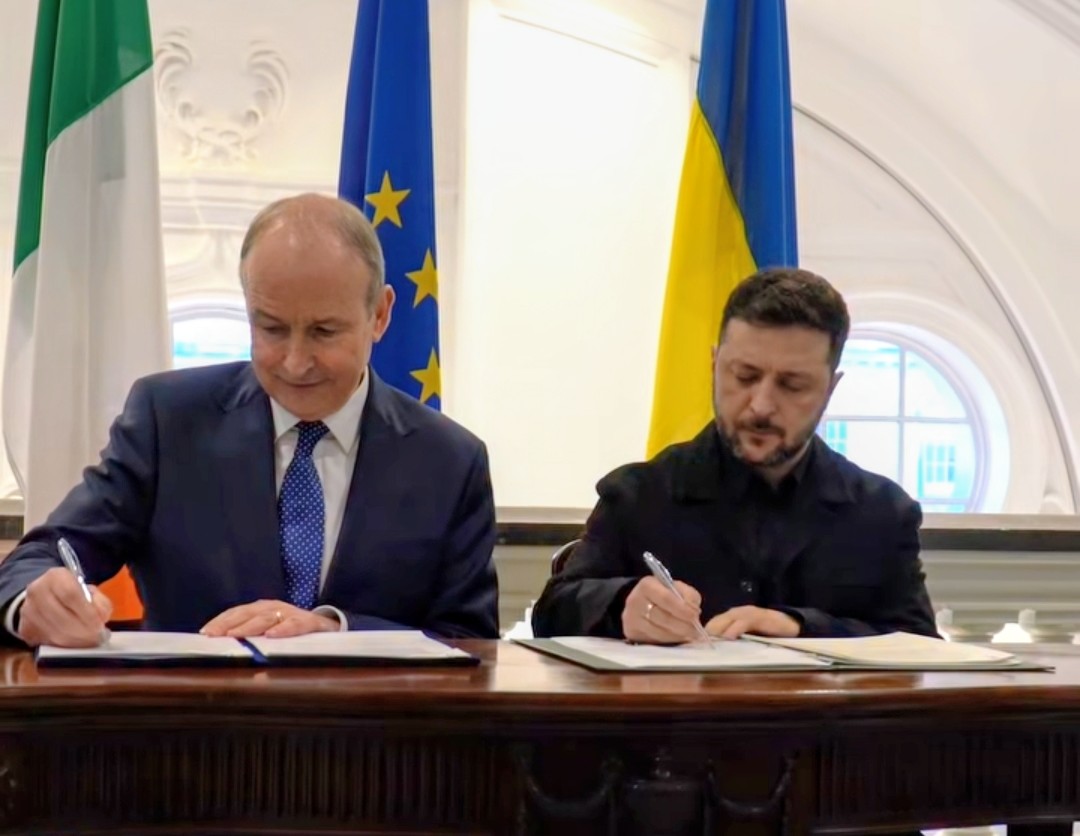
Ireland has pledged a new package of support for Ukraine, with Tánaiste and Minister for Foreign Affairs Micheál Martin confirming an additional €100 million in non-lethal military assistance following his meeting with President Volodymyr Zelensky. The announcement comes as Ukraine faces intensified Russian missile and drone attacks targeting critical infrastructure and residential areas across the country.
After the meeting, Martin said he was “pleased” to offer Zelensky not only political assurances of Ireland’s continued support, but tangible contributions aimed at strengthening Ukraine’s resilience. He stressed that the fresh package of non-lethal aid is designed to help the country withstand the “indiscriminate nightly onslaught” of Russian strikes that have intensified in recent weeks as winter conditions set in.
The newly announced support will be channelled through the EU’s assistance mechanisms and is expected to include protective equipment, medical supplies, engineering tools, and other non-lethal capabilities essential for defending civilians and stabilising critical infrastructure. Ireland, which maintains a longstanding policy of military neutrality, has consistently supported Ukraine through humanitarian aid, macro-financial assistance, and non-lethal military contributions since the invasion began in February 2022.
Martin reiterated that Ireland’s position on Ukraine remains “unwavering” and grounded in its broader commitment to European security. In recent months, Irish officials have repeatedly emphasised that the Kremlin’s escalating tactics — including coordinated missile strikes on Ukraine’s power grid — threaten regional stability and require a unified European response.
Zelensky, who continues to press European partners for both defensive military equipment and financial support, welcomed Ireland’s decision, noting that sustained assistance is crucial as Ukraine prepares for a challenging winter battlefield environment. The increased Russian bombardment has already resulted in power shortages in several regions, placing additional strain on the country’s emergency systems.
Ireland’s contribution follows broader EU discussions on maintaining long-term support for Kyiv, as well as ongoing negotiations among member states over future funding commitments. The Irish government has positioned its latest package as part of a collective European effort to safeguard Ukraine’s sovereignty and protect civilian lives from Russia’s continuing attacks.