Tensions between Iran and the United States have sharply escalated, with Lebanon’s Iran-aligned militant group Hezbollah issuing a stark warning that any attack on Iran would be treated as an attack on the group itself, heightening fears of a broader regional confrontation.
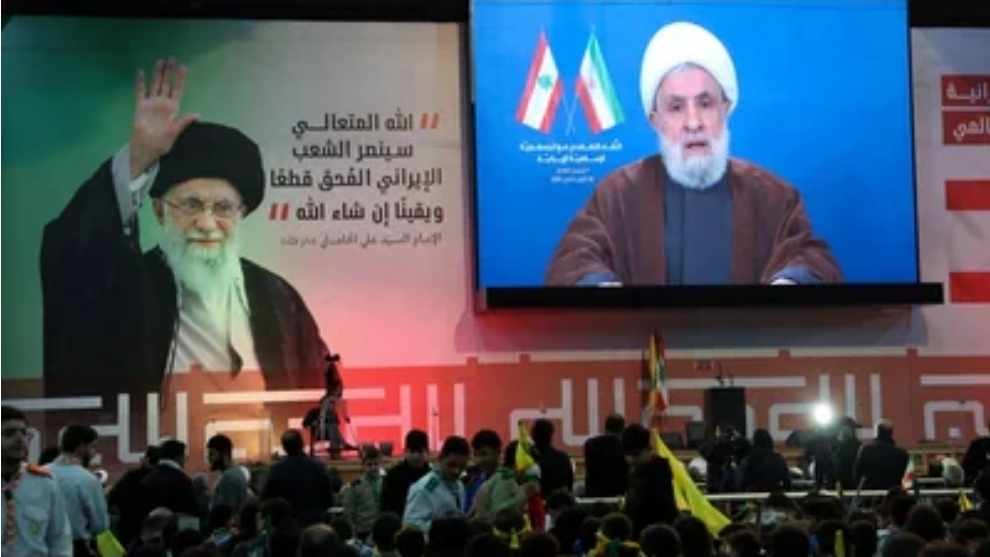
On Monday, Hezbollah deputy leader Naim Qassem said in a televised address to supporters that Tehran’s close ties to his organization mean that “we are targeted by any potential aggression and determined to defend ourselves” and that the group “is not neutral” if Iran comes under military assault. He warned that a new war with Iran would “ignite the region,” reflecting deep concern among Tehran’s allies about the fallout from rising US–Iran tensions.
The public statement comes as the situation between Washington and Tehran worsens amid conflicting signals from US leadership. US President Donald Trump has deployed a US naval strike group, led by the aircraft carrier USS Abraham Lincoln, into Middle Eastern waters. The move — described by US officials as precautionary — has stoked fears of potential military confrontation. Tehran has strongly denounced the build-up as a threat to its sovereignty, with Iranian authorities warning that any military attack would be considered an act of all-out war and trigger a severe response.
Relations have been strained since a violent crackdown on domestic protesters in Iran, which drew international criticism and threats of US action. Iranian forces have kept large segments of the population offline amid fears of escalation. Tehran’s Islamic Revolutionary Guard Corps leadership has reiterated its readiness to defend the country, with senior commanders warning that they remain prepared for conflict.
Hezbollah has historic ties to Iran and relies heavily on Tehran for funding, weapons and political support. The group’s leaders have framed their warning as solidarity with their main backer, even as their capacity to project power has been affected by previous engagements, including clashes with Israel that largely subsided after a ceasefire in late 2024.
In addition to Hezbollah’s reaction, other Iran-aligned armed groups in the region have issued their own threats. Leaders of Iraq’s Kataib Hezbollah warned that a war against Iran would not be “a walk in the park,” while others have spoken of broader resistance against potential US or allied action.
Analysts say the current standoff reflects deeper regional fault lines. Iran’s leaders view US military deployments and rhetoric as provocations, while Washington has stressed it prefers diplomacy but will not rule out force to curb Tehran’s nuclear activities or respond to human rights abuses. The risk of miscalculation remains high, with regional partners and proxies on alert as diplomatic efforts continue amid mounting international concern.
Image: Hezbollah leader Naim Qassem gives a televised address during a rally in solidarity with Iran and Iran’s Supreme Leader Ayatollah Ali Khamenei, at Beirut’s southern suburbs
Image source: Hindustan Times