
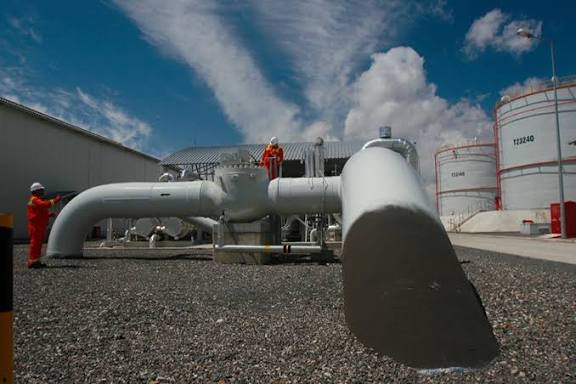
Iran has signaled that it may target the Baku-Tbilisi-Ceyhan (BTC) oil pipeline, a key energy corridor that supplies nearly 30 percent of Israel’s oil, amid rapidly escalating tensions in the Middle East following recent US and Israeli strikes on Iranian territory.
An adviser to the commander of Iran’s Islamic Revolutionary Guard Corps (IRGC) said on Tuesday that Tehran would not allow oil exports benefiting its adversaries to continue and warned that Iran could strike what he described as the “enemy’s oil supply lines.”
Iranian state-affiliated media reports that the official stated that regional energy infrastructure supporting Israel could become a target if the confrontation with the United States and Israel intensifies.
The remarks were made in the context of the growing military escalation between Iran and Israel, triggered by recent strikes carried out by the United States and Israel against Iranian military and strategic facilities. Tehran has vowed retaliation and warned that it could respond not only directly against Israeli targets but also against infrastructure linked to Israeli energy supplies.
The Baku-Tbilisi-Ceyhan pipeline, which runs from Azerbaijan’s Caspian Sea oil fields through Georgia to Turkey’s Mediterranean port of Ceyhan, is one of the most important energy corridors connecting the Caspian region with global markets. From Ceyhan, oil shipments are transported by tankers to various destinations, including Israel.
Analysts estimate that Israel receives a significant share of its crude oil through supplies transported via the BTC route and shipped from the Turkish port of Ceyhan to Israeli terminals.
A potential attack on the pipeline would have serious implications not only for Israel’s energy security but also for regional stability and global oil markets. The pipeline is a critical infrastructure project for Azerbaijan, Georgia and Turkey, and any disruption could affect international energy flows.
Security experts note that the pipeline stretches for more than 1,700 kilometers across three countries and has long been considered strategically sensitive infrastructure. While sections of the route are protected and monitored, its length and geographic exposure make it difficult to fully secure against potential sabotage or missile attacks.
Officials in Azerbaijan, Georgia and Turkey have not yet publicly responded to the Iranian statement. However, any credible threat against the pipeline would likely prompt heightened security measures along the route.
The warning comes as tensions in the Middle East continue to rise following the recent exchange of strikes between Iran, Israel and the United States. Tehran has repeatedly warned that it could expand the scope of its response if attacks on its territory continue.
Energy analysts say that threats against regional oil infrastructure could significantly increase volatility in global energy markets, particularly if key export routes in the Caspian and Middle East regions are affected.
For Georgia, the BTC pipeline is one of the country’s most important strategic infrastructure projects, serving as a major transit corridor that strengthens its geopolitical and economic role between the Caspian region and Europe.
While it remains unclear whether Iran would actually attempt to strike the pipeline, the statement underscores the widening risks to regional energy infrastructure as the confrontation between Iran, Israel and their allies intensifies.