Iran has described Israeli airstrikes on Lebanon as a “grave violation” of the recently announced US–Iran ceasefire, as tensions continue to escalate across the Middle East despite the fragile agreement.
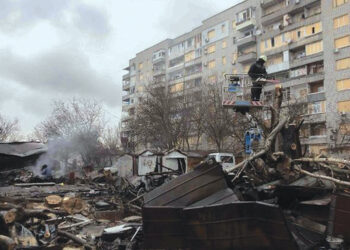
In an interview with the BBC, Iran’s Deputy Foreign Minister Saeed Khatibzadeh accused Israel of carrying out a “massacre” in Lebanon, pointing to reports from the Lebanese health ministry that at least 182 people were killed in airstrikes on Wednesday alone. The attacks, which targeted multiple areas including Beirut, have intensified concerns over the stability of the ceasefire reached just a day earlier.
Khatibzadeh stressed that such actions undermine the very foundation of the agreement, warning that continued violence could jeopardize efforts to de-escalate the broader confrontation between Washington and Tehran. He also signaled that Iran could reopen the strategically vital Strait of Hormuz — a key global energy route — if the United States withdraws what he described as its “aggression” in the region.
The ceasefire, announced late Tuesday by the US and Iran, was initially presented as a step toward reducing tensions. However, conflicting interpretations of its terms have quickly emerged. US President Donald Trump, commenting on the agreement, insisted that American forces would remain “in place” in the region until Iran fully complies with what he called the “real” ceasefire, which he said includes commitments on abandoning nuclear weapons ambitions and reopening the Strait of Hormuz.
Developments on the ground appear to contradict these claims. On Wednesday, Iran indicated that the Strait of Hormuz remains closed, even as US officials reported an increase in maritime traffic through the waterway, highlighting the uncertainty surrounding the agreement’s implementation.
Meanwhile, analysts warn that Israel’s ongoing military campaign in Lebanon risks further complicating an already volatile situation. Following a day of heavy strikes in Beirut, questions remain over Israel’s long-term strategy and whether its operations fall outside the scope of the US–Iran ceasefire.
The situation underscores the fragility of the current truce and the broader challenges of achieving stability in a region where multiple conflicts and competing interests remain deeply intertwined.
Image source: The BBC