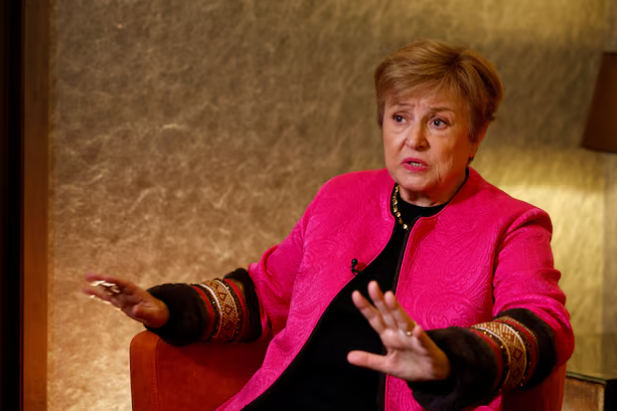
The head of the International Monetary Fund (IMF), Kristalina Georgieva, has warned that the ongoing war in the Middle East is set to push global inflation higher and weigh on economic growth, as disruptions to energy supplies ripple across the world economy.
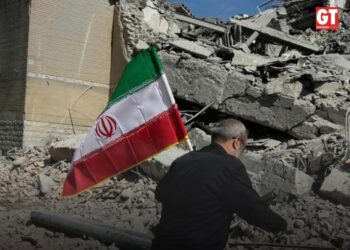
In an interview with Reuters, Georgieva said the conflict has triggered an unprecedented shock to global energy markets, with millions of barrels of oil production affected by Iran’s effective blockage of the Strait of Hormuz — a critical maritime route through which roughly one-fifth of the world’s oil and gas is transported.
Georgieva claimed that the war has already reduced global oil supply by approximately 13%, sending shockwaves through related supply chains, including gas, helium, and fertilizers.
She noted that even if the conflict is resolved quickly, the IMF will still revise its forecasts, lowering global growth projections and raising inflation expectations.
“Even with a rapid end to hostilities and a relatively quick recovery, we expect a downward revision of growth and an upward revision of inflation,” Georgieva said, warning that a prolonged conflict would significantly worsen the outlook.
Prior to the escalation, the IMF had expected a modest improvement in global economic performance, projecting growth of 3.3% in 2026 and 3.2% in 2027 as economies continued to recover from the pandemic.
Georgieva stressed that the impact will be particularly severe for low-income and vulnerable countries lacking domestic energy resources. Many such countries have limited fiscal capacity to cushion their populations from rising prices, increasing the risk of social unrest.
The IMF is expected to present multiple economic scenarios reflecting the potential trajectory of the conflict in its upcoming World Economic Outlook report, scheduled for release on April 14.