The year 1851 is one of the most memorable in the history of Georgian culture. That is the time when the Tbilisi State Opera and Ballet Theater was founded and, as we all know very well, has never stopped being the dominant venue for opera plays and ballet shows in Sakartvelo ever since, including the now-remembered-as-evil Soviet times, when Georgian art, amazingly, flourished and was well supported by the government. The famously conspicuous building on Rustaveli Avenue in Tbilisi, our beloved Opera House was initially built during the Russian Imperial period, reconstructed after a fire in 1896, and given a new name in 1937 after the most prominent Georgian composer Zakaria Paliashvili, the author of the well-known national operatic icons Daisy and Abesalom da Eteri, the long-standing season openers of the House.
On top of the Georgian operas, the Tbilisi Opera House’s repertoire, for tens of years, has included the Western classics, among them Pagliacci, an Italian opera in a prologue and two acts, with music and libretto by Ruggero Leoncavallo, which tells the tale of Canio (tenor), actor and leader of a commedia dell’arte theatrical company, who murders his wife Nedda and her lover Silvio on stage during a performance, and Tonio, the primary antagonist baritone character in the play. Soon, following Leoncavallo’s world premiere in Milan on May 21, 1892, Pagliacci was brought to Tbilisi, with the first-night performance on October 13, 1893 at the Tiflis Imperial Theater. This fact makes Pagliacci one of the earliest Western operatic works performed on the Georgian stage, which helps strengthen the old theater’s undying standing and gorgeous artistic character, organically connecting the Georgian operatic tradition with the European one, which has always attracted Georgian opera-goers and determined their cultural values.
The contemporary production by the late director Temur Chkheidze, staged at the Tbilisi Opera House, took place in 2006 and has been restaged at various times since. In February of 2020, Pagliacci was again presented with local and international artists by director Chkheidze and conducted by Zaza Azmaiparashvili, corroborating the fact of the opera being a natural part of the theater’s modern playbill. And finally, Pagliacci was performed at the Tbilisi Opera House on the 1st of March, emphasizing its interminable popularity with Georgian opera buffs.
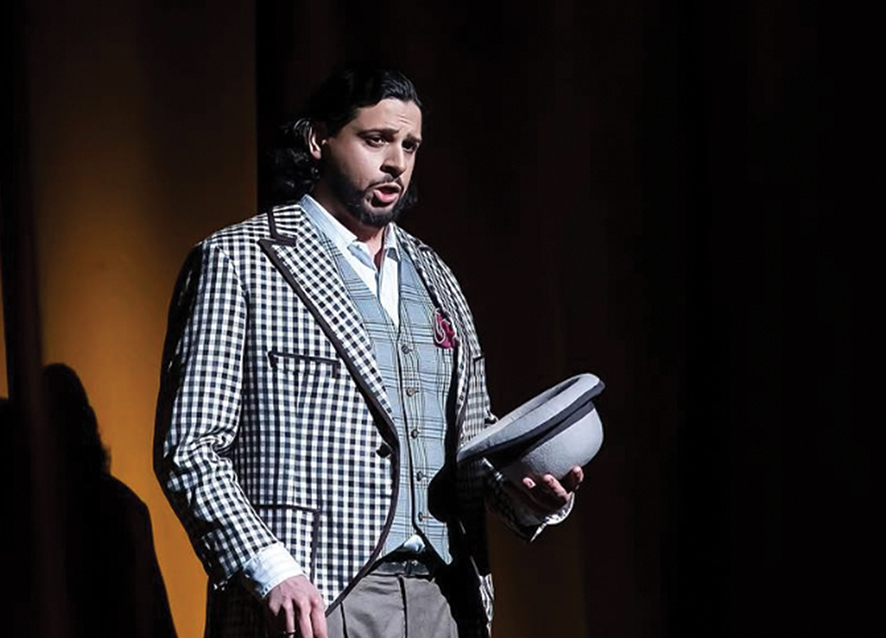
This is exactly where the sensation starts: we saw and heard the famous Georgian tenor Teimuraz Gugushvili as Canio and his grandson Akaki Gugushvili as Tonio, both of them in outstanding shape and voice. The audience could hardly believe that it was the octogenarian Gugushvili in the finale of the first act, culminating the entire event in an amazing performance and vocal might. The overly surprised and emotionally stricken fans gave him a standing ovation, applauding for several curtain calls. This man is not getting old. Literally! As a matter of fact, he is becoming younger with every performance that the House gives him a chance to appear in.
In addition to talent’s unbelievable stage life and vibes, he is the chair of the vocal department at the Tbilisi Conservatory, giving the nation newly trained talents and vocal cadres. The tenor’s baritone grandson Akaki is not just his genetic offspring but his eternal student and the probable inheritor of his astonishing grandpa’s most valuable legacy, so well preserved by Teimuraz Gugushvili and prepared for an incipient operatic relay race.
The public loved to death this family interpretation of Pagliacci, so well done and memorably performed. If tradition and continuity make any sense in our digitally defined time, here we are, all is in place for believing that both matter and both have a chance to embellish our telephonically shaped indoor life, and make us feel a little better when voices like the Gugushvilis are heard loudly.
Well, let me now do my fair dues by giving to Caesar what is Caesar’s and to God what is God’s: together with Teimuraz and Akaki, there were in the beautiful show the perfect Georgian soprano Makvala Aspanidze as Nedda, Tamaz Saginadze as Beppe and Lasha Sesitashvili as Silvio, all of them just darlings of our opera stage. Music director of the production Zaza Azmaiparashvili, conductor Levan Jagaev, principal chorus master Avtandil Chkhenkeli and director Federico Grazzini, led by the Theater’s artistic director Badri Maisuradze, in great teamwork made the whole thing as successful as it has turned out to be. Bravo!
Blog by Nugzar B. Ruhadze