The Georgian government has approved new admission quotas for state universities under the “one city – one faculty” principle, a key component of the country’s higher education reform, Education, Science and Youth Minister Givi Mikanadze announced.
Minister claimed that the new system aims to reflect the traditional academic profile of each institution while ensuring a more balanced distribution of academic programmes across the country.
Under the reform, Tbilisi State University will admit students to programmes in exact and natural sciences, humanities (excluding pedagogy), law, economics and business administration, as well as social and political sciences. Admissions at Georgian Technical University will focus exclusively on engineering and technical disciplines, while Tbilisi State Medical University will offer places in medical specialities.
Ilia State University will admit students to pedagogy programmes and to STEM fields accredited by ABET. Sukhumi State University will accept students in agrarian specialities, Georgian-Abkhazian language and literature, and pedagogy. Arts universities and the University of Sports will continue to admit students in their respective fields.
Meanwhile, Batumi and Kutaisi universities will retain their multidisciplinary profiles, while universities in Zugdidi, Gori, Akhaltsikhe and Telavi will prioritise agrarian disciplines, tourism and pedagogy.
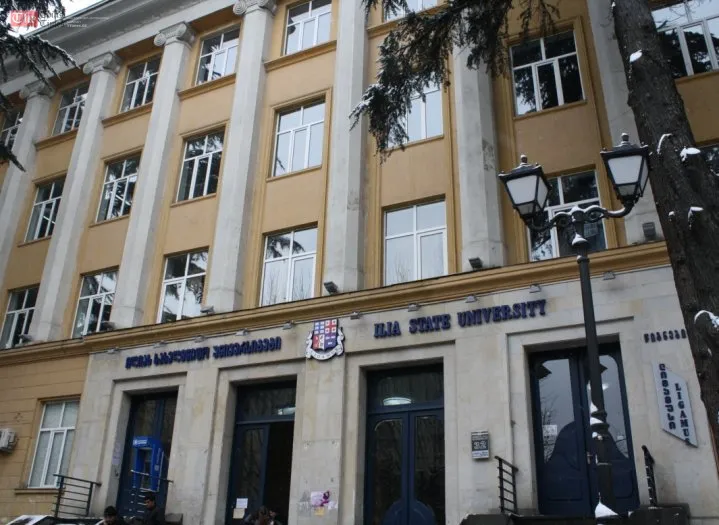
However, the decision has drawn strong criticism from Ilia State University. The institution’s Vice-Rector, Professor Giorgi Gvalia, described the reform as “shocking” and unrelated to genuine improvements in higher education, arguing that it effectively threatens the university’s existence in its current form.
Gvalia stated that the university considers the decision illegitimate and inconsistent with the Constitution of Georgia, adding that the academic community is united in its opposition and will use all available legal mechanisms, both domestically and internationally, to challenge the measure.
He claimed that restricting Ilia State University primarily to pedagogical programmes would eliminate the majority of its academic offerings. The university currently operates around 100 programmes across various fields, and the reform would leave only a small portion of them in place, potentially leading to a sharp decline in student numbers and serious financial difficulties.
He warned that the reduction in enrolment could affect the university’s ability to maintain existing programmes and staff, ultimately lowering educational standards nationwide.
University representatives have pledged to resist the ministry’s decision, arguing that the reform risks undermining one of the country’s most successful higher education institutions rather than improving the quality of education.