In the world of realism, you may have a right to something, but if you lack the means to achieve it, you must be prepared to compromise, – Gerard Libaridian tells Radio Free Europe/Radio Liberty’s Georgian service.
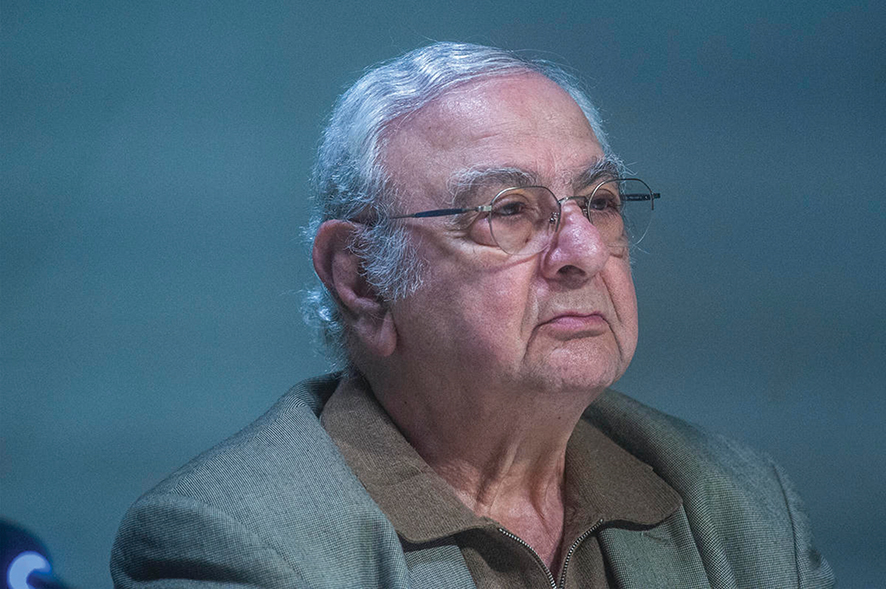
An Armenian-American historian and diplomat, and for many years the senior adviser to former president Levon Ter-Petrosyan, Libaridian played a central role in shaping Armenia’s foreign policy and was one of the main negotiators in the Karabakh conflict.
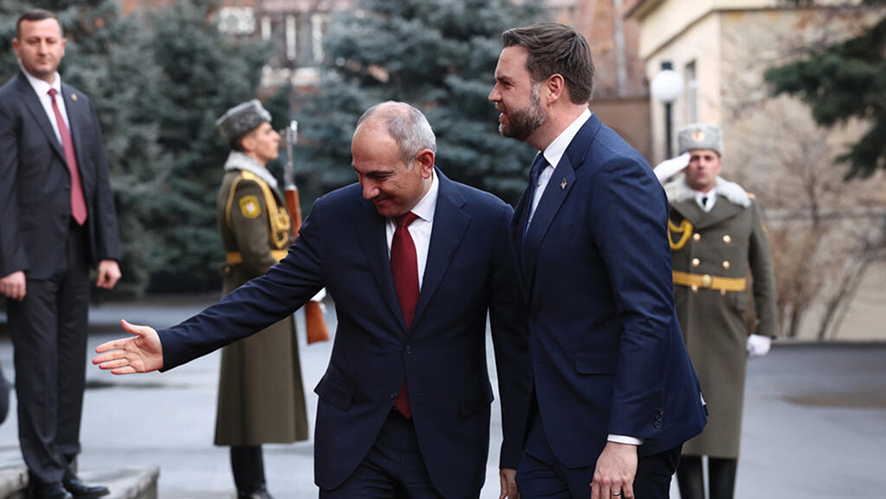
In this interview, he analyzes the consequences of the Second Karabakh War, Armenia’s strategic errors, the shifting regional balance of power, and the illusions surrounding reliance on Russia. He also discusses US Vice President JD Vance’s visit to Yerevan and Baku on February 9–10.
In your recent writing, you said, “Armenia lost the Second Karabakh War, but many Armenians have been playing a dangerous game pretending they didn’t.” What is the cost of continuing that game?
Policies lead to disaster when they are not based on realities. If you have goals and if you don’t have the means and strategy to achieve them, and instead you set maximalist demands, that leads to delusion and self-deception. As I’ve written before, Azerbaijan could lose a war and come back for another many, many times over. They have such a luxury. Armenia can lose a war only once, and it will be very difficult for it to recover. Azerbaijan has the means, friends and allies to do so; Armenia does not. In the world of realism, you may have the right to something, but without the means to achieve it, you have to go to compromises where possible. You have to be pragmatic.
Having the right to something is not an adequate response or the equivalent to the other side’s military means and strategy. The unrealistic policies of the Armenian side, beginning in 1998, have led to the loss of the most basic right of Armenians in Karabakh: the right to live on their ancestral lands. They have that right, but not the means or a workable strategy to achieve it.
Two years ago, Armenians were extremely concerned about losing Armenia itself somewhere along the way. Some were even sure it was going to happen. Now it seems many have forgotten that and they’re reverting to the old pattern of demanding the maximum and making policy on the basis of a right that you have, as opposed to what you can actually do.
When you look back at the Second Karabakh War, it seemed a foregone conclusion that Azerbaijan would win with the resources they had sunk into their military. What was it that led Armenia to believe it could win without compromises?
It was a form of self-deception. You focus only on your policy, only on what it is that you want, and you forget or disregard that there is another side that also gets a say. There was a time when some Armenian political forces said that the issue was resolved in the 1990s, that if Baku has a problem, it should resolve it as its own problem. The fact that this problem had two opposing sides didn’t seem to matter to them; they thought they had just won and that’s it, it was done. Obviously, that wasn’t the case.
What part did Russia play in that self-deception, as you call it?
There are two points I can make on this. One is that the mentality of Karabakh leaders indeed was often determined by what it was told by Russia. The Armenian side at that time acted upon its almost instinctive trust in Russia, Russia as its protector, its savior. Armenians believed Russia could not let the Armenian side down.
And the second thing is that both Karabakh and nationalist forces in Armenia argued that if Azerbaijan has oil, Armenia has the diaspora. Somehow, they arrived at the conclusion that the diaspora was equivalent to Azerbaijan’s oil, and that was one of the critical factors in the way Armenians deceived themselves. Right now, there seems to be less self-denial or self-deception on the part of the Armenian government and more adjustment to reality. At least you could say that looking at the attitude and disposition of the current Armenian government. And the attitude of the people in Armenia regarding Russian policy is changing too.
With that in mind, how close are we getting to a real and enduring peace deal?
We are close to consolidating the peace that has been agreed upon. The two sides are building on the mutual trust they have developed, with confidence-building measures that are coming out every day. Some issues remain, but the two sides seem committed to resolving them through negotiations. Both sides, Armenia and Azerbaijan, have declared that the war is over, and their actions since the agreement was reached have confirmed that.
It is important to note that the peace agreement was worked out between Armenia and Azerbaijan in direct, bilateral negotiations, and increased trust in each other; also, the interests which both Armenia and Azerbaijan have defined as their national interests. Of course, there can be no absolute assurance that peace will prevail under any and all circumstances. For example, there could be a change of government in Armenia as a result of the coming general elections; the new government may reverse the current policies, reject the peace agreement and return to the maximal statements. And that could trigger a change of policy in Azerbaijan as well. If Armenia changes, Azerbaijan will change accordingly. There’s also, of course, the international situation, which can best be described as chaotic. Chaos offers new opportunities, but it can also increase uncertainty and unpredictability among the big players. One hopes that Yerevan and Baku will be able to navigate through the chaos wisely.
With the TRIPP project, are we looking at a long- or at least medium-term US policy shift in the South Caucasus, or is this merely another argument to make for the Nobel Peace Prize?
Very relevant question. The most important fact to remember regarding the Armenia-Azerbaijan peace process is that it is far less dependent on outside mediators such as the US, including the specifics of the TRIPP agreement.
The second fact is that the US has had an interest in the region since the collapse of the Soviet Union, and the Trump administration’s involvement is in essence a continuation of that. Vice-President Vance’s visit is yet another indication that the US is being consistent in and continuing its involvement.
The big change is not so much US policy as the changes in the policies of Armenia and Azerbaijan and the US benefitting from that change. I do hope, otherwise, that the VP visit will not inspire overconfidence in US involvement with regard to the fundamental question of security. Especially considering that TRIPP may become less important over the years if all other transit routes are opened and routes that may go through central Armenia instead of veering south and then going north may become more practical. Incidentally, I do wish TRIPP had a different name. Such symbolisms matter too.
Your caution contrasts with what many see as a masterstroke by Baku and Yerevan – bringing in the US to counter Russia. In street terms, it’s like calling the big boss from another block: Armenia and Azerbaijan can tell Trump, “Vlad is ignoring the peace you built, surely you won’t let it stand?”
Yes, I would not place such significance in Armenia and Azerbaijan betting on the US to counterbalance Russia. When it comes to the fundamental question of security and defense against possible unwelcome steps by Moscow, there are limits as to what the US and the West will do to counterbalance Russia, at least in the South Caucasus. The case of Georgia is the best example of that.
As long as Yerevan and Baku coordinate their policies and rely on their newly found spirit to pursue peace together as the basis of that, Moscow’s leverage will decrease and the two republics will not need to rely on others. Hopefully, such cooperation will lead to the emergence of a regional political identity and a new order in the region, an order that is not opposed to anyone but makes it less of a prey to others.
Regarding the barriers and obstacles remaining before signing off the peace agreement – how insurmountable are they?
I do not see any major problem between Azerbaijan and Armenia. As I said, the countries have defined their national interests, and those interests align, most importantly in both parties wanting to have peace.
How would this Azerbaijan-Armenia peace, if it were to materialize, transform the region?
When analysts and commentators think about the region, they have in mind pipelines, transit routes, geopolitical interests and rivalries, and they forget that these republics exist through the people and for the people. So the most important consequence would be that the people of the region would have peace. This means that their young men will not die in new wars, that the domestic economic dynamic will improve, that their budgets, in the long run, will not be based on defense expenditures. Of course, the international communication patterns will change, as far as connecting the East to the West, from China to Europe and beyond, and that will bring additional benefits.
Georgia could be impacted by these new routes and dynamics. At Davos, President Aliyev noted that what currently passes through Georgia may one day pass through Armenia.
Georgia will not be denied the position of a transit route, especially as the regional trade volumes increase due to the peace between Azerbaijan and Armenia. It will be beneficial to everyone in the region.
At Davos, President Trump said Putin was surprised by his role in resolving the Armenia-Azerbaijan conflict and added, perhaps offhand, “that’s his territory.” How should we interpret that, and how does the TRIPP project fit, or was it just a figure of speech?
Well, with all respect to the President of the United States, I do not rely on his characterization of discussions with Putin to analyze his discussions with Putin. Of course, the TRIPP project was an important issue for both countries, and, in particular, the specific agreement on how to manage the transit route was an achievement for the US, and, interestingly, an achievement that Russia could have made far earlier, but chose not to.
Speaking of Russia, how do you think it will react once and however the Ukraine war is resolved? Will there be costs attached for Azerbaijan and Armenia for “discovering” that they can actually solve their disputes bilaterally?
When and if the Ukraine war is resolved, there’s always the possibility that Azerbaijan and Armenia will pay a price. I cannot predict what Russia will do. Maybe others can, I can’t. But what seems inevitable is that Russia’s policy in the South Caucasus, especially with regard to Armenia and Azerbaijan, will need to be adjusted. Moscow’s preoccupation with Ukraine and the consequences of that war in the international arena have, in a sense, paralyzed the ability of the foreign policy of Russia to be reviewed and to be reassessed. In many respects, Russian policy is still functioning on old instincts; a more defensive mentality has developed that has encouraged nationalist and expansionist policy, so we see a more aggressive policy from Moscow.
Second point: Russia has lost a good deal of its leverage in Armenia, which was the traditional pro-Russian attitude of the population and some domestic political players. Russia has lost that crucial leverage, at least among the people of Armenia, because it failed to honor the commitments it assumed with regard to peacekeeping and security for the people of Karabakh in 2020, and the defense of Armenian borders in 2023. Moscow is refusing to understand the implications of the change in the mentality of the population of Armenia and to adjust its policy accordingly. It continues to expect Armenia to obey Russia regardless of how Russia behaves.
That has been Moscow’s traditional policy, supported by the maintenance of fear from Turkey – as long as the underlying sentiment of Armenian policy was fear from Turkey, Moscow felt and calculated that Armenia had nowhere else to go but to Moscow. Some Armenian political institutions, including the Church, have embraced that logic, but the people of Armenia have lost their trust in Moscow, and that has opened a path to a new thinking that says Armenia is alone and has no allies, and must therefore consider resolving its problems with its neighbors, namely Azerbaijan and Turkey, the neighbors that are seen as potential threats to Armenian security. And we see that the Armenian government has indeed taken steps in both directions.
And they seem to have worked.
The government’s policies have worked because Azerbaijan has determined itself that it no longer needs to be in conflict with Armenia, and that it needs peace with Armenia in order to achieve some of its wider policy goals. And Turkey has stated since 1993 that it has no problem with Armenia, but its actual relations with Yerevan depend on Armenia settling its issues with Baku. We are inching closer and closer to the gradual opening of the border and establishment of diplomatic relations between Turkey and Armenia. I do believe that Turkey-Armenia relations will improve and will be normalized. Under these circumstances, Moscow will need to review its position.
Moscow could use force or stir domestic chaos in Armenia, but both would be difficult to execute and unlikely to be productive.
It is not my intention to offer advice to Russia. As a historian, I’ve always had great respect for Russian diplomacy, and Moscow will define its own interests, but I can point out that the consequences of either a policy that uses force or produces chaos are unlikely to benefit Russia in the long term. Turning populations against Russia is not the best way to remain relevant in the region or to be able to defend one’s legitimate interests, not in the long run, as the Soviet experience has proven. So, while it is very important to remember that Russia can do things, it doesn’t mean that it will produce the result it wants in the long run.
Finally, Russia can use its economic leverage in Armenia; but as Vietnam for the US and Afghanistan for the USSR, you may have superior weapons and economic leverage, but you cannot always use them because the consequences of that are worse than the problem you are trying to solve.
Could Armenia face a “Georgian scenario” without alienating Russia? Is that a realistic option?
Russia has attempted to replicate the Georgian scenario, but the Armenian government is actively working to prevent it. Whether through nationalist forces, oligarchs, or the Church, attempts to replicate Georgia’s experience are being met with firm resistance. The government demonstrates a clear ability to distinguish between Armenia’s interests and Russia’s. While Moscow has legitimate interests in the South Caucasus, pursuing more than that through coercive or unacceptable measures is a different matter, and its options are limited. In Azerbaijan, those options are even more constrained.
Interview by Vazha Tavberidze