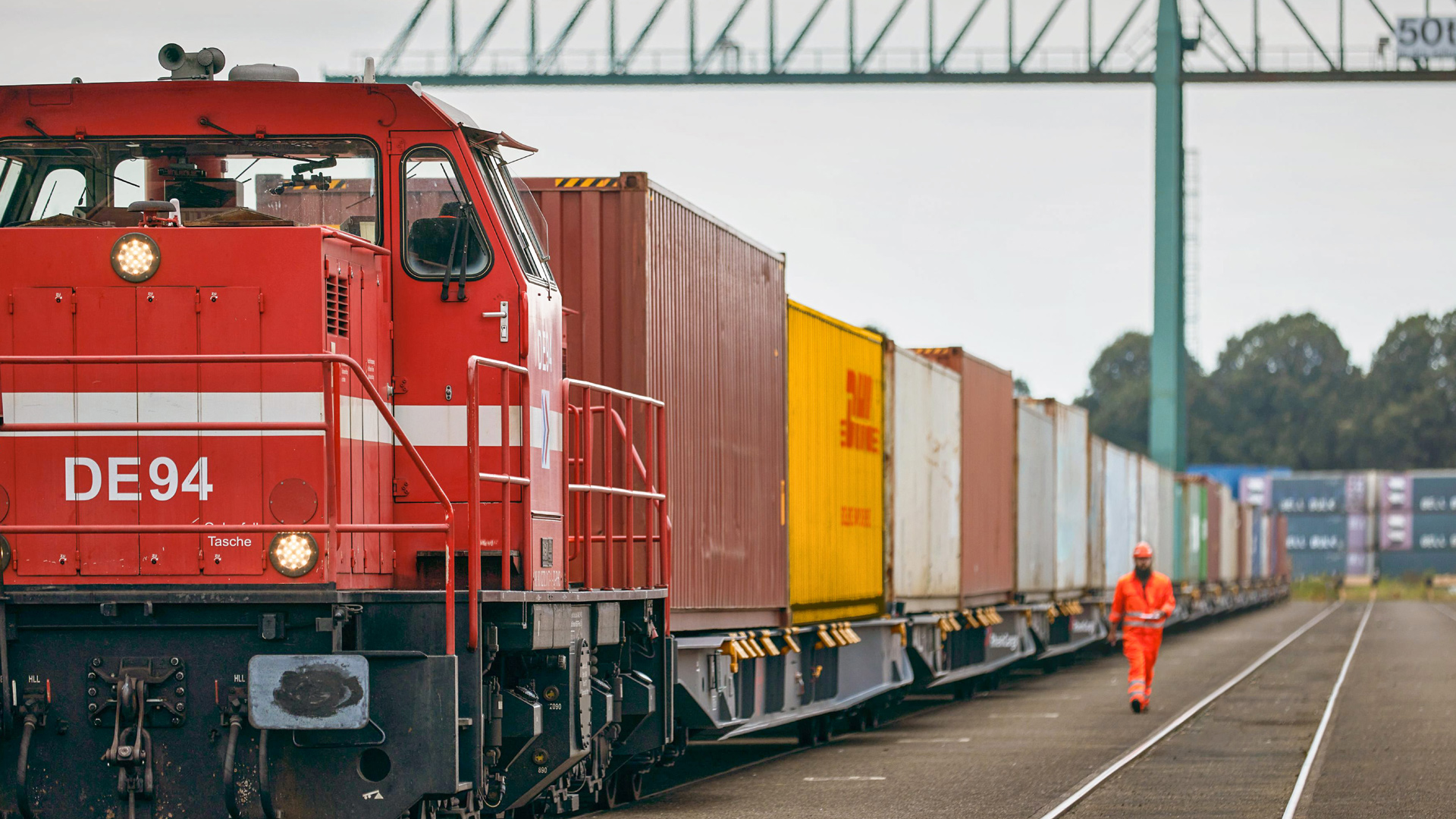
The National Statistics Office of Georgia (Geostat) stated that Georgia’s railway infrastructure remained strategically transit-oriented in 2025, though both freight and passenger traffic declined compared to the previous year.
Rail infrastructure
By the end of 2025, the total operational length of railways in Georgia reached 2,441 kilometers, of which 98.4% was electrified.
Railway lines accounted for 1,592.6 kilometers, with 99.6% electrified. Main lines extended 551.3 kilometers, of which 57.1% were double-track and 42.9% single-track.
The total length of railway tracks stood at 1,978.9 kilometers. Of this:
- 44% were main tracks
- 3% were branch lines
- 9% were station tracks
- 9% were railway sidings
Freight transport
In 2025, Georgian railways transported 13.3 million tons of freight, marking a 3% decrease year-on-year.
Transit freight continued to dominate operations:
- 5% of total freight was transit
- 7% was international (excluding transit)
- 9% was domestic
Incoming freight accounted for 75.8% of total rail cargo while outgoing freight represented 24.2%.
Among incoming freight:
- 8% originated from the Russian Federation
- 2% came from Azerbaijan
- Other countries collectively accounted for 37%
For outgoing freight:
- 2% was destined for Armenia
- 2% for Kazakhstan
- 4% for the Russian Federation
The largest share of transit freight was destined for:
- The Netherlands (13.4%)
- Turkey (10.8%)
- China (6.6%)
- Ukraine (2.9%)
- Italy (2.4%)
- Romania (1.3%)
In terms of origin, 6% of total transit freight was sent from Brazil, 3% from Turkey and 1.2% from the United States.
Commodity structure
Overall freight composition in 2025 was dominated by:
- Coke and refined petroleum products (36.4%)
- Chemicals, chemical products and man-made fibers; rubber and plastic products (20.9%)
- Metal ores and mining products (12.8%)
Domestic freight differed significantly, with metal ores and mining products accounting for 56.5%, followed by coke and petroleum products (22.7%) and transport equipment (9.9%).
For international freight:
- Incoming goods were primarily coke and petroleum products (47.3%), nonmetallic mineral products (17%) and metal ores (11%).
- Outgoing goods were mainly chemicals and man-made fibers (35%), food products, beverages and tobacco (25.6%), metal ores (13%) and basic metals (12.1%).
Transit freight was highly concentrated, with three product groups, coke and petroleum products (38.2%), chemicals (30%) and food products, beverages and tobacco (10.4%), accounting for 78.6% of total transit volume.
Passenger traffic
Passenger transport saw a significant decline in 2025. The number of passengers transported by Georgian Railway fell by 17.3% year-on-year to 1.72 million persons. Passenger turnover decreased by 17.7%, reaching 393.3 million passenger-kilometers.
Domestic travel accounted for 98.4% of total passengers (1.69 million), marking a 17.5% decline compared to 2024.
International passenger traffic totaled 27,700 persons, down 2.4% year-on-year. All international rail passengers traveled to or from Armenia. Armenia accounted for 67.9% of embarkations and 32.1% of disembarkations, with no rail passenger traffic recorded with other neighboring countries in 2025.