More than 130 small- and medium-scale hazelnut producers in Georgia have strengthened their farming practices through a targeted training program aimed at improving productivity, sustainability, and food safety in one of the country’s key agricultural sectors.
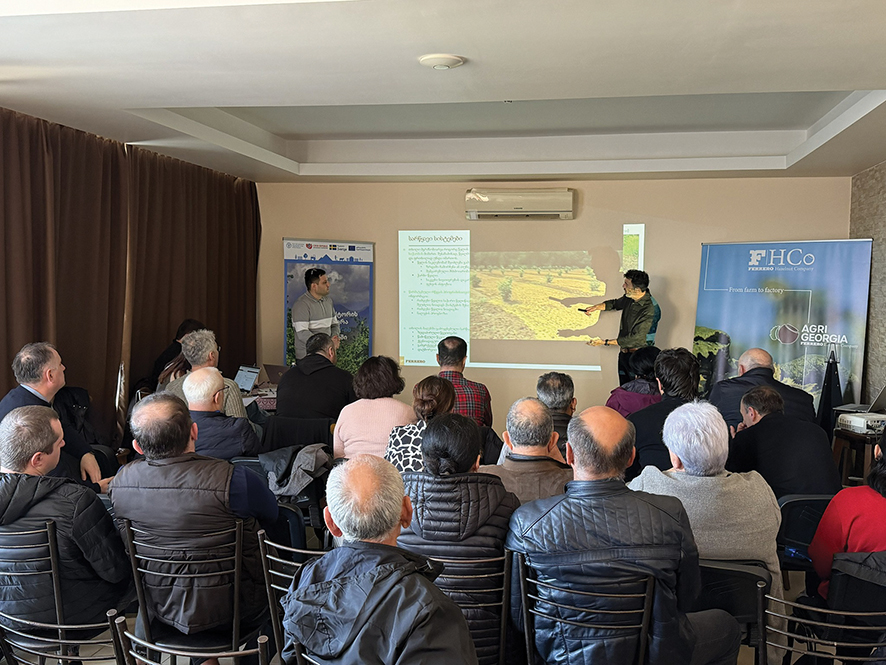
A total of 133 farmers took part in the initiative, held in Zugdidi and Telavi, which focused on integrated orchard management. The training sessions were organized under an ongoing partnership between the Food and Agriculture Organization of the United Nations (FAO) and AgriGeorgia, Ferrero’s local hazelnut company, with support from the European Union and Sweden through the ENPARD IV program.
The two-day training module, led by experts from Ferrero’s Agri Competence Center in coordination with FAO, covered essential topics including water management, plant nutrition, and integrated pest and disease control. The program is designed to help farmers adopt modern, climate-smart agricultural practices while improving crop quality and production efficiency.
“Supporting the advancement of production standards in Georgia’s hazelnut sector is essential to ensuring food safety, sustainability, and long-term competitiveness,” said FAO Program Manager Guido Agostinucci. He noted that the initiative equips producers with up-to-date, practical knowledge and offers access to financial support, including matching grants for equipment such as hazelnut drying systems.

AgriGeorgia Outgrowing Manager Marika Kodua highlighted the importance of knowledge sharing for local producers. “These opportunities help farmers adopt modern orchard management practices and improve both the quality and safety of their hazelnut production,” she said.
The program also addresses growing concerns over food safety, particularly the risk of aflatoxin contamination—a key issue affecting exports. According to Denis Reiss, Program Officer for Sustainable Food Systems at the EU Delegation to Georgia, 17 border rejections linked to aflatoxin were recorded in 2025 through the EU’s Rapid Alert System for Food and Feed (RASFF).
“With over 65% of Georgian hazelnut exports destined for the EU market, maintaining and expanding this market share is critical,” Reiss said. He added that improved harvesting, storage, and cultivation practices can significantly reduce contamination risks.
Since the launch of the partnership, more than 300 farmers have received training in primary production, post-harvest handling, and processing. Participants have also been eligible for financial assistance, with 22 matching grants approved in 2025 to co-finance hazelnut drying equipment—an important step in enhancing food safety across the value chain.
The initiative forms part of the EU’s broader support for rural development in Georgia through the ENPARD program, which has been active since 2013. Aimed at reducing rural poverty and strengthening agricultural capacity, ENPARD has evolved to include a strong focus on food safety, supported by international partners including Sweden, FAO, and the Czech Development Agency.
By Team GT