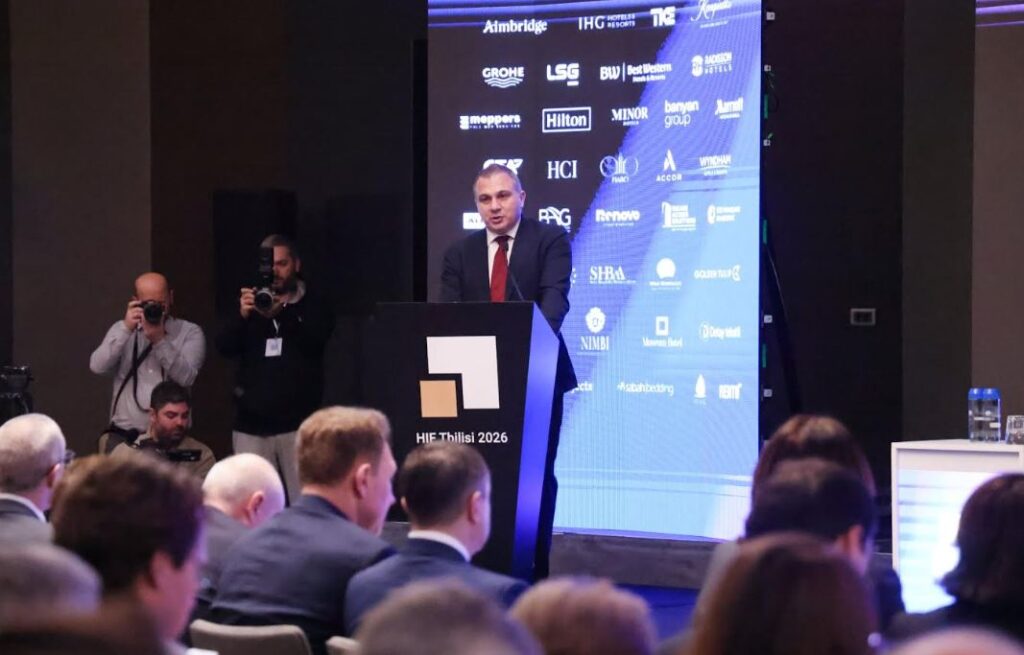
Georgia’s Minister of Infrastructure, Revaz Sokhadze, officially opened the Hospitality Investment Forum Tbilisi 2026, setting an ambitious tone for the country’s next phase of tourism and hospitality development.
The forum, held in Tbilisi, brought together leading hotel operators, global hospitality brands, real estate developers, institutional investors, financial institutions, and senior public officials. Designed as a high-level professional platform, the event focused on strengthening international investment cooperation and accelerating the expansion of Georgia’s hospitality sector amid growing global interest in the region.
In his keynote address, Sokhadze described hospitality as one of the most dynamic and strategically important sectors of the Georgian economy. He noted that tourism and related services generate significant employment across the country, particularly in regional areas, while also reinforcing Georgia’s international competitiveness and visibility.
“Hospitality in Georgia is not merely an economic activity; it is part of our national identity,” the minister said, pointing to the country’s long-standing tradition of welcoming guests and its positioning at the crossroads of Europe and Asia.
Participants discussed ongoing and planned investment projects across Tbilisi, Batumi, Kutaisi, and emerging mountain and wellness destinations. Panels explored how to convert rising international interest into concrete capital flows, the expansion of premium and luxury hotel segments, and the application of modern valuation tools and market analytics in hospitality real estate.
Georgia’s tourism sector has shown steady recovery and growth in recent years, with visitor numbers approaching and, in some segments, exceeding pre-pandemic levels. Industry analysts note increasing diversification in source markets, alongside growing demand for high-end accommodation, branded residences, and mixed-use developments combining hospitality, retail, and residential components.
Sokhadze highlighted that infrastructure development remains central to sustaining this momentum. The government is implementing large-scale projects aimed at improving connectivity and supporting year-round tourism. International airports are undergoing expansion and modernization, while major highway upgrades are enhancing access between regions and key tourism clusters.
In parallel, the Ministry of Infrastructure is advancing urban regeneration initiatives, modernizing water supply systems, and investing in municipal improvements in resort towns and mountainous areas. These measures, the minister said, are designed to reduce investment risk and create a stronger foundation for private sector participation.
The forum also addressed public-private partnership models, financing mechanisms, and regulatory stability: areas that investors consistently cite as decisive in emerging markets. Sokhadze reaffirmed the government’s commitment to maintaining a transparent and predictable business environment, reducing bureaucratic barriers, and aligning sectoral development with international standards.
He emphasized Georgia’s ambition to establish itself as a regional hub where tourism, hospitality, transport, and urban infrastructure evolve as an integrated ecosystem rather than isolated projects.
“Georgia is building an open and predictable business environment, where investment means not only commercial success but a contribution to the country’s long-term development,” Sokhadze declared. “Now is the right time to create new destinations and world-class infrastructure together. Now is the time to invest, to collaborate, and to grow.”
As global investors increasingly look toward the South Caucasus for diversification and growth opportunities, Hospitality Investment Forum Tbilisi 2026 underscored Georgia’s intention to remain at the forefront of regional tourism development, backed by coordinated state policy and expanding infrastructure capacity.