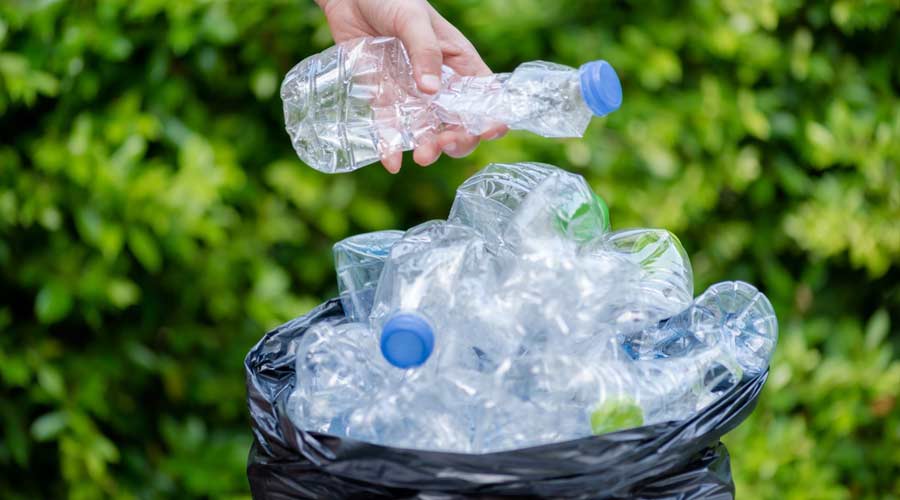
The government of Georgia has approved new regulations that will ban the production, import and sale of certain plastic products intended for contact with food, including most plastic beverage bottles. The measure will be introduced gradually over the next two years as part of broader efforts to reduce plastic pollution and its environmental impact.
Under the regulation, the first restrictions will come into force on July 1, 2026 when food-service establishments will no longer be allowed to serve beverages to customers in plastic bottles. A bigger prohibition will follow on February 1, 2027 when the production, import and sale of beverages in plastic bottles will be fully banned within Georgia, except for products manufactured specifically for export.
The regulation includes several exceptions. The ban will not apply to:
- drinking water packaged in bottles of 3 liters or more
- alcoholic or non-alcoholic beverages packaged in containers of 20 liters or larger
- water supplied for the needs of the Ministry of Internal Affairs of Georgia, the Georgian Defense Forces, and military personnel
The government stated that the regulation reduces the environmental damage caused by plastic waste.
The explanatory note accompanying the decision highlights that plastic can take hundreds of years to decompose, contributing to pollution of soil, rivers and marine environments, damaging sanitation infrastructure and reducing soil fertility.
Research conducted in Georgia shows that plastic accounts for the overwhelming majority of river waste. Studies indicate that 88% of debris found in rivers is plastic, with plastic bottles alone making up approximately 41% of that pollution.