That was what sent me driving towards Tianeti. I have a painting, one of many such it turns out, of a birch tree forest in winter, by the Georgian painter Oleg Timchenko. The trees in it are so close together that there is nothing visible between their white and black trunks. This is something which I want very much to find in nature, and I have been looking for such a forest here in Georgia.

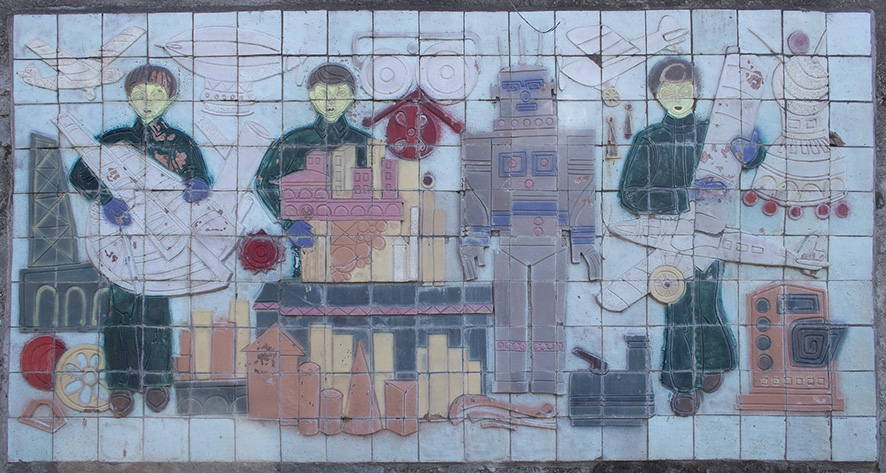
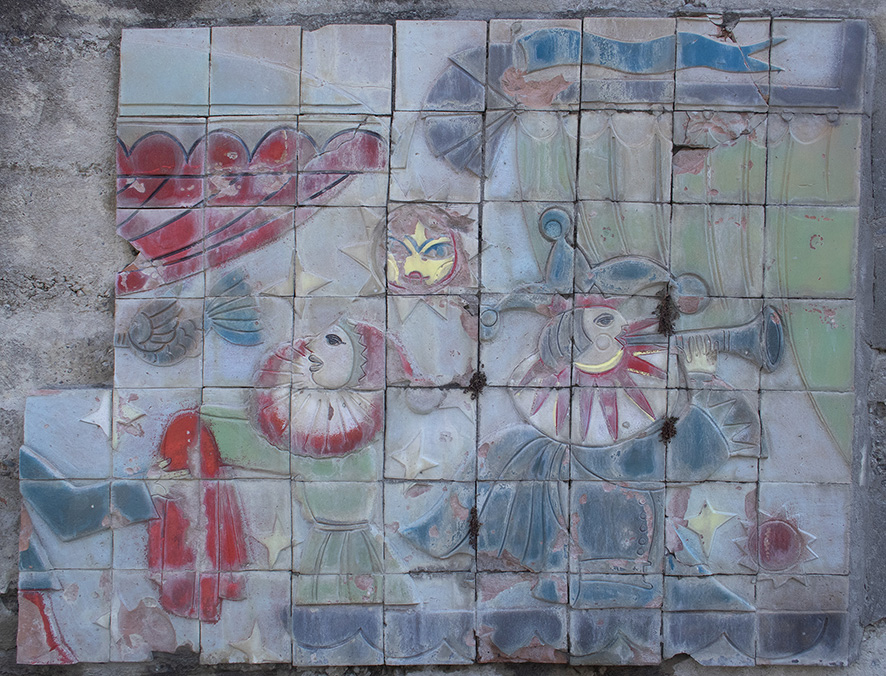
Friends told me that on the road to Tianeti, north of Tbilisi, in the mountains, there are stands of birches visible. So I set off to try to find them. On the way, I first stopped at a whole series of Soviet-era ceramic tile murals set onto concrete walls at the roadside. These are crumbling but still beautiful, in a naive folk-art way, and I carefully photographed each one before they fall to ruin. Then I drove on.


Around one of the high passes of the journey, at maybe 1300m or so of altitude and with plenty of hillside snow not yet melted, I did find what someone else might mistake for birches, in abundance. But these trunks were light gray, with dark green moss growing on them, instead of the paper-white trunks with thin horizontal lines and other growths in black. So, similar at a glance, but not what I was seeking. I know that birches do grow in Svaneti, and have found them outside my village there. They are the only tree usable for the burning torches of the late-winter Lamproba festival. But what I have seen there is not the tight groupings of so many trunks that you can photograph them alone, with nothing between. There they are much more sparse.
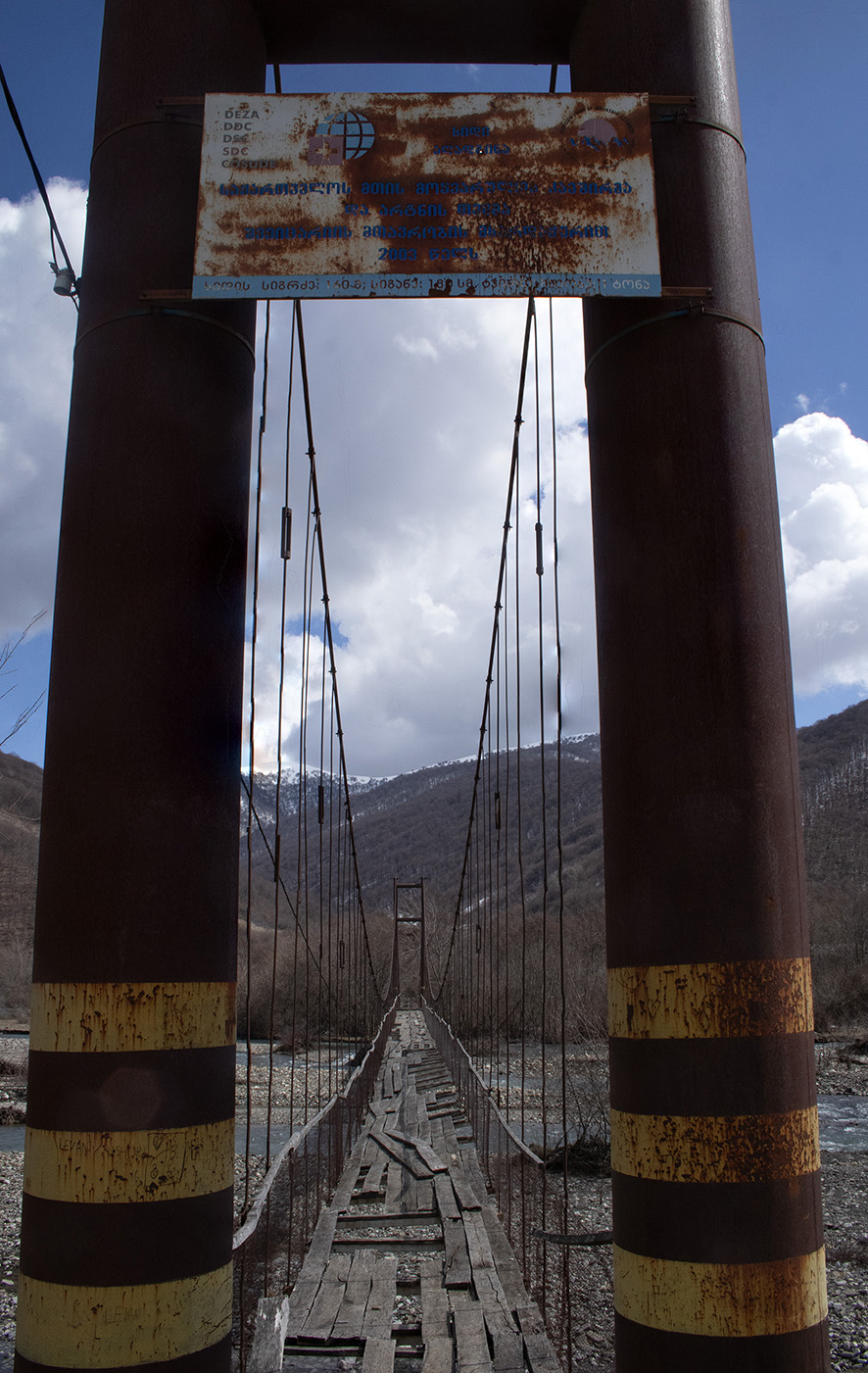
Indeed, my Tianeti birch search did leave me in the lurch. I drove on the nicely asphalted road right to that town, through it, and farther north, through villages with names amusing to me. Churchkhelaurebi, for example. You could translate this as the place where people (-eb) who make churchkhela, the Georgian national sweet of walnuts in thickened grape syrup, live (the -ur signifies that they are also Khevsur people). Khevsurtsopeli, similarly, means “Khevsur village.” And many other village names on signs which I have never come across before. Lisho, Bodakheva, with its nice crumbling old bridge which I dared to walk on. Ghulelebi, Devenaantkhevi, Velebi (which means “Valleys”), Aloti, Bokoni, Mamadaanebi, and more.

Finally, the asphalt road gave way to gravel and dirt just after Zemo (Upper) Artani. I drove on, more carefully, and the snow increased. Eventually, I couldn’t see a place to turn the car around ahead, and decided to head back from there, instead of risking getting stuck in the signal-less middle of nowhere. Past this, Google Maps has the road rising into the mountains (so, even more snow this early in the year) before eventually petering out altogether, and no more villages on it anyway. A fork to the right ends similarly. Enough for this time.
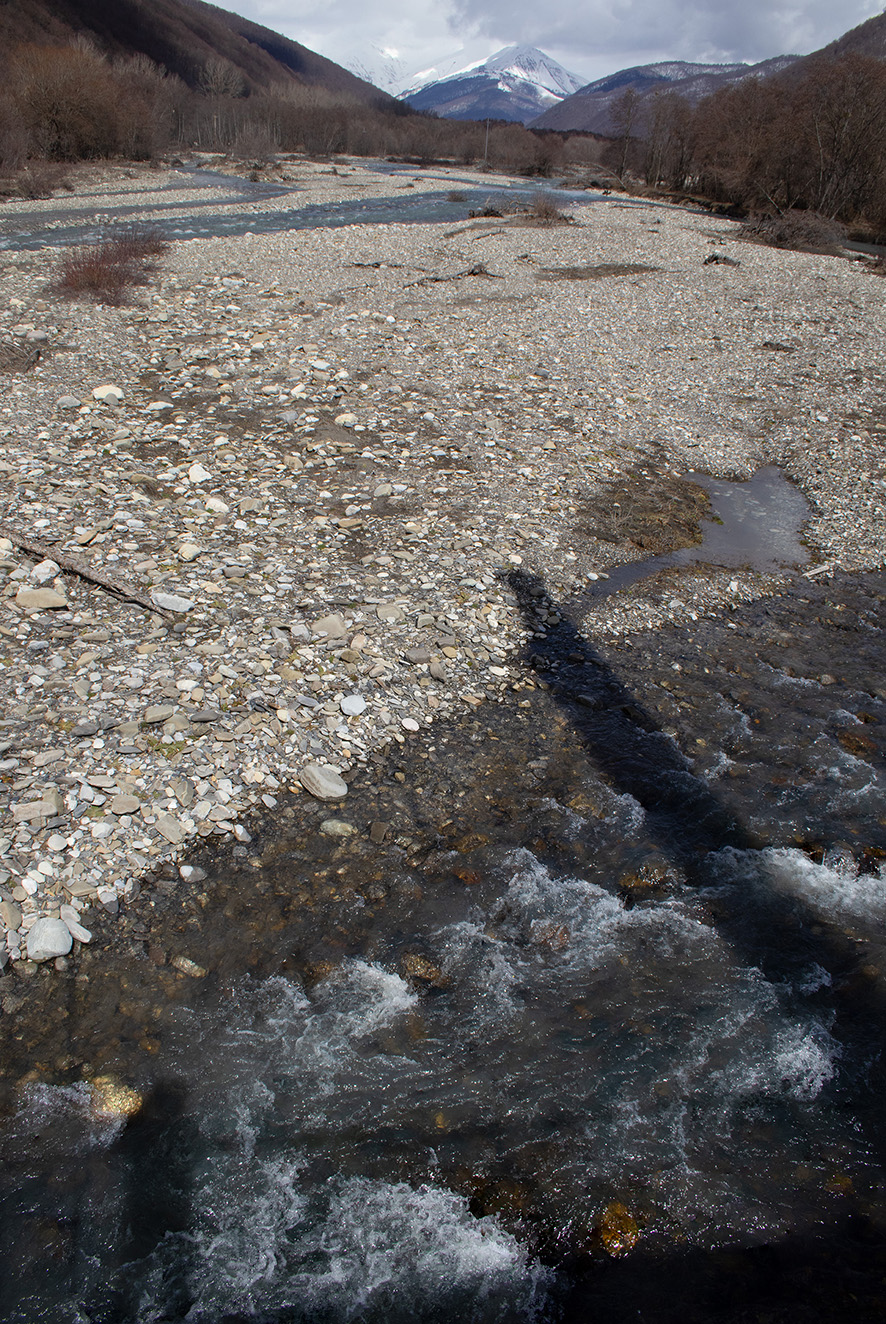
Even if I took a different road north, towards Khevsureti or Tusheti, I would end up snow-blocked. Those main roads in don’t open up for the shepherds and their flocks to go home from the lowlands until sometime in May, usually. Double lives for almost the entire population of those two provinces: summers up north in spectacular peaks, the other seasons down south in slightly more prosaic but motherly, beautiful grazing fields and hills.
West from Tianeti would take you to the large Zhinvali hydroelectric dam and Annuli fortress; but I have seen these several times already, and this isn’t the most picturesque season for serious landscape photos. The trees up here are still mostly bare of spring buds, so, looking rather dead; there is some snow at the high spots, but it is melting fast all the time now, day and night.
I was quite satisfied with my several hours’ jaunt, even though birches failed to appear. I might just track down Timchenko’s contact details and ask him directly whether he painted from a real scene or a fantasy one. And I could also keep looking, Googling, and asking for what I seek. It needn’t even be in Georgia, although that would be simplest for me. Anywhere will do. Eventually, I will find what my mind’s eye has already seen. Until then, the search is also its own reward.
Blog by Tony Hanmer
Tony Hanmer has lived in Georgia since 1999, in Svaneti since 2007, and been a weekly writer and photographer for GT since early 2011. He runs the “Svaneti Renaissance” Facebook group, now with over 2000 members, at www.facebook.com/groups/SvanetiRenaissance/
He and his wife also run their own guest house in Etseri: www.facebook.com/hanmer.house.svaneti