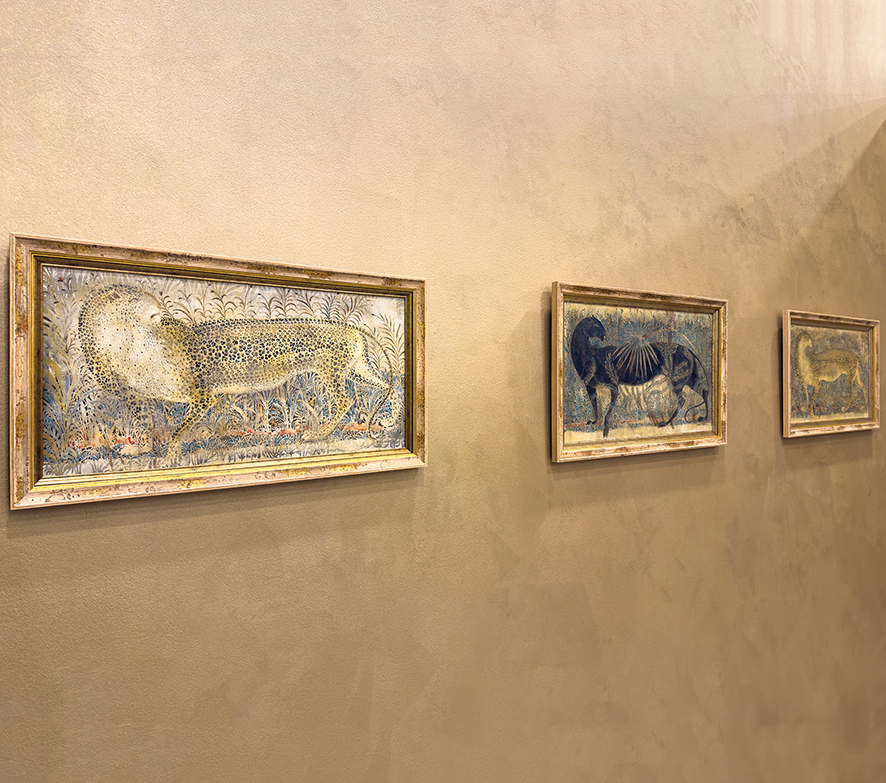
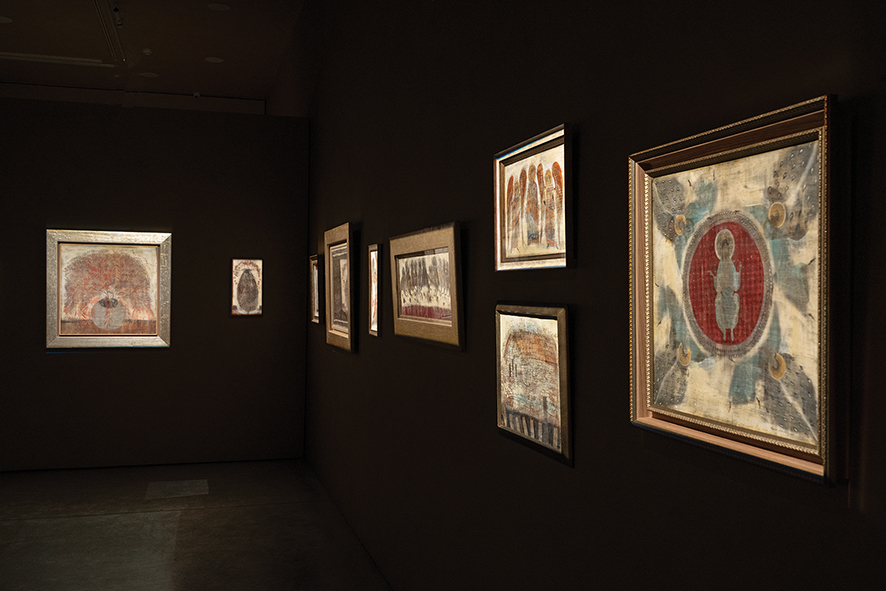
ATINATI’S Cultural Center continues its exhibition series – ATINATI Collection, and for the first time presents Merab Abramishvili’s personal collection. This exhibition is part of Baia Gallery’s mega exhibition cycle Merab Abramishvili – Transparent Memory. The project, which is located in ATINATI’s exhibition hall and two exhibition spaces of Baia Gallery, offers a rare, wide-reaching view of Abramishvili’s creative world. The aim is simple yet ambitious: to introduce the artist to the global stage as one of Georgia’s cultural icons.
ATINATI, a non-profit foundation, has long worked to share Georgian culture with a broader audience. Through its media platform, ATINATI.COM, and its Cultural Center, the foundation highlights the richness of Georgian art and history. Its growing art collection—featuring works across different media—shows the ongoing story of Georgian art from early modernism to the contemporary scene, and from names like Pirosmani to Andro Wekua.
A key goal for ATINATI is to bring Georgia’s cultural heritage to international attention while supporting artists at home. The new exhibition does just that. Visitors can explore around 50 works by Merab Abramishvili, following his development as an artist and seeing the full breadth of his painting style in one place.
Abramishvili holds a special place in ATINATI’s collection. In fact, his work was one of the main inspirations behind the foundation’s decision to build a collection at all. ATINATI was drawn to his fresh approach to religious themes and iconography, as well as his expressive, instantly recognizable style. His ability to blend traditional imagery with a modern, personal perspective made his work especially powerful to the collector.
ATINATI acquired most of Abramishvili’s works from international auctions and private collectors abroad before bringing them back to Georgia—part of the foundation’s mission to locate and return important pieces of Georgian culture.
Merab Abramishvili (March 16, 1957 – July 22, 2006, Tbilisi) is one of the most outstanding artists in Georgian contemporary art, whose significance is already recognized both locally and internationally.

Merab Abramishvili belongs to the “eighties” generation. The 1980s was a time marked by complex political, social, and cultural changes in Georgia. The era of the Soviet Union was coming to an end, and a new reality was emerging. Artists faced difficult choices, and it is in this context that Abramishvili’s creative position becomes especially intriguing. He counters destruction with creation, and opposes anti-humanism with humanism. Through his paintings, he presents a harmonious and universal vision of the world—one that symbolizes paradise and eternity. All the themes he touches resonate with universal human issues.
Merab Abramishvili’s expressive style is truly unique. The artist employs the levkas technique, historically used in the Middle Ages for creating wall paintings and icons. His works, executed on plywood coated with levkas (a plaster and glue base), evoke the impression of frescos. Layers of tempera paint are applied in alternating spots, outlined by expressive contours, enriched with detailed drawing, and characterized by effects of lightness, transparency, and luminosity. The levkas technique, vibrant tempera colors, the harmonious interplay of color and line, the importance of form, and the unique texture, all define the distinctive style of Abramishvili’s art. His work sometimes carries the monumental grandeur of frescos, while simultaneously displaying the precision and detail of icon painting. The modern reinterpretation of archaic tradition is a defining feature of his artistic vision.

Merab Abramishvili’s work unites the traditions of Georgian culture with influences from both Eastern and Western art, all thoughtfully reinterpreted in a contemporary way. In his art, national identity is seamlessly integrated with global culture. That is why his work transcends local appreciation and holds such significance on the international stage.
“The artist worked within the boundaries and aesthetic climate shaped by the inertia of medieval Georgian painting, the weight of tradition, the synthesis of Western and Eastern cultures, and the cultural codes of the global art scene,” says Baia Tsikoridze, art historian and founder of Baia Gallery. “His work reflects the patterns and experiences of world culture, while his style offers interpretations informed by these influences.”
Merab Abramishvili’s works are kept at the Shalva Amiranashvili Museum of Fine Arts in Georgia, as well as in significant local and international private collections.
Merab Abramishvili’s creative work is one of the most remarkable phenomena in contemporary Georgian painting. He created and left a unique artistic legacy that synthesizes Georgian national traditions with global art trends. He crafted an artistic world where the idea of eternity and the continuity of life prevails.
ATINATI’S goal through this exhibition cycle, and by presenting the artist’s work on such a scale, was to permanently inscribe Merab Abramishvili’s name on the cultural map of world heritage.
By Team GT