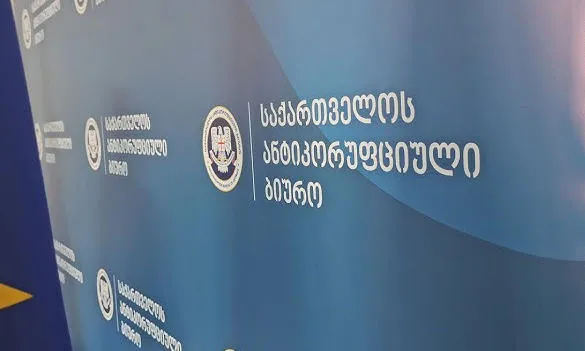
Parliament Speaker Shalva Papuashvili announced today that three state institutions — the Anti-Corruption Bureau, the Personal Data Protection Service, and the Business Ombudsman’s Office — will be abolished in 2026 as part of an institutional restructuring.
He claimed that the Anti-Corruption Bureau and the Personal Data Protection Service will cease to exist on March 2, 2026, with all their functions transferred to the State Audit Office. Meanwhile, the Business Ombudsman’s Office will be dissolved on January 1, 2026, and its responsibilities will move under the Ministry of Economy.
Papuashvili said the goal is to strengthen the constitutional architecture of public administration and optimize state resources. He noted that anti-corruption efforts already involve multiple bodies — including the Government Administration’s Efficiency Department, the State Audit Office, the Anti-Corruption Agency of the State Security Service, and the Prosecutor’s Office.
Currently, the Anti-Corruption Bureau’s primary role is the collection and monitoring of declarations filed by public officials, political parties, and NGOs. According to Papuashvili, consultations with the government produced a consensus that these functions are more appropriately housed in the State Audit Office, which holds “a higher and more independent constitutional status.”
The same rationale, he said, applies to the Personal Data Protection Service, whose duties will also be integrated into the State Audit Office. Papuashvili argued that the Audit Office’s level of institutional independence better aligns with international standards.
Regarding the Business Ombudsman, Papuashvili stated that shifting the institution under the Ministry of Economy will allow swifter responses to business-sector challenges and improve coordination at the political level.
Overall, he said the reform package will align governance structures with the constitutional framework, clarify responsibilities, simplify institutional functions, and save the state an estimated 20 million GEL annually.