Georgia’s Ministry of Internally Displaced Persons from the Occupied Territories, Labour, Health and Social Affairs has announced a comprehensive audit of the unified database of socially vulnerable families, amid concerns that a significant number of beneficiaries may no longer qualify for state assistance.
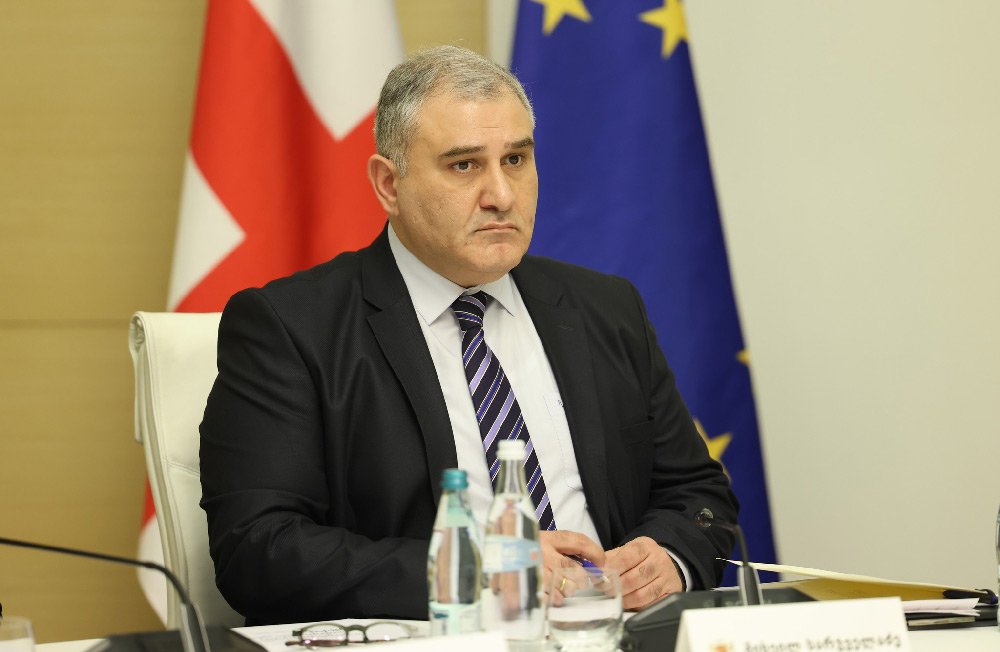
Health Minister Mikheil Sarjveladze made the announcement at a press briefing today, stating that the review aims to ensure that social assistance reaches those who genuinely require support.
“At present, the number of families registered in the unified database of socially vulnerable households and receiving financial assistance exceeds 185,000, with a combined membership of some 710,000 individuals. In total, nearly 400,000 families — approximately 1,300,000 individuals — are registered in the database,” Sarjveladze said.
Minister claimed that more than half of the families listed in the database do not receive direct financial allowances but may benefit from various concessions provided under current legislation, including healthcare, utility, and education-related benefits.
Sarjveladze noted that delays in household verification procedures, compounded by both “objective and subjective factors,” have contributed to outdated information remaining in the system.
In particular, he highlighted that during the COVID-19 pandemic, a de facto moratorium on household verifications was introduced, with only rare exceptions. As a result, the database continues to include families whose financial circumstances have since improved.
“Thankfully, some individuals and families registered in the database no longer require state social support,” he said.
The Minister also suggested that the database has at times been used for political speculation, particularly regarding the number of registered vulnerable households.
Since 2012, the eligibility threshold score for receiving assistance has been raised twice, allowing more families to qualify for benefits. Sarjveladze stated that had the threshold not been adjusted, the number of recipient families would currently stand at no more than 120,000, rather than the existing 185,000.
The unified database operates on a scoring system that evaluates households based on income, property ownership, assets, and living conditions. Families falling below a designated threshold are eligible for monthly cash assistance and other social benefits.
The Minister revealed several examples of what he described as “anomalous” cases uncovered during preliminary reviews. According to Sarjveladze, one beneficiary family recorded a combined income of several tens of thousands of lari within a three-month period. Another purchased multiple vehicles worth several tens of thousands of lari in a single year. One household reportedly acquired a brand-new 2025 model vehicle, while another secured bank loans amounting to several hundred thousand lari.
While the Minister acknowledged that such cases do not represent the majority, he emphasized that the number is “not insignificant.”
“In most instances, what we are dealing with are households whose material circumstances have improved over time and whose situation is no longer such that the state ought to be providing them with financial assistance,” Sarjveladze concluded.
The comprehensive audit is expected to involve renewed verification visits and cross-checking of financial data to reassess eligibility. Officials have not yet specified a timeline for completion of the review.
The initiative comes amid broader fiscal discussions regarding efficient allocation of social spending, as the government seeks to balance social protection commitments with budgetary discipline.
Further details regarding the audit mechanism and potential policy adjustments are expected in the coming weeks.