Azerbaijan has launched a sweeping crackdown on social media users under newly enforced regulations targeting what authorities describe as “immoral” online content. Critics and human rights groups warn that the vague language of the law is being used to silence dissent and further restrict freedom of expression in the country.
The legislation, which came into effect earlier this year, prohibits the dissemination of content deemed to violate “public morality,” “national values,” or “family ethics” on digital platforms. Officials argue that the measure is designed to protect cultural standards and safeguard minors from harmful material. However, since its implementation, several bloggers, activists, and independent commentators have reportedly been detained or fined for posts critical of government policies.
Local media report that individuals have been questioned or arrested for videos and commentary published on platforms such as Facebook, TikTok, and YouTube. In a number of cases, authorities cited “immoral conduct” or “disrespect toward state institutions” as grounds for prosecution. Legal experts note that the law does not clearly define what constitutes immorality, granting enforcement agencies broad discretion.
International watchdog organizations have expressed concern that the regulation may serve as a tool for political repression. They argue that Azerbaijan has a history of limiting independent journalism and online activism, particularly ahead of politically sensitive periods. According to rights advocates, the new ban expands existing restrictions on defamation and public order into the digital sphere, effectively tightening state control over online discourse.
Government representatives, however, reject allegations of censorship. Officials maintain that the regulation is consistent with national legislation and international norms aimed at combating hate speech, cyberbullying, and the spread of harmful content. They insist that enforcement actions target violations of ethical standards rather than political views.
Opposition figures contend that the timing of the crackdown is significant, pointing to growing economic challenges and increased public criticism on social media. Analysts suggest that digital platforms have become one of the few remaining spaces for open debate in Azerbaijan, making them a focal point for regulatory pressure.
The recent detentions mark a new phase in the country’s approach to online governance, reflecting broader regional trends toward stricter digital oversight. Observers say the long-term impact will depend on how broadly the law is applied and whether courts provide meaningful checks on enforcement.
As investigations continue, civil society groups are calling for greater transparency and clearer legal definitions to prevent arbitrary application of the ban. The situation is likely to draw further scrutiny from international partners and rights organizations in the coming months.
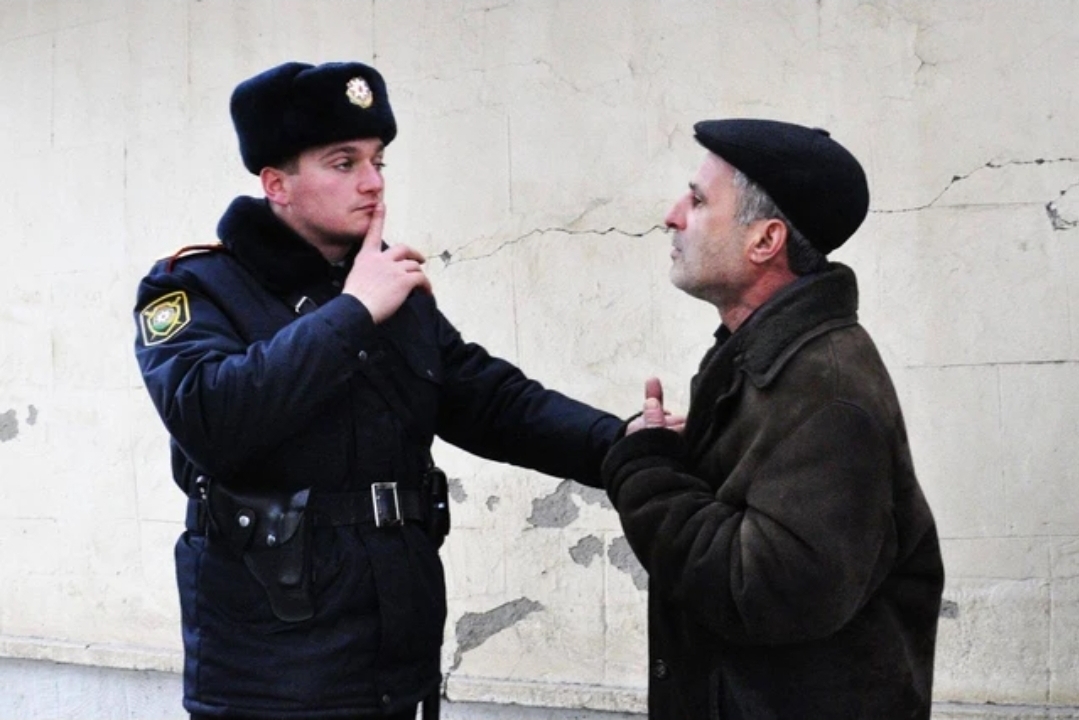
Header image: An Azerbaijani police officer telling a citizen to be quiet in 2019. Photo courtesy of Fargana Novruzova