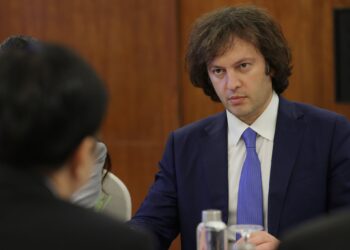
Kakhaber Bekauri, Chair of the Georgian Communications Commission, stated that recent amendments to Georgia’s broadcasting law are to tackle disinformation and restore clear boundaries between factual reporting and opinion. Speaking on Imedi TV, Bekauri said the reforms respond to long-standing weaknesses in media self-regulation that allowed ethical standards to be applied inconsistently.
Under the revised rules, broadcasters are now legally required to deliver accurate, fact-based news, ensure fairness and impartiality and clearly distinguish facts from commentary. The amendments also strengthen the right of reply, obliging media outlets to give individuals who are the subject of accusations a chance to respond.
Bekauri emphasized that these standards are not new in principle, but have now been made enforceable due to repeated failures of voluntary compliance. He noted that the commission modeled the changes on British media regulation, drawing specifically on the practices of the UK regulator Ofcom to guide enforcement.
The commission stated that implementation is already in progress. Since the amendments came into force, 11 complaints have been reviewed, around half of them submitted by organizations that had previously opposed the legislation. Bekauri stressed that the goal is prevention rather than punishment, pointing out that sanctions against major broadcasters have been rare over the past five years.
Placing the changes in a broader context, Bekauri pointed to the liberalization of Georgia’s media environment over the past decade. The transition to digital broadcasting and the removal of the traditional licensing regime have significantly expanded media pluralism. Georgia currently has 21 national broadcasters and more than 100 television channels while new entrants can begin broadcasting through a simplified authorization process completed within 10 days.