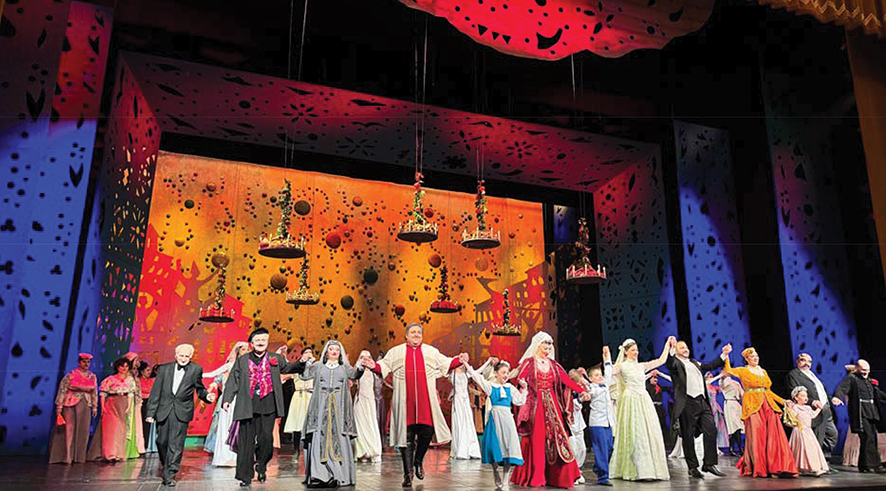
The New Year at the Tbilisi Opera and Ballet Theater began with a gesture of confidence: the reopening of the season through Victor Dolidze’s ‘Keto and Kote.’ This choice carried weight. The opera occupies a paradoxical place in Georgian culture—deeply loved, widely quoted, endlessly recognizable, and yet staged with surprising rarity even at home. To begin the year with it signaled an embrace of clarity, humor, and musical intelligence as guiding principles for what follows.
For international audiences, ‘Keto and Kote’ enters the repertory as a discovery. For Georgian listeners, it returns as a familiar voice whose precision remains intact. This production approached the work as living theater, presenting it with trust in its craft and respect for its internal logic.
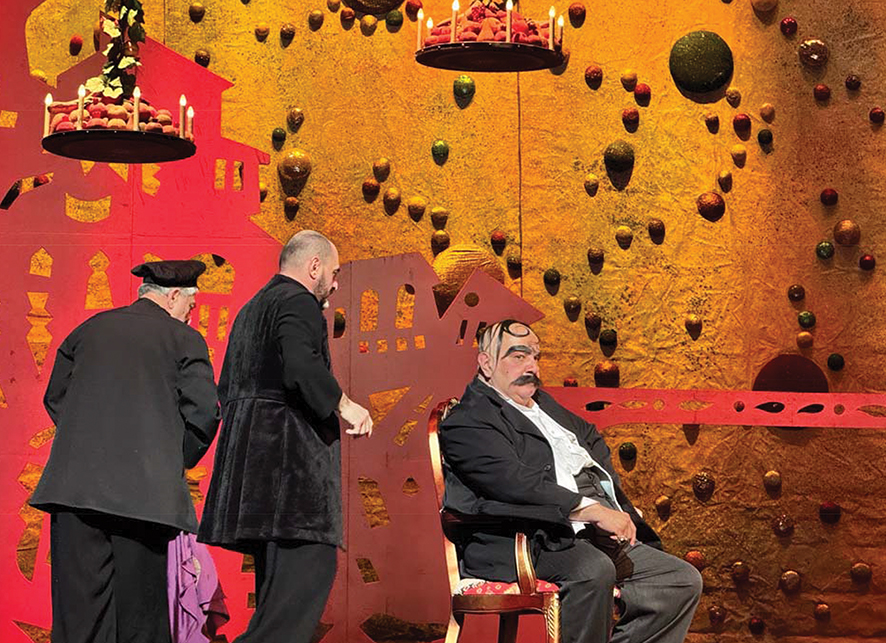
Premiered in 1919, Keto and Kote crystallizes a specific urban imagination. Its lineage runs through the world of Tbilisi’s theatrical folklore, where matchmakers govern social choreography and marriage unfolds as strategy, ritual, and performance. The story circles two young lovers navigating a network of intermediaries—chief among them the two elderly matchmakers, Barbale and Babusi—figures who command authority through experience rather than power.
Dolidze’s achievement rests in shaping this material into an operatic organism that breathes conversational rhythm. The libretto moves with the cadence of spoken Georgian, and the music listens attentively. Comedy here functions as a mode of knowledge. Every joke carries sociological density.
The score resists decorative folklore. Dolidze constructs his musical grammar from intonation patterns, rhythmic asymmetries, and melodic curves derived from urban speech. Arias unfold as expanded conversations; ensembles behave like social negotiations in sound.
Harmonically, the opera inhabits a flexible tonal world enriched by modal inflections. These shifts illuminate character psychology rather than scenic color. Rhythmic articulation carries much of the dramatic energy: syncopations suggest hesitation, anticipation, and cunning. Orchestration favors translucence, allowing text to remain legible while instrumental lines comment quietly from the margins.

Comic timing operates structurally. Phrases stretch and contract with the elasticity of dialogue. Pauses speak. Cadences arrive with human timing rather than architectural inevitability. This attentiveness to temporal nuance gives the opera its enduring freshness.
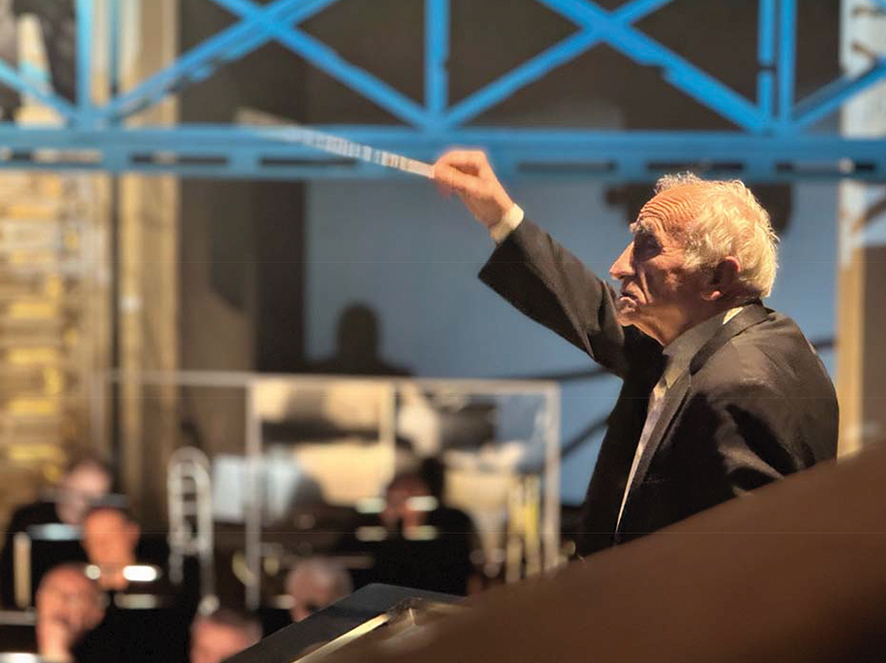
At the podium, Revaz Takidze shaped the evening with authority grounded in listening. The orchestra moved as a responsive ensemble, sustaining buoyancy while preserving detail. Tempi reflected the inner pulse of the drama; articulation sharpened humor; lyricism unfolded with restraint. The reading trusted Dolidze’s balance between wit and warmth, allowing the score’s intelligence to guide the room.
As Kote, Armaz Darashvili shaped his role through articulate phrasing and supple lyricism. His performance prioritized clarity of intention, allowing charm to arise from musical line rather than effect. Mariana Beridze offered a Keto of vocal warmth and emotional agency, sustaining lyrical flow while maintaining dramatic alertness.
The supporting cast enriched the social fabric. Vakhtang Jashiashvili as Prince Levan and Manana Lordanishvili as Maro grounded the narrative with vocal authority and stylistic poise. Legi Imedashvili, Irakli Mujiri, and Tamaz Saginadze animated the operatic community with rhythmic precision and characterful presence.
The evening’s gravitational center emerged through the matchmakers. Irina Aleksidze (Barbale) and Irina Sherazadishvili (Babusi) embodied lived knowledge. Their performances carried layers of irony, care, and calculation, rendered through vocal color and timing refined to near chamber-music intimacy. These figures articulated a collective memory, speaking through music shaped by decades of theatrical wisdom.
Beginning the season with Keto and Kote reframed celebration as attentiveness. The opera affirms a cultural idea of joy grounded in precision and empathy. Its humor reveals social mechanisms; its music preserves the sound of a city thinking aloud. Such qualities explain the work’s enduring place in popular affection and the sense of injustice surrounding its infrequent appearances.
This New Year’s opening restored the opera to its natural habitat: a shared space where intelligence and pleasure coexist without friction. Keto and Kote spoke fluently to those who know every turn and to those encountering it for the first time. The result felt quietly definitive—a reminder that operatic tradition can renew itself through works that understand how people listen, speak, and live together.
Review by Ivan Nechaev