Russia on Wednesday sharply condemned the United States’ seizure of two oil tankers tied to Venezuela, branding the actions a violation of international law and an act of “piracy,” as tensions between Moscow and Washington escalate amid an intensifying US campaign to control Venezuelan oil exports.
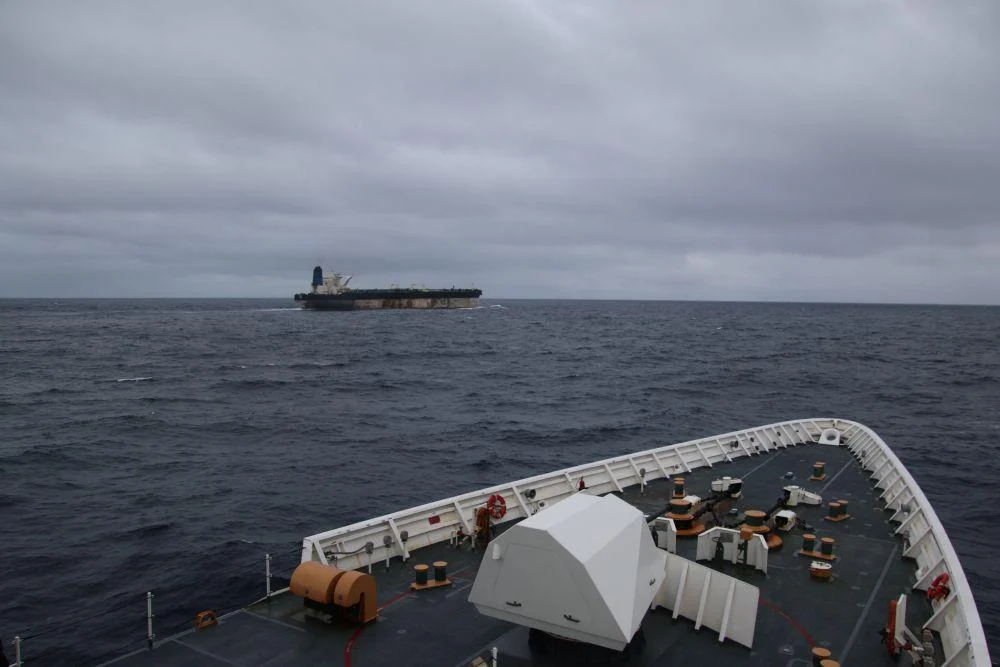
The US confirmed that its forces intercepted two tankers linked to Venezuela on January 7, including a Russian-flagged vessel, Marinera, and a second ship, the Sophia, as part of a broader enforcement operation targeting oil shipments that Washington says violate sanctions and help sustain the regime of Venezuelan President Nicolás Maduro.
The seizures come in the wake of an already extraordinary US military operation against Venezuela, in which US special forces captured President Maduro on federal drug and narco-terrorism charges in a raid earlier this week, prompting global criticism and diplomatic fallout.
Moscow denounced the seizure of the Marinera as an unlawful use of force in international waters and inconsistent with established maritime law. Russia’s transport ministry cited the 1982 United Nations Convention on the Law of the Sea, asserting that no state has the right to use force against ships properly registered under another nation’s flag. Russian lawmakers described the action as “piracy of the 21st century,” accusing the United States of acting outside legal norms.
A senior Russian lawmaker, chairman of the International Affairs Committee of the State Duma, said sanctions cannot justify such seizures under international law and warned that Washington’s conduct undermines legal order at sea. Russia also demanded the “proper and humane treatment” of the Russian crew and their prompt repatriation.
Moscow’s public response appeared unusually terse at first, in part because the seizure occurred on a Russian public holiday, but state news agencies quickly amplified government criticism once the details were confirmed.
US officials said the operations were part of a sustained effort to enforce sanctions on Venezuelan oil shipments and disrupt what they call a “shadow fleet” of vessels used to evade restrictions and sustain the Maduro government. The Marinera—previously named Bella 1—had been tracked for more than two weeks across the Atlantic and is alleged to have switched identities and flags in an apparent attempt to evade enforcement and deliver sanctioned cargoes.
US authorities assert that the operation against the two tankers was undertaken with legal warrants issued under US law, and that the vessels were targeted for their alleged roles in sanction-busting activities. Homeland Security and Department of Justice officials say the interdictions are designed to prevent illicit oil flows and protect national security interests.
The seizure marks one of the most dramatic recent flashpoints in US–Russia relations, which remain strained over a range of issues including the war in Ukraine and competing influence in the Global South. Moscow has supported Caracas economically and militarily for years, while Washington has intensified pressure through sanctions, military deployment, and now direct interdiction of tanker traffic.
International reactions to the broader US strategy have been mixed. China slammed the moves as “bullying,” accusing Washington of violating Venezuelan sovereignty. Other foreign governments have voiced concern about legal precedents and the safety of maritime commerce, while some US allies have cautiously supported efforts to clamp down on illicit oil trade.
Analysts say the tanker seizures could further complicate already fraught relations between Washington and Moscow, even as both capitals navigate other global hotspots. With Venezuela possessing some of the world’s largest crude reserves, control over its oil exports has significant economic and geopolitical stakes.
Image: An image taken from the US Coast Guard Cutter Munro shows the Marinera oil tanker.
Credit: US European Command