Tbilisi’s art scene has been evolving rapidly in recent years, and the local art market is gradually entering a more professional and sustainable stage. The newly opened Art Foundation Anagi (AFA) has already emerged as a quiet but influential trendsetter, introducing institutional rigor and international standards to Georgia’s art market. Its latest initiative, The Art Club Tbilisi, marks a decisive step toward a broader shift in how Georgian art understands its place both at home and on the global stage.
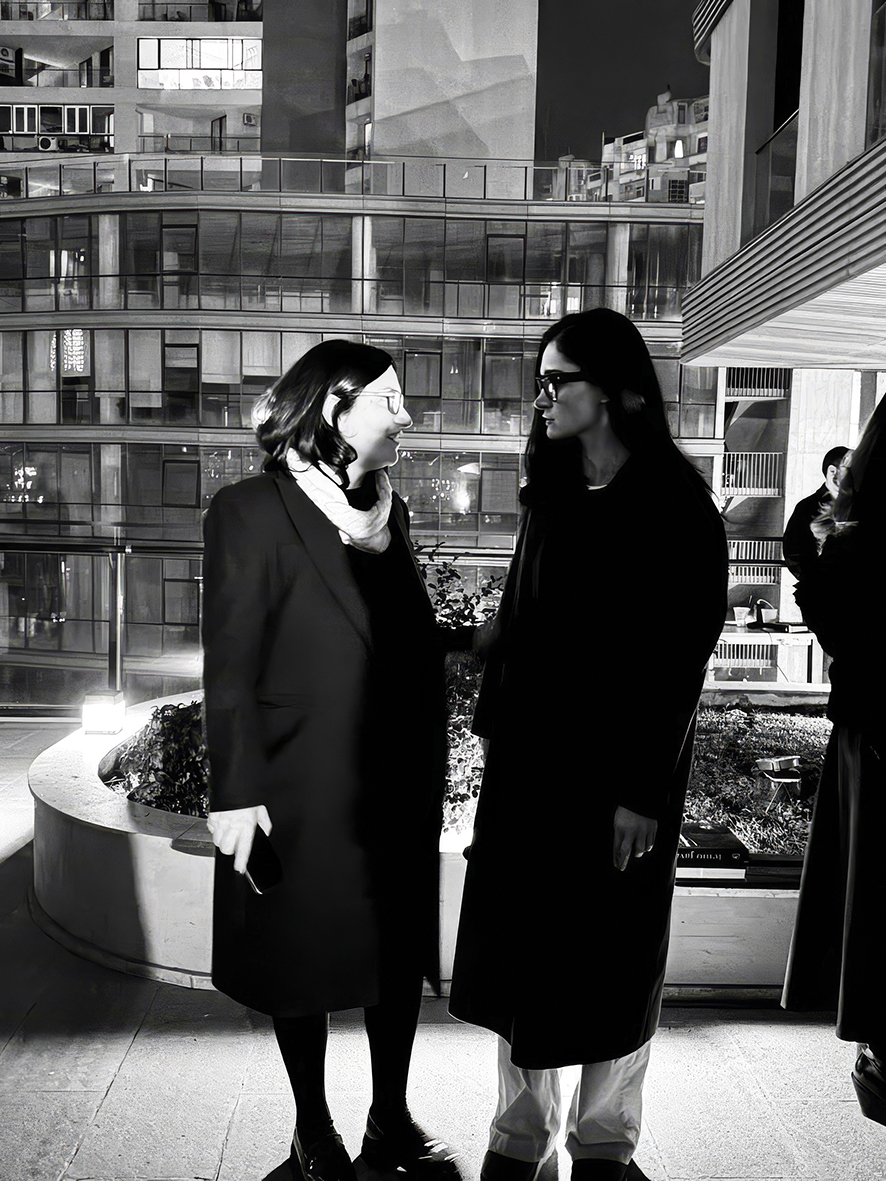
On a crisp December evening, the club’s official debut felt more like New York than Tbilisi. Against the shimmer of the city’s night lights, a private rooftop at the Park Home Vake complex brought together art collectors, business representatives, and enthusiasts, all drawn by the anticipation of something new. Membership certificates were formally presented, welcoming the inaugural members into an exclusive circle committed to promoting Georgian art and approaching collecting with a professional, structured perspective.
If you want to become an art collector, you must be systematic – Michael North.
Among the club’s first honorary members is Michael North, a capital markets expert and former executive at leading international investment banks with more than three decades of experience. North also maintains a notable collection of works by Georgian artists. He has been visiting Georgia since 1997 and recalls being struck by how a small nation with a turbulent history had produced such a wealth of remarkable painters.
“At that time, there were many prominent artists, but almost no market,” he says. “They were trying to find collectors or investors, but the infrastructure simply didn’t exist. What I see today is very different.”
Over the years, North has closely followed developments in Tbilisi, observing the steady growth of exhibition audiences and the increasing number of people engaging with art, learning, and exploring.
While he is impressed by this emerging audience, he notes that the culture of belonging to art clubs or museum circles is still new in Georgia and requires further cultivation. The evolution, he emphasizes, is not merely aesthetic – it is about nurturing an intellectually curious public that thinks critically.
Our goal is to serve as a bridge between Georgia’s well-preserved cultural past and its future, safeguarding its identity while fostering growth. This is the message our foundation carries and is built upon – Thea Goguadze-Apfel.
“Modern art may seem difficult to understand, but it is a development of ideas, culture, and society, and an improvement in the understanding of life generally,” he explains. “You encounter all aspects of life in the exhibitions. Art is also an element of society-building, and Georgia still needs this kind of society-building.”
When it comes to collecting, North is unequivocal: passion alone is not enough, particularly when art intersects with wealth.
“If you want to become a collector, you must be systematic,” he insists. “Instead of relying solely on personal preference, it’s essential to engage with galleries and seek professional advice. That guidance helps you understand what is appropriate, especially when collecting is linked to investment or wealth management.”
This emphasis on expertise and structure lies at the heart of Art Foundation Anagi’s broader vision. Observers at the launch noted that, in a remarkably short time, the foundation has introduced new expectations and professional standards into Georgia’s art ecosystem. While Georgian art is increasingly stepping onto the global cultural stage, many argue that securing lasting international recognition will require institutional discipline, adherence to global standards, and sustained, long-term effort.
Art is an element of society-building. Georgia still needs this kind of society-building – Michael North.
Thea Goguadze-Apfel, co-founder of Art Foundation Anagi, echoes this view. She says, creating a collection of international value, demands far more than refined taste.
“It requires professional vision, institutional expertise, and the right infrastructure,” she explains.
Membership in The Art Club Tbilisi includes close collaboration with the foundation’s curators, grounded in research and scholarly practice and deep market expertise. The objective is not only to build private collections of international standing, but to ensure their professional management over time. According to the founders, such collaboration adds cultural and intellectual depth to private collections and ultimately enhances their financial value.
The club itself forms part of a larger initiative known as AFA Creative Capital, conceived as Art Foundation Anagi’s first major long-term project. Creative Capital is envisioned as an inclusive community, extending beyond collectors to organisations, individuals, and younger generations. Its aim is to promote Georgian art and culture, establish art as a legitimate investment class, attract capital into the creative industries, and increase the creative economy’s share within Georgia’s broader economic landscape.
The initiative is also designed to engage wealth management professionals, family offices, private collectors, and other stakeholders interested in art as both cultural and financial capital, reflecting a growing awareness of art’s role within sophisticated asset management strategies.
These institutional developments unfold against the backdrop of a rapidly evolving local art scene. In recent years, Tbilisi has witnessed a surge of new galleries, many founded and led by a younger generation of dynamic, well-educated, and globally connected Georgian women gallerists. Their efforts have steadily increased the visibility of Georgian artists at major international art fairs and exhibitions. Yet, despite these advances, significant challenges remain, particularly in establishing robust legal frameworks, formalizing art investments, and introducing supportive tax incentives.
The gallerists are clearly asserting their influence. This year, a landmark moment arrived when London’s prestigious Bonhams staged the first-ever auction devoted solely to Georgian art. The event decisively freed Georgian artists from the long-standing, ambiguous post-Soviet categorization that had often lumped them together with Russian art. Beyond boosting the international visibility of Georgian creators, the auction has generated scholarly attention, heightened commercial interest, and opened new avenues for the global market to engage with Georgian works.
The “decoupling” initiative was spearheaded by the same figures now driving what many describe as a Georgian “art market revolution” through Art Foundation Anagi.
For Michael North, these developments place Georgia firmly within an international context.
“In Paris, London, or Berlin, being part of such clubs is completely natural,” he says. “In Frankfurt, where I come from, I’m a member of the Städel Club. These communities matter; people value them deeply. I believe those who join The Art Club Tbilisi will be in very good hands, especially as international connections between clubs continue to grow.”
With the launch of The Art Club Tbilisi, Georgia’s art market appears to be entering a more deliberate and professional phase, one defined less by individual enthusiasm and more by institutions capable of sustaining long-term cultural and economic value.
While structural developments matter, the heart of Art Foundation Anagi lies in a larger vision. As Thea Goguadze-Apfel notes:
“Moving past the technical details, our goal is to serve as a bridge between Georgia’s well-preserved cultural past and its future, safeguarding its identity while fostering growth. This is the message our foundation carries and is built upon.”
By Team GT