During an official visit to China this week, Georgia and the People’s Republic of China reaffirmed their strategic partnership and explored ways to expand cooperation across trade, infrastructure, tourism, and investment. The visit coincided with Georgia’s role as guest of honor at the China International Import Expo (CIIE) in Shanghai, where more than 40 Georgian companies showcased products and investment opportunities.
At the Expo’s opening ceremony, Georgian Prime Minister Irakli Kobakhidze and Chinese Premier Li Qiang officially opened the Georgian exhibition space. The display highlighted Georgia’s cultural heritage, unique alphabet, traditional wine-making, tourism potential, and culinary traditions. Visitors could attend master classes, taste local wines, and enjoy cultural performances, giving both Chinese and international attendees a firsthand look at Georgia’s offerings.
Georgia has participated in the CIIE for eight consecutive years, but this year’s guest-of-honor status marked a notable milestone in bilateral relations. The Expo, first held in 2018, has become a key platform for international trade, reflecting China’s efforts to open its domestic market and promote global trade integration.
Expanding Trade and Economic Cooperation
China is one of Georgia’s most significant trading partners. Since the Free Trade Agreement between the two countries came into effect in January 2018—covering nearly 95 percent of Georgian exports—bilateral trade has grown steadily. According to Georgia’s Ministry of Economy, trade turnover reached USD 1.6 billion in the first nine months of 2025, a 15 percent increase from the same period in 2024.
Georgia exports wine, mineral water, nuts, copper ores, and agricultural products to China, while importing machinery, electronics, textiles, and construction materials. While the trade balance favors China, Georgian officials note that the free trade arrangement has improved access for local producers and encouraged diversification of exports.
Investment from China is also on the rise. In the first half of 2025, Chinese direct investment in Georgia reached USD 7.43 million, a 229 percent increase compared to the same period in 2024. Although modest in absolute terms, the figures indicate growing interest in Georgian markets. Authorities have identified energy, logistics, transport, and hospitality as priority sectors for future investment.
Infrastructure and Connectivity
Transport and logistics were central topics during discussions. Both sides reaffirmed their commitment to developing the Middle Corridor, a trade route linking China to Europe through Central Asia and the South Caucasus.
Data from Georgia’s transport agencies show that container traffic via the Middle Corridor rose 71 percent in January–August 2025 compared to the same period in 2024, while cargo volumes have grown more than fifteenfold since 2023. Georgian officials see this as evidence of the corridor’s expanding strategic importance and Georgia’s potential role as a transit hub between Asia and Europe.
Ongoing infrastructure projects—including the Anaklia Deep-Sea Port, modernization of the East–West Highway, the Black Sea submarine cable project, and the Baku–Tbilisi–Kars railway—are key to this vision. The government says these initiatives will enhance regional connectivity, support freight transport, and attract further investment in logistics.
Tourism and Cultural Exchange
Tourism has become a growing component of China–Georgia relations. Chinese visitors to Georgia increased by 45 percent in the first three quarters of 2025, reflecting better air connectivity and targeted promotional campaigns. Georgia aims to promote cultural heritage, wine tourism, and nature-based experiences to attract more Chinese travelers.
During meetings in Shanghai and Beijing, Prime Minister Kobakhidze emphasized that “friendly relations and mutual respect” form the foundation of the partnership. He reiterated Georgia’s support for the One China principle and thanked China for recognizing Georgia’s sovereignty and territorial integrity.
Strategic and Political Dialogue
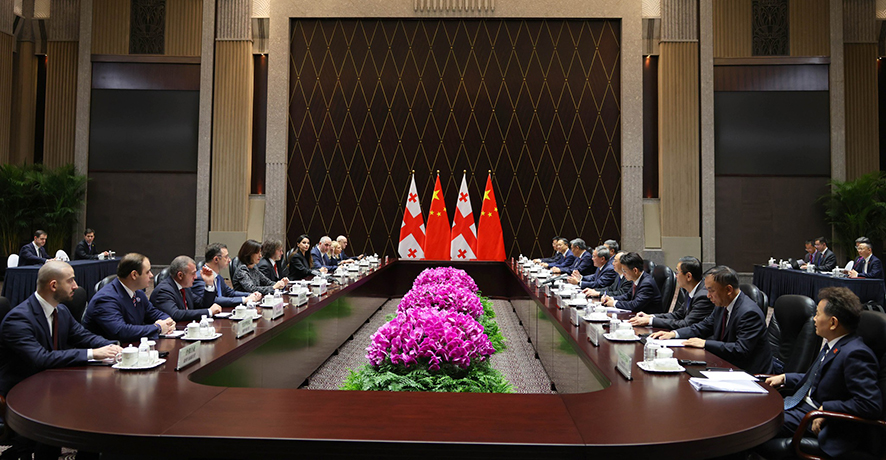
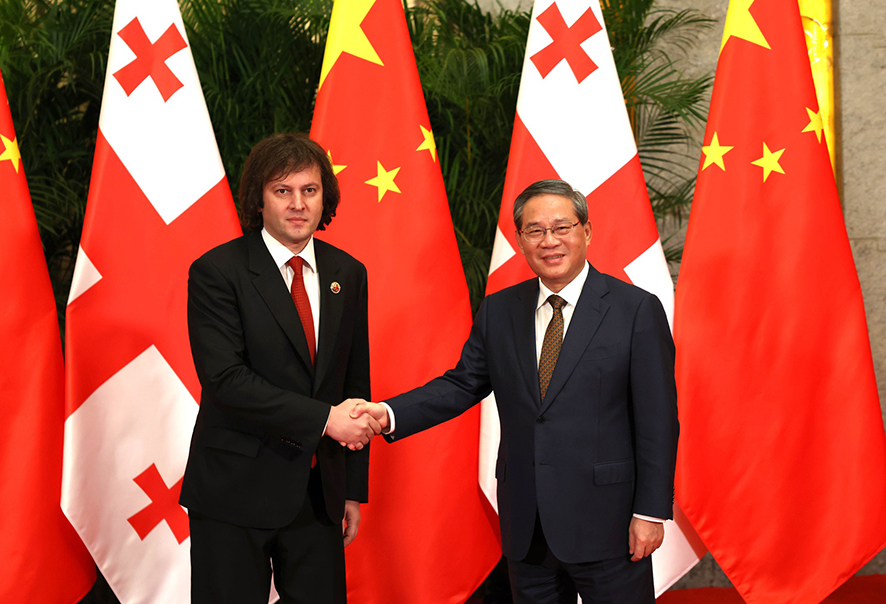
Kobakhidze and Premier Li Qiang discussed ways to strengthen the Strategic Partnership Agreement signed in 2023. Both leaders stressed mutual respect, equality, and non-interference as guiding principles. Cooperation within China’s Belt and Road Initiative was also highlighted, with Georgia positioning itself as a key contributor to regional connectivity.
Following these talks, several memorandums of understanding were signed between Georgian and Chinese ministries, covering areas such as the economy, environmental protection, and agriculture. Georgian signatories included Mariam Kvrivishvili, Minister of Economy and Sustainable Development; David Songhulashvili, Minister of Environmental Protection and Agriculture; and Paata Kalandadze, Georgia’s Ambassador to China.
Shanghai’s Mayor Kong Cheng met with the Georgian delegation, describing the relationship as “friendly and mutually beneficial” and expressing support for expanding cooperation in trade, innovation, and urban development.
Economic Context and Outlook
Georgia’s deepening engagement with China complements the country’s broader economic trajectory. According to the IMF, Georgia recorded one of the world’s fastest growth rates between 2021 and 2024, averaging 9.7 percent annually, with a projected 7.2 percent growth in 2025 and a medium-term outlook of 5.1 percent. Authorities credit this performance to stable macroeconomic management, diversified exports, and continued investment in infrastructure.
Georgia continues to balance partnerships between East and West, promoting itself as a reliable partner in the South Caucasus. Closer engagement with China expands trade routes and investment opportunities while supporting European integration efforts.
As Georgia positions itself as a bridge between Europe and Asia, both governments appear committed to keeping momentum in their partnership. With trade volumes growing, infrastructure projects advancing, and investment links strengthening, the relationship is moving beyond diplomatic formalities toward tangible, results-oriented cooperation.
The 2025 CIIE highlighted this shift: what started as symbolic participation in China’s trade fair has become a practical platform for business and cultural exchange. The next challenge will be translating this engagement into a more balanced trade relationship and stronger economic resilience for Georgia. For now, the message from Shanghai and Beijing is clear: China and Georgia are building a pragmatic, long-term partnership rooted in mutual economic interests and regional connectivity.
By Team GT