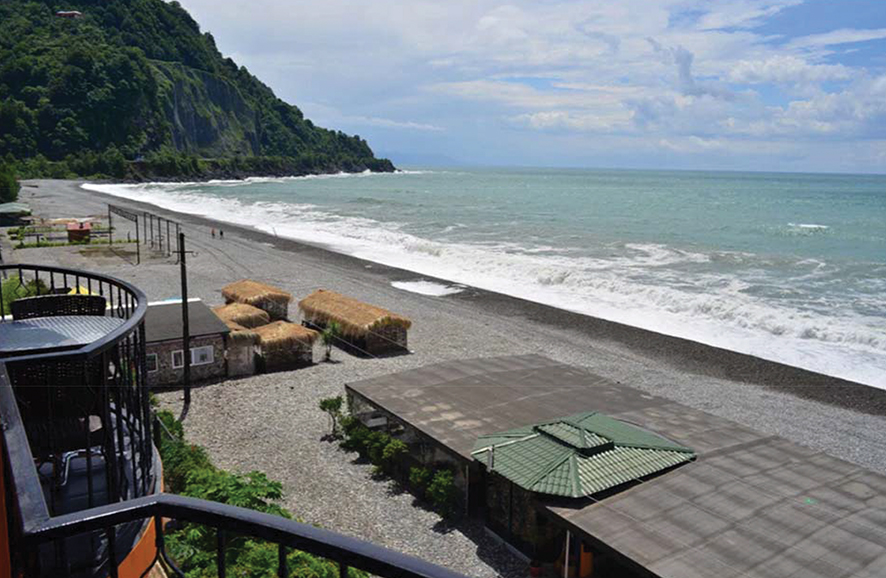
Returnees walking along the Gonio–Kvariati coastline just south of Batumi this summer will notice something unusual. Parts of the beachfront that were filled with small cafés, bars, and wooden bungalows are suddenly empty.
What is happening is not random. Authorities in Batumi have launched a new round of demolitions aimed at what they describe as “unauthorized coastal development,” continuing a longer effort to bring order to one of Georgia’s fastest changing seaside areas.
A coastline that changed faster than the rules
Gonio and Kvariati, near the Turkish border, were once quiet coastal villages. In recent years, they have become a popular escape for both locals and visitors looking for cleaner water and a calmer alternative to Batumi’s busy boulevard.
That popularity came quickly, and in many cases informally. Small seasonal cafés and beach bars started appearing along the shore. Many were meant to be temporary, but over time they became more permanent, often without full planning permission.
Locals and planners say this has created a familiar problem: tourism growing faster than regulation can keep up. The result is a coastline that feels increasingly crowded, with mixed structures built close to the water and little consistent planning.
Georgia has spent more than a decade building its tourism sector, with Batumi at the center of that strategy. But the pace of growth has made enforcement difficult, especially in beachfront areas where land use is complicated and often contested.
What is being removed
Batumi Municipal Inspection says 35 property owners were officially warned about violations linked to unauthorized structures. These included cafés, bars, kiosks, and small beachfront buildings.
Some owners took action themselves after receiving notices. Officials report that:
• 12 cafés and bars were taken down voluntarily
• Several kiosks were removed by their owners
• 15 remaining structures are now scheduled for forced demolition
City officials say the removals are being carried out under existing laws covering construction permits and coastal protection.
Not just Gonio–Kvariati
This is part of a wider cleanup effort that has been unfolding across Batumi over several months, including along the city’s central boulevard.
So far, authorities say the campaign has led to the removal of:
• About 80 small commercial structures
• Nearly 25 food and nightlife venues
• Four branded beachfront zones
• Around 10 extensions added to existing buildings
• A locally known structure often called the “wedding house”
The scale of the removals suggests a move toward stricter enforcement after years when rules were applied more loosely, especially during peak tourism seasons.
A balancing act between growth and space
The Black Sea coast in Georgia’s Adjara region is under increasing pressure. Erosion, waste management challenges, and rapid construction have all raised concerns about long-term sustainability.
In areas like Gonio–Kvariati, those concerns are even more visible. The coastline sits close to historically significant sites, including Gonio Fortress, adding another layer to the debate over what should be preserved, what should be built, and what should be removed.
For now, the changes are easy to see on the ground. Some familiar spots are gone, replaced by open stretches of beach again. For some, that feels like loss. For others, it feels like a reset.
What happens next will depend on whether enforcement continues after the summer season, or whether the pressure of tourism once again reshapes the coastline faster than the rules can keep up.
By Team GT