The past week in the Russia-Ukraine war saw continuing heavy fighting and pressure on both sides. On the ground, Russian forces pushed their spring offensive east of the Dnipro River, especially around Donetsk and the fortified urban belt. Ukrainian commanders said some Russian advances had slowed, and in several areas their troops had pushed the attackers back.
Ukraine’s commander-in-chief, Oleksandr Syrskyi, said Kyiv had regained about 480 square kilometers of territory since late January and retaken eight settlements in Dnipropetrovsk region and four in Zaporizhzhia region. He said, however, that Russian forces were still regrouping and continuing their offensive, while trying to secure more ground and create what he described as a buffer zone near Dnipropetrovsk. Ukrainian counterattacks near Hulyaipole and Oleksandrivka have slowed Russian movements around Pokrovsk, a key logistical hub in eastern Ukraine.
The frontline remains more than 1,200 kilometers long and heavily contested. Key cities like Kramatorsk, part of Ukraine’s “fortress belt” of defenses, remain major objectives for Moscow’s forces, even as Russia’s overall gains appear limited compared with earlier phases of the war.
This week, air attacks drew particular attention. On April 3, Ukrainian air defense units reported intercepting hundreds of incoming threats, including more than 500 drones and dozens of missiles, though not all were stopped and there were casualties and damage in multiple regions. Ukrainian officials said Russia is increasingly moving from night attacks to daytime strikes, a tactic meant to cause fear and disruption. Kyiv, Zhytomyr, and Kramatorsk were among the areas hit, and Kharkiv faced one of the heaviest bombardments since the war began.
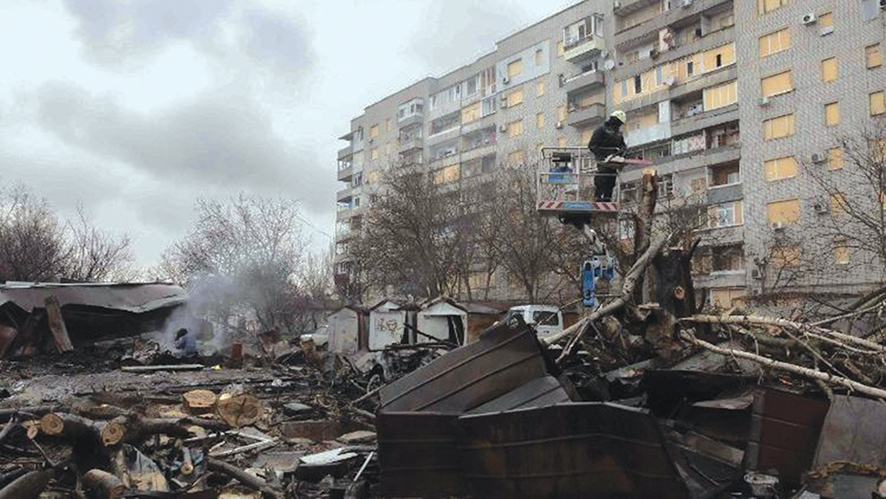
The civilian toll was heavy. In Odesa on April 6, a drone strike killed a woman and her two-year-old daughter along with another woman and wounded more than a dozen people, including a pregnant woman and two small children. Damage to homes, a kindergarten, and power lines left thousands of households without electricity. In southeastern Ukraine on April 7, attacks on a bus in Nikopol and shelling in Kherson killed several civilians, including elderly residents. Officials in Kyiv described this pattern as an escalation during the Easter period rather than a pause.
Russian bombardment also cut power to hundreds of thousands of households in northern Ukraine after damage to distribution infrastructure. Ukrainian leaders say Moscow is trying to wear down defenses and civilian morale by targeting energy systems.
Energy infrastructure was a central focus for Ukraine’s military response. Kyiv has stepped up long-range drone strikes against Russian energy facilities to reduce export revenue and disrupt military logistics. The NORSI refinery, Russia’s fourth-largest, suspended operations after a Ukrainian drone attack on April 5. Ukrainian strikes have also affected other refineries and oil export terminals, including damage at Ust-Luga and Primorsk on the Baltic Sea, and reported fires at facilities in Ufa.
Ukrainian forces also struck oil terminals in southern Russia, including at Novorossiysk, causing fires and damage that affected loading infrastructure. These actions have drawn strong responses from Russian authorities.
Ukraine’s long-range strikes caused disruption and injury inside Russia as well. Officials said a drone attack on Novorossiysk injured at least eight people including children, while air and drone attacks in Belgorod and in occupied parts of Donetsk and Zaporizhzhia caused major power outages and at least one civilian death. Another strike in southern Russia killed one person, injured four others, and set a foreign-flagged vessel on fire. Ukraine’s point is clear: if Russia continues striking Ukrainian cities and infrastructure, its own assets supporting the war are vulnerable.
Diplomatic efforts made little headway this week. President Volodymyr Zelensky said Ukraine is ready for a ceasefire if Russia halts strikes, including proposed pauses on attacks against energy infrastructure. He said a lasting peace would require meaningful security guarantees for Ukraine. Moscow rejected the narrower ceasefire offer while continuing to call for broader peace talks on its own terms. Recent US-brokered talks, which have taken place in Istanbul, Abu Dhabi, and Geneva, remain stalled with disagreements over territory, including Russia’s demand that Ukraine surrender control of parts of Donbas that Kyiv refuses to concede. A potential visit by US envoys was discussed, but no breakthrough emerged.
On the international front, most support for Ukraine this week came in the form of financial and procurement measures rather than major new weapons announcements. On April 3, the European Commission began steps toward a €90 billion support loan for Ukraine for 2026 to 2027, including planned budget support and defense industrial funding. Measures were also approved to speed up procurement of drones and other defense equipment. The EU estimates its total military support for Ukraine at nearly €70 billion and broader assistance at about €195 billion. Ukrainian officials continue to emphasize that air defense systems, especially Patriot-class systems, remain urgently needed.
Taken together, the week did not see dramatic shifts in the frontline or in diplomacy, but it did show how the war is unfolding. Russia continues to press its spring offensive and intensify aerial attacks that hit civilians and infrastructure, while Ukraine responds by reclaiming territory in some areas and targeting the energy and supply networks that underlie Russia’s war effort. The result is a conflict marked by heavy fighting in the east, increasing pressure on infrastructure, and slow or stalled diplomatic negotiations.
Compiled by Ana Dumbadze