A week after Georgia was added to a global human rights watchlist, concerns are intensifying over the country’s political trajectory. In an interview with GEORGIA TODAY, Tara Petrovic, Europe researcher for the CIVICUS Monitor, describes an unprecedentedly swift decline in civic freedoms, one she says should alarm not only Georgians, but observers across Europe.
When you look at Georgia right now, what worries you most about the direction it’s heading in?
The most alarming thing to watch unfold is the speed at which the situation is deteriorating. The CIVICUS Monitor has been tracking civic space conditions globally for almost ten years, and annually assesses 198 countries and territories, assigning one of five ratings. Georgia dropped two ratings, from the second-best, “narrowed,” to the second-worst, “repressed,” in just two years.
We’ve very rarely seen a decline that sharp and that quick anywhere in the world in all the time we’ve been monitoring.
When we talk about civic space, we mean how well fundamental rights to speak out, protest and organize are protected in law and practice. As that space narrows, it becomes more difficult to challenge new restrictions. Once it closes entirely, resistance becomes almost impossible. While protests in Georgia remain persistent, each new law appears designed to weaken people’s resolve.
Of all the new laws passed recently, which one do you think will have the biggest real-life impact on people, and how?
What makes the legislative changes adopted on March 4 so concerning is how broad their provisions are. Take the amendments expanding the definition of foreign grants: while they seem to be aimed at NGOs and media that depend on foreign funding, who are endlessly vilified by the government as destabilizing influences, the wording is so broad that enforcement is only limited by the authorities’ imagination. There is no guarantee anyone who’s politically active or outspoken in their criticism can’t be smeared as having been paid off by foreign powers and prosecuted.
And that vagueness is by design: the uncertainty leaves space for authorities to harass and intimidate whoever they want and impose bureaucratic obligations that are impossible to meet, while operating under the guise of defending the country’s sovereignty. Civil society and media will be most directly affected, as these and previous restrictions are an existential threat to their funding, but the chilling effect will impact many others. At this point, there’s no way of knowing how many people will actually be targeted for prosecution, but anyone who sees the impact will think twice about what they say and do. We’ve seen this play out to devastating effect in Russia.
The amendments threatening prison for “extremism against the constitutional order,” or creating the perception government institutions are illegitimate are dangerous in the same way.
Do you think there’s still a realistic chance to reverse these changes, or has something more fundamental shifted?
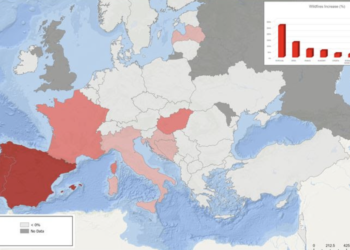
While Georgia stands out because of how quickly things have unraveled, our research shows freedoms are under attack worldwide. Even in Europe, countries seen as established democracies have seen their ratings slip in recent years. For example, France, Germany and Italy were all downgraded from “narrowed” to “obstructed” in our latest assessment. This shows that keeping civic space open requires constant vigilance, and the freedoms we have can’t be taken for granted.
On the other hand, the shifting nature of the civic space landscape also means positive change is always possible. Drifting towards repression is always an easier process than the reverse, but we do constantly see examples where people succeed in taking back civic space through grassroots organizing, campaigns and protests.
Trying to suppress dissent through force and intimidation never succeeds in bringing stability: it only deepens resentment and polarization. The Georgian authorities can choose to reverse course at any time, repeal these repressive laws and stop persecuting protesters and critics.
From what you’ve seen, how are these laws actually playing out on the ground for protesters, activists and journalists?
The endless amendments criminalizing common protest behaviors – face coverings, fireworks, blocking the road and the movement of pedestrians, at first with crippling fines, then administrative detention and imprisonment, are being put into practice relentlessly in a clear attempt to intimidate. A week ago, the media reported a second case of a protester facing imprisonment over repeated administrative offences under the new laws. In February, a dozen people reported having had their bank accounts seized for unpaid protest fines from 2025, despite having appealed the rulings.
Independent media and civil society are struggling to survive: since restrictions on foreign funding have been tightened, numerous CSOs and media outlets have reported inspections from anti-corruption authorities, frozen bank accounts and criminal investigations.
Two journalists and a photographer are currently on trial and could be punished with administrative detention for reporting from protests, with rulings expected at the end of the month. Among activists, there is a real fear of reprisals for speaking out publicly or engaging with international organizations, a shocking contrast compared to only a couple of years ago.
If things continue on this path, what could this mean for ordinary Georgians, and for the country’s future in Europe?
The implications could be far-reaching. The European Union has been very vocal in affirming that these laws and repressive practices are incompatible with Georgia’s aspirations for membership. According to the Commission, the country is now a “candidate in name only.”
Despite its current hostile rhetoric, the government maintains that EU integration is a realistic goal it continues to pursue: a goal that Georgians have traditionally overwhelmingly supported. But unless the authorities reverse course and de-escalate their assault on dissent, there is no path forward for Georgia to join the EU.
Interview by Katie Ruth Davies