
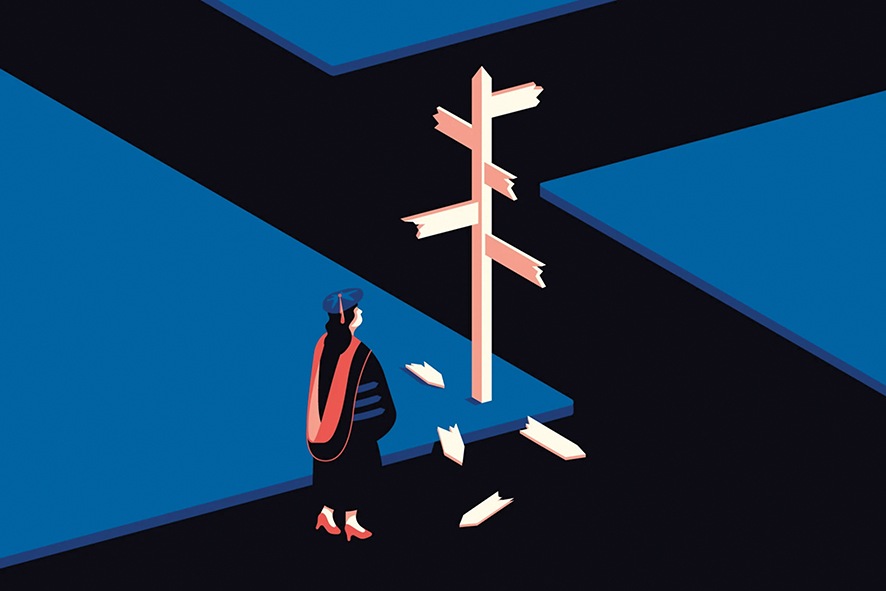
The ongoing heated controversy about the reform of the country’s system of education must be a weighty harbinger of something momentous coming up. Hence, this society seems to be quite alive and kicking. Well, it is truly “kicking,” judging by the tone, content, and vocabulary of all the public and governmental discussions on the topic. The opposition to the reform process is egregious, the exacerbation on both sides is obvious, and the prospect of the presumable consequences is indistinct. Meanwhile, the government is adamant about its intention to render the education of this nation as closely approximated to something useful, practicable, and profitable as possible, with the help of the available pedagogic and scientific cadres, material resources, and public enthusiasm for resuscitating the defunct system and changing it for the better.
It is presumed that the production of more technicians will help businesses reduce reliance on expensive foreign labor, which is not very widely used in Georgia, but which we cannot do without
The recently undertaken reform, among other thoroughly calculated goals, is aiming at underpinning the business sector and strengthening the economy by means of upgrading human resources, enhancing both academic freedom and teaching-learning responsibility, maintaining balanced state control, and eradicating formerly perpetuated inefficiencies. One of the government’s strongest arguments is that the free tuition policy for public universities will improve access to education and better match skills to labor market demands, but the opponents are trying to warn the administration against negative impacts, including deteriorated university independence and self-sufficiency, as well as increased costs for private education.
One of the most constructive probable effects that might very well be helpful for local business and the economy should be a rational orientation toward the labor market, which above all means bridging the gap between Skills & Knowledge and Demand & Supply. This seems to be absolutely critical for reducing high youth unemployment and helping businesses that are striving to find highly qualified people in indigenous labor markets. The next one is vocational education growth, meaning an increased focus on technical and vocational education and training and partnerships, linking all this with the private sector. Let’s call it the general development of the lifelong (continuous) education environment.

It is presumed that the production of more technicians will help businesses reduce reliance on expensive foreign labor, which is not very widely used in Georgia, but which we cannot do without either. The long-term productivity gain is just as important, containing modeling patterns that have the potential to improve the quality of education and increase long-term GDP growth. Increased public spending is also an issue to heed, which in practice means that the government intends to boost education spending to 6% of GDP. This could improve school infrastructure, teacher training, and overall educational quality.
So much for the likely positive effects of the reform. Let’s now have a thorough look at the latent negative impacts and risks. Certain international scholars are warning us that restructuring university funding and governance reduces autonomy, which is essential for a competitive, innovation-driven economy. The possibility of market distortion is not excluded either: the plan to fully fund public universities while stripping public funding from private ones might limit choices for students, decrease competition in the education sector, and drive up costs in private institutions.
Concerns exist that the reform might fail to foster critical thinking and instead promote emigration of talent due to, for instance, a lack of investment in research and low compensation for academic staff. Some fear the reforms may lead to a re-Sovietization of the education system, reducing international cooperation and damaging the quality of higher education, which would hamper the long-term competitiveness of the Georgian economy. These are just the heads-up points that deserve our thoughtful consideration.
Modern educational exigencies ask for extreme care and wisdom in considering what this nation really needs to undertake in the next fifty years to be successful
On the other hand, all these arguments are controversial, but still need to be taken into consideration, provided we want to make the reform as healthy and advantageous as our time of digital and technological progress demands. Modern educational exigencies are asking of us, the reform-doers, to be extremely careful and wisely considerate of what this nation really needs to undertake in the next fifty years (at least!), public-education-wise, in order to be successful.
To conclude, in terms of general education, the intention of introducing a new school model, possible mandatory uniforms, and enhanced security is aimed at stabilizing the system, but the impact on learning outcomes remains to be seen. Concerning higher education, the sector is facing major structural changes, raising concerns about the autonomy of private universities and the quality of education. Speaking about vocational training, this area is generally seen as something positive, with donor-backed initiatives aimed at strengthening skills in agriculture and other sectors.
In a word, there is nothing wrong with the ongoing educational reform in Sakartvelo being so extensively and bitterly contentious. This is probably the only way to arrive at where we want to be: the truth!
Blog by Nugzar B. Ruhadze