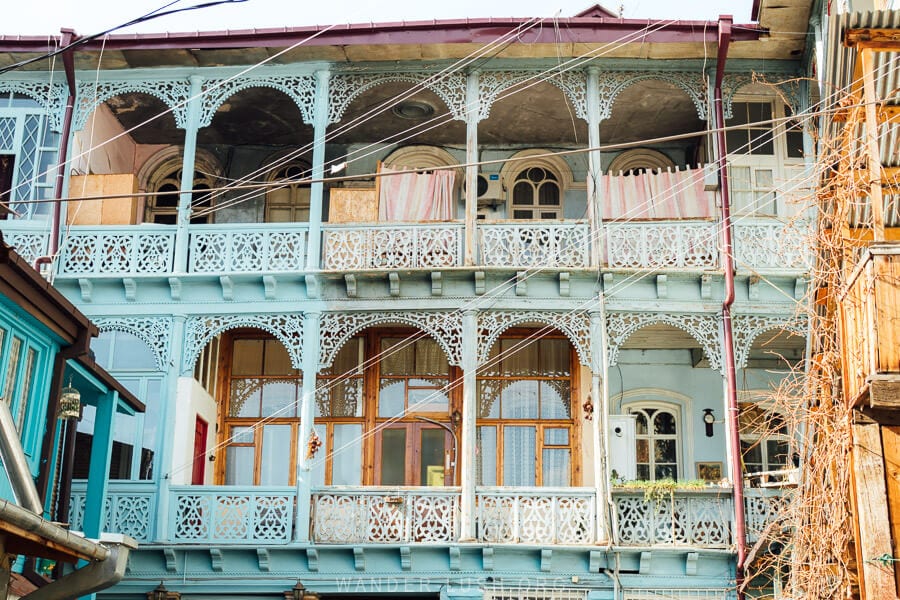
Tbilisi City Hall has launched a new program to buy out dilapidated residential buildings located within the capital’s cultural heritage protection zones, Mayor Kakha Kaladze announced at a municipal government meeting.
The initiative, which was part of the mayor’s election pledge, is designed to give property owners in historic districts an alternative option if they do not wish to wait for redevelopment or investor-led rehabilitation projects. Kaladze stated that the program provides residents with the opportunity to independently decide the future of their property and sell it directly to the municipality.
Eligibility criteria
Participation in the program is subject to several mandatory conditions:
- The residential building must be classified as Category IV or V dilapidated (high-risk structural condition).
- All property owners in the building must provide unanimous consent to participate.
- Demolition of the building must not pose a risk to adjacent structures.
If demolition could affect neighboring properties, the municipality is prepared to include adjacent landowners in the buyout program under the same conditions.
What will and will not be purchased
The municipality will purchase all legally registered private property units within eligible buildings, with several exceptions:
- Common ownership areas of apartment associations (entrances, corridors, stairwells, shared yards and other common-use spaces)
- Garages and parking spaces (the city operates separate programs to convert such areas into recreational spaces)
- Attics and terraces that are not renovated or used as living space
However, renovated attics and terraces used for residential purposes will be subject to buyout.
Property valuation and future use
All eligible properties will be assessed by the Levan Samkharauli National Forensics Bureau. Residential spaces will be valued as housing units while non-residential areas will be evaluated based on their actual condition.
Following acquisition, the municipality plans to prepare the territories for investment and future development aligned with urban planning standards and the architectural specifics of historic districts. The land will then be disposed of as outlined Georgian legislation.