An elite group of Georgian small and medium-sized enterprises (SMEs) is showcasing the latest developments in Georgia’s capital market and helping draw new investors to Tbilisi. These are companies that have issued bonds under the IFI-backed Enterprise Georgia’s Capital Market Support Program, a government response to the well-publicized problem for SMEs of finding affordable funds, particularly for growth or refinancing.
Georgia’s new SME entrants to its bond market seem more role models than typical for the program, but their range of activities will certainly augment the stock market’s corporate list. They are more medium-sized than small, and able to attract tens of millions with coupons of well under 10% on their dollar and euro-denominated bonds. The current star performers named within the framework of the program include microbank MBC, real estate management group Chavchavadze, commercial real estate developer MP Development, and outdoor advertising company Alma.
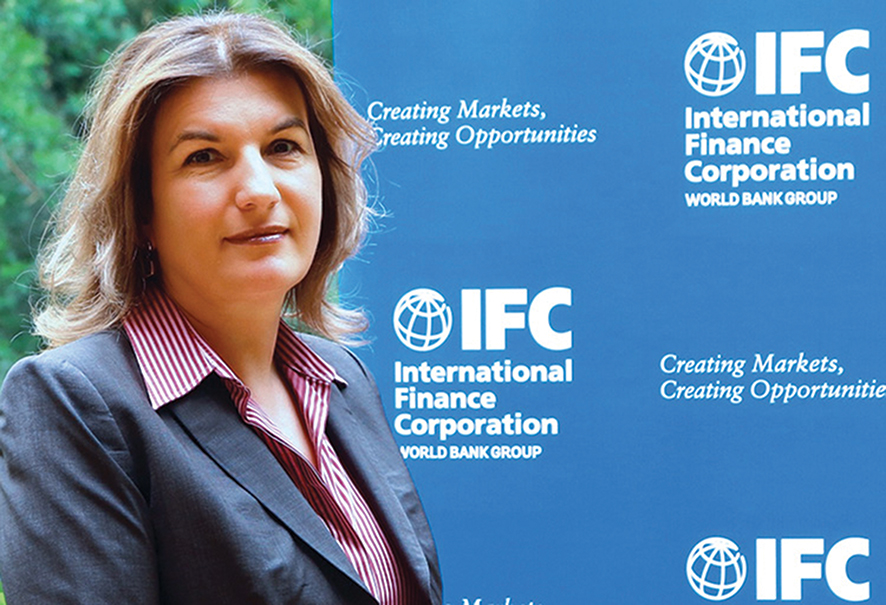
The background to the inauguration of SME bonds is that “…many smaller businesses still cite access to finance among their major constraints,” as stated by the IFC’s Regional Manager for the South Caucasus Ivana Fernandes Duarte. The high level of collateral needed to secure bank loans is one of the major obstacles for Georgian SMEs (since they are considered by the Georgian commercial banks to be high risk), which has also been detailed as a problem by the European Investment Bank.
Many smaller businesses still cite access to finance among their major constraints
Georgia has been persistent in its preference for bond rather than equity issuance for corporate fundraising. In Europe, equities have historically been the non-banking route to finance for SMEs, but this has changed since the 2008 financial crisis, and a range of mini bonds for SMEs has been introduced.
For any economy, SMEs are extremely important, as constantly emphasized by the major multinational development banks, including the EBRD, ADB, and others. The World Bank stated that they are “…the backbone of most economies…In developing countries, SMEs are central to economic diversification, productivity, and poverty reduction.” Globally, not just in Georgia, “they face persistent challenges in obtaining the financing needed to start, sustain, and grow.”
Very few, indeed, of their fellow Georgian SME sector peers will be able to follow the same path as these extremely profitable and very well-connected forerunners and solve their financial problems by issuing similar bonds, albeit co-financing is available on costs. A handful will—the ambition for the Capital Market Support Program is to raise 3 billion GEL in corporate bond issues by 2028 for 100 out of the tens of thousands of SME companies. However, despite its limited financial reach, the program does create an extensive circle of benefits, ranging from strengthening Georgia’s capital market by widening the financial instruments issued, extending the range of investments beyond major corporations, bringing in new industries, and deepening the country’s level of financial education.
Yet, at this stage, SME bonds seem unlikely to help with another major Georgian capital market problem: the lack of liquidity criticized by the EBRD, among other IFIs. Should the program reach its declared 100-company target, there could be a chance. But investors in most Georgian bonds seem ready to buy and hold, if the official available stock market trading figures give a correct picture. While trading seems moribund, the investor pool is deepening. Investor names mentioned in financial market reports have included the EBRD and IFC, and there are capital market report references to wealthy individuals from Georgia and abroad and local pension funds. Additionally, the yields on offer are attractive to international frontier funds.
SMEs and the Georgian economy
The importance to the banks of their SME loan business can be illustrated by the fact that at the end of last year, Bank of Georgia’s SME published loan portfolio stood at GEL 5 billion, having risen by 10% in the year, compared to its corporate banking portfolio of GEL 8.3 billion. Rates vary between banks, but checking online across the rates charged for a loan for 2025, the effective annual interest rate for GEL-denominated SME loans generally ranges from approximately 12% to over 16%, depending on the lender and specific loan product.
SMEs are vitally important to the Georgian economy, although the complexity of collecting accurate and comprehensive data leaves the numbers quoted ranging from around 100,000 to well over 200,000—in 2023, ISET had a figure of 248,170, with most doing wholesale or retail business. Figures from the Georgian statistical agency, Geostat, for last year state that SMEs accounted for 54.3% of the total business sector output—up by 11.6% on 2023—and represented 58.3% of business sector employment. The government said a year ago that they number 99.7% of the active businesses in the country.
It can thus be said that the attention for economic and social reasons being given to increasing funding options for the sector via bonds by Enterprise Georgia is vital. So far, within the framework of the agency’s Produce in Georgia capital market program, 13 issues by eight companies have been supported, 26 applications have been received, and the additional mobilized investment capital has exceeded 450 million GEL. The program, which started last year, helps businesses to not only structure bond issues as an alternative to bank finance, but also co-finances companies’ associated costs. To date, both domestic and foreign investors have been receptive to SME bonds, helped by the relatively high yields (on international comparisons) offered, which balance some of the risk.
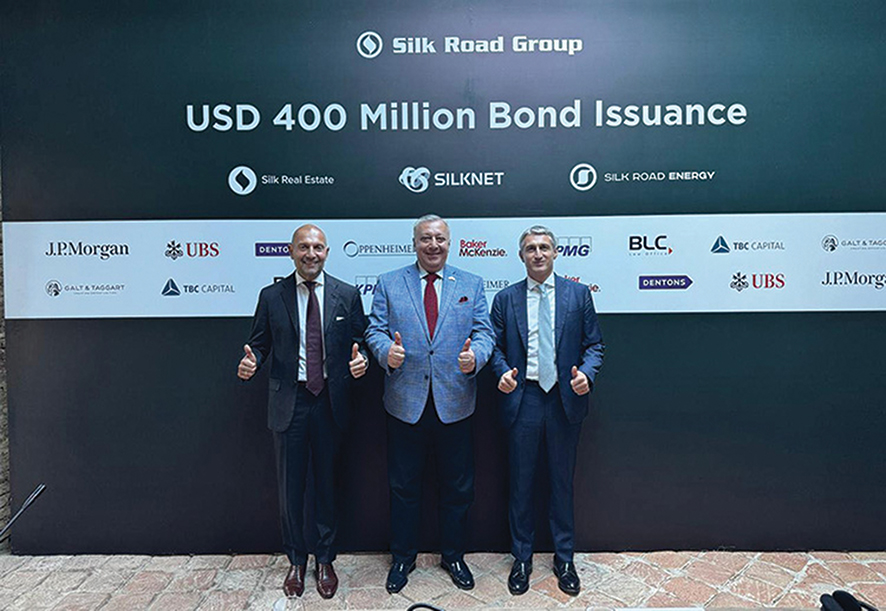
Georgian bonds seem to have retained attraction in that new issues are being launched despite the fact that foreign investors have been slowly pulling back over the last few years from Georgian government treasury bonds. In the corporate bond section of the market, Silk Road successfully completed an inaugural international bond offering in October, although listed on Dublin’s stock market—a $400 million 5-year bond with a coupon of 7.5%—a significant milestone for Georgia’s private sector capital markets as well as for the group itself.
In a financially uncertain world, Georgia’s economic growth looks inviting. In July, the IMF commented that “the Georgian economy has performed remarkably well despite elevated domestic and geopolitical uncertainty.” It pointed to the economy’s high growth rate, headline inflation returning to target, and public debt declining to the internationally low level of 36% of GDP in 2024. “Economic activity is projected to remain strong in the near term and gradually converge to potential,” it added. While this latest report contained many strictures, risk warnings, and reservations on a wide range of social, economic, governance, and other fronts, it stated that: “The financial sector is sound, and reforms have advanced…”
New financing for SMEs is not limited to bonds. To drive funding into the sector, international financial institutions such as the EIB, IFC, EBRD, and Black Sea Trade and Development Bank are partnering with Georgian banks or the government to channel funding for SMEs, often via banks (on-lending) or guarantees. For example, the EIB made a loan of €50 million to the Bank of Georgia for SMEs and mid-caps, with at least 30% directed to green investments. An IFC investment of $150 million has been made to TBC Bank to boost SME lending. EBRD guarantee programs or risk-sharing instruments are used to incentivize banks to lend to SMEs, allowing reduced collateral or improved terms.
However, work continues apace to help grow the SME end of the Georgian bond market and Enterprise Georgia’s Capital Market Support Program will launch a technical assistance component to its bond issuance program next year aimed at encouraging both issuers and investors.
The EBRD and Georgian SMEs
The EBRD has long been a mentor to Georgian companies issuing bonds—both to deepen local capital markets by providing instruments that align with international investors’ strategies and to broaden local access to finance. Expanding the range of tradable instruments in this way increases secondary market activity and improves pricing benchmarks. Now SMEs are included.
The EBRD’s Georgia team shared the following perspective with Investor on the role of bond issuance for SMEs:
Can you give us a bit of background on financing for SMEs?
Historically, SMEs have relied heavily on bank lending, which limits diversification and constrains growth. By introducing support initiatives for bond financing for corporates (including SMEs), the EBRD aims to expand financial inclusion by creating alternative funding channels for local businesses. This also helps to promote market development through innovative instruments, such as green and gender bonds, aligning with global ESG standards. And of course, any little help from donors is welcome. So, we have leveraged technical assistance and co-financing from the European Union under the initiative called the EU Capital Market Support Program, which reduced issuance-related costs and provided capacity building support.
EBRD aims to expand financial inclusion by creating alternative funding channels for local businesses. This also helps to promote market development through innovative instruments, such as green and gender bonds
Is this a funding option that many Georgian SMEs should or could consider?
Yes, for SMEs with strong governance, transparent financials, and growth ambitions, bond issuance can be an attractive alternative to traditional loans. Key advantages include:
- Access to longer-term local currency financing, reducing foreign exchange risk.
- Enhanced visibility and credibility in capital markets, which can attract both domestic and international investors.
- Potential cost benefits, especially when issuance is supported by grants or technical assistance from the EBRD and its partners.
While not every SME will qualify immediately, those with solid fundamentals and a clear growth strategy should explore this option as part of their financing mix.
How should SMEs assess and prepare themselves?
Preparation is critical. SMEs should focus on maintaining robust accounting systems, audited statements, and clear cash-flow projections. It is also essential to strengthen corporate governance practices and ensure compliance with disclosure requirements. Obtaining a credit rating, addressing any structural weaknesses, is yet another important step. It is also important for local companies to learn environmental, social, and governance criteria as many issuances target green or social objectives. Working with SMEs and offering capacity building on all of the above aspects, the EBRD supports this process through advisory services and tailored guidance to help them meet market and regulatory standards.
For those SMEs who cannot qualify for this cheaper and assisted funding, what help and education continues to be made available by the EBRD?
The EBRD remains committed to supporting all SMEs, regardless of their readiness for bond issuance. If they are not ready for a bond issuance, then we can start with credit lines through partner banks for modernization, energy efficiency, and green investments. In addition, our advisory services—under the Advice for Small Businesses program—covers strategy, digitalization, and compliance with EU standards, offering a wide range of capacity building expertise. For example, educational platforms, such as the EBRD Know How Academy, offer practical tools and training for business development. All the above initiatives ensure that SMEs continue to receive guidance and financial support while building their capacity for future capital market participation.
By Sally White for Investor.ge