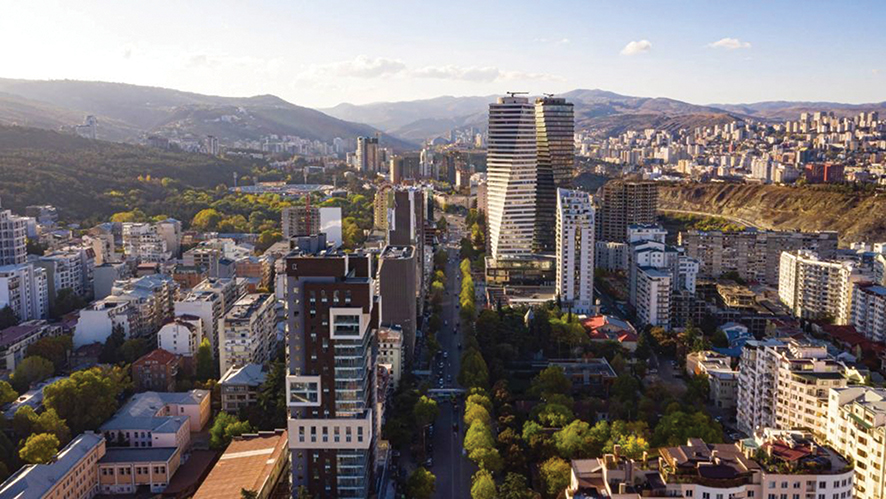
A new report by TBC Capital reveals that Georgia’s real estate market maintained upward momentum in 2025, with total property transactions increasing by 6% year on year. A total of 78,500 real estate transactions were recorded during the year. The majority of deals, 49,200 units, were concluded in the secondary market, showing sustained demand for existing properties, while 29,300 transactions took place in the primary market, reflecting ongoing activity in newly developed residential projects. The report did not provide a detailed regional breakdown of transactions.
Average residential property prices also rose in 2025. In Tbilisi, the capital, the average price reached $1,312 per square meter, marking a 4.1% annual increase, while Black Sea coastal city Batumi saw even stronger price growth, with average prices climbing 16.5% year on year to $1,395 per square meter, indicating heightened demand in the coastal tourism hub.
Historic & Structural Market Features
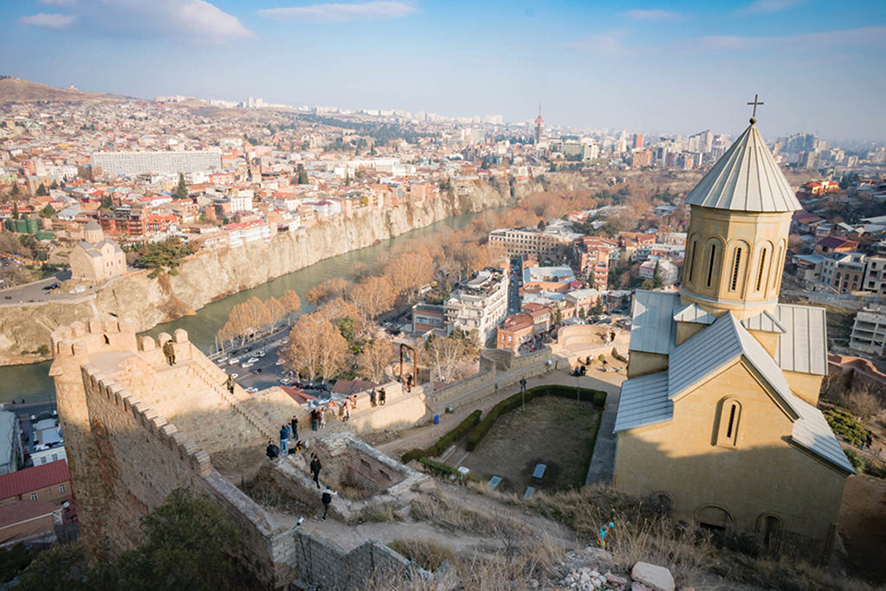
Georgia’s real estate market reflects a blend of historical character and modern growth dynamics. The country’s long history and architectural diversity create a unique property landscape where modern developments sit alongside centuries old structures. While this historical richness adds cultural appeal to cities like Tbilisi and Batumi, it also presents urban planning challenges around preservation and integration with new construction.
National statistics show that new housing prices in Tbilisi have risen sharply over the past few years, with new dwellings up about 57% since 2020
Another distinctive characteristic of the Georgian market is its relatively light regulation compared with Western markets. This has historically enabled quick and streamlined property transactions, often attractive to foreign buyers seeking efficient processes and lower entry barriers. However, some analysts caution that the lack of standardized protections or enforcement mechanisms can expose investors to market inconsistency and potential risks without strong due diligence.
Price Trends and Market Dynamics
National statistics show that new housing prices in Tbilisi have risen sharply over the past few years, with new dwellings up about 57% since 2020, and private houses appreciating faster than apartment units.
Mid 2025 reporting also points to distinctive patterns within cities:
• In Tbilisi, existing resale transactions have driven much of the recent growth, with new project activity rising more modestly, and secondary market sales gaining market share.
• In Batumi, demand for new builds continues to surge, often at stronger rates than in the capital, supported by tourism linked housing, short term rental investor interest and quality beachfront developments.
Analysts note that some segments of the market appear to be transitioning from speculative buying toward more strategic, long-term investment models. This reflects a broader maturing of the sector as buyers increasingly evaluate infrastructure quality, long term rental yields, and livability factors rather than speculative price gains alone.
Foreign Buyers, Residency & Investment Drivers
The Georgian property market has retained strong interest from international buyers, drawn by relatively lower price points compared with Western and regional peers and, until recently, relatively easy access to residency through property investment. Foreign investment remains an important demand driver, especially from countries including Israel and several EU markets.
In line with efforts to refine immigration incentives and ensure sustainable growth, Georgia’s government has adjusted its residency by investment rules. Effective 1 March 2026, the minimum qualifying real estate investment for a temporary residence permit will increase to USD 150,000, up from lower thresholds in prior years. This marks the third such increase since the program was introduced, signaling a shift toward higher value, longer term investments rather than short term speculation.
Sectoral Trends Beyond Residential
While residential real estate commands much of the spotlight, commercial, retail, hospitality, and office segments are also evolving. Mid 2025 research noted a growing pipeline of modern retail and office space in Tbilisi, expanded hotel development in Batumi, and increased international tourism bringing higher occupancy rates and revenues: factors that boost investor confidence in hotel and mixed use properties.
Tourism’s broader impact cannot be understated: strong growth in visitor numbers and tourism income has helped underpin residential and hospitality real estate demand, particularly in regions where short stay rentals are viable investment vehicles.
Challenges and Market Risks
Despite strong performance, some observers highlight risks inherent in a comparatively emerging market environment:
• Regulatory gaps: The relatively unregulated framework can accelerate deals but may also elevate risks around construction quality, contract enforcement and buyer protections.
• Infrastructure constraints: Rapid property development sometimes outpaces infrastructure provision, particularly in fast growing coastal or suburban zones.
• Market segmentation: Price growth and demand vary widely between segments (e.g., premium vs mid range), and some areas may experience localized oversupply if planning and demand forecasting are misaligned.
Outlook for 2026
Looking ahead, TBC Capital forecasts continued expansion in Georgia’s housing sector, with property prices expected to grow by around 3.2% in 2026 and overall market volume by 4.5%. This projection reflects both healthy demand fundamentals and broader economic resilience.
Overall, Georgia’s real estate sector in 2025–26 appears robust but evolving: balancing strong demand, diverse investor interest, and shifting buyer priorities within a market that remains both opportunistic and subject to regulatory and structural refinement.
By Team GT