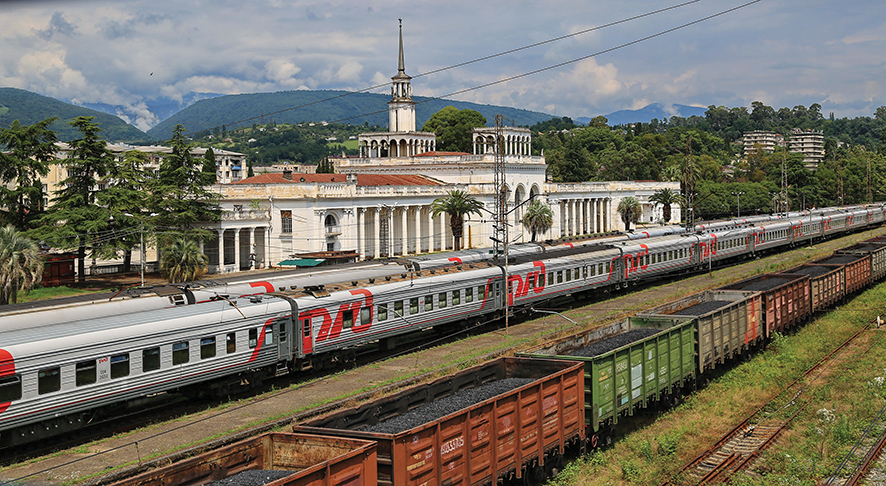
Georgian Railways has firmly denied reports about a possible resumption of rail traffic between Georgia and Russia via Abkhazia, saying there are no discussions or negotiations underway and that the issue is not being considered.
In an official response issued on 13 February 2026, the state railway operator said it “does not have any discussions about resuming railway traffic between Russia and Georgia” and added that it was “absolutely incomprehensible” why the issue was being discussed publicly.
The clarification followed remarks by Russian Deputy Prime Minister Alexei Overchuk, who said work is underway to “unblock all disrupted routes in the Caucasus,” including the possibility of restoring rail service between the Russian Federation and Georgia through Abkhazia. He described strengthening transport and logistics links as “critically important for peace, stability and economic prosperity” in the region, and argued that reopening such routes would improve connectivity with Azerbaijan, Turkey and Iran, including access to ports in the Persian Gulf and the Indian Ocean.
In Tbilisi, senior officials reinforced the railway company’s position. Shalva Papuashvili, chairman of the Georgian Parliament, said Georgia “is not holding talks with Russia on restoring railway connections” through Abkhazia and stated that such discussions “are not taking place.” He added that the only precondition Georgia sets for normalizing relations with Moscow is “the restoration of Georgia’s territorial integrity.” Papuashvili made similar comments in 2023 after similar statements were released by the Russian Foreign Ministry. He said at the time that Georgia “is not discussing resumption of rail link with Russia” and noted that the line has been closed since the early 1990s.
A Line Severed by War
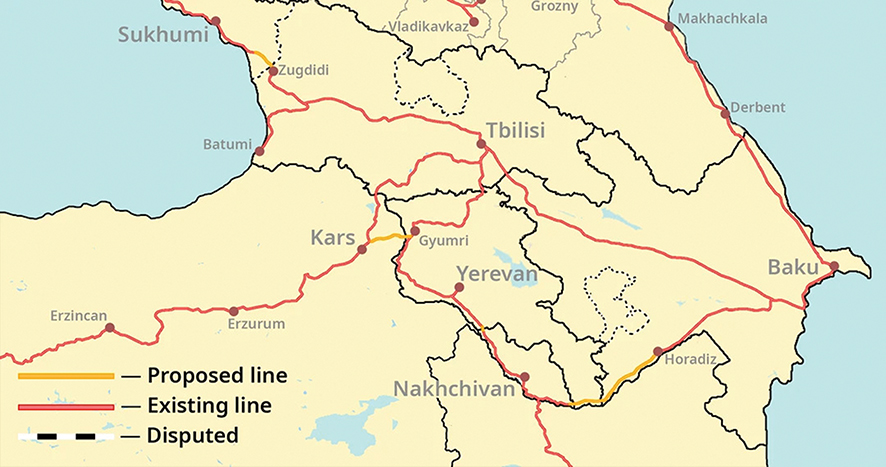
The railway in question once formed part of the Black Sea coastal route linking Russia’s North Caucasus with Georgia and, before 1992, onward to Tbilisi and Armenia. Under Soviet administration it was integrated into the Transcaucasus Railway system, which connected major cities across the South Caucasus. The Abkhaz section of the line is approximately 221 kilometres long and historically connected the North Caucasus Railway network with Georgian Railways.
Through traffic was halted during the 1992 to 1993 war between Georgian and Abkhaz forces. Fighting and the mass displacement of ethnic Georgians from Abkhazia led to the severing of the line. Since then, only the northern section linking Russia and Abkhazia has functioned, with passenger services operating between Sochi and Sukhumi. The southern connection to Georgian controlled territory has remained closed.
The issue became further entangled after the 2008 war between Russia and Georgia, when Moscow recognized Abkhazia as an independent state, a move rejected by Tbilisi and most of the international community. Diplomatic relations between the two countries were cut and have not been restored, leaving transport links politically sensitive.
There have been intermittent attempts to revisit the railway question. In March 2003, during talks in Sochi, Russian President Vladimir Putin and Georgian President Eduard Shevardnadze agreed to establish joint working groups addressing key issues related to the Abkhazia conflict, including the return of refugees and internally displaced persons, the rehabilitation of the Enguri hydroelectric power facilities, and the possible restoration of the railway through Abkhazia. The understanding, often referred to as the “Sochi agreements,” made clear from the Georgian side that any reopening of the rail link would be conditional on tangible progress in ensuring the safe and dignified return of displaced persons. The arrangements were never fully implemented.
Railway activity inside Abkhazia
While the cross border link with Georgia remains closed, the railway inside Abkhazia has seen a measurable revival in recent years.
The network, operated by the state enterprise Abkhazian Railway in cooperation with Russian Railways, runs from the Psou border crossing with Russia down the Black Sea coast to Sukhumi and Ochamchira, with a freight branch toward Tkuarchal.
Freight volumes have increased significantly. In 2022, more than 796,000 tons of cargo were delivered by rail into Abkhazia, with nearly 12,000 freight wagons handled. In 2023, around 14,000 wagons reportedly arrived, and container trains began operating for the first time in decades. Annual volumes have approached roughly one million tons in recent years.
Cargo consists mainly of construction materials, fuel and food supplies imported from Russia. Coal shipments from the Tkuarchal area are transported by rail to the coast and transshipped onward, including exports to Turkey. A container terminal commissioned at the port of Ochamchire in early 2025, linked directly to the railway, has capacity to store about 1,200 containers, signaling an effort to integrate rail and maritime logistics more closely.
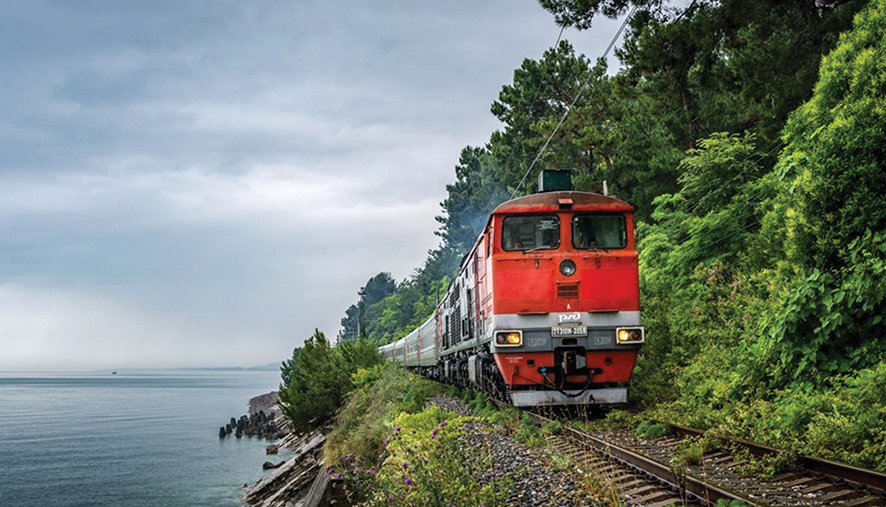
Passenger traffic is more limited and largely seasonal. Russian operated electric trains, including the “Lastochka” service, connect Sochi with Gagra and Sukhumi during peak tourist periods, carrying tens of thousands of passengers over the summer months. Revenues are concentrated in the holiday season.
Despite these increases, infrastructure constraints remain. Sections of track require ongoing maintenance, bridges have undergone repairs, and the southern stretch toward Georgian controlled territory remains damaged or dismantled. Analysts note that although internal freight and port integration have expanded, the railway’s role as a full transit corridor is constrained by legal uncertainties and the unresolved political status of Abkhazia.
Armenia’s focus elsewhere
The debate over transport corridors is part of broader regional discussions. Overchuk has also referred to reconstruction of rail sections that would connect Russia with Armenia via Azerbaijan and Georgia, framing such projects as efforts to unblock communications across the South Caucasus.
Armenia has not endorsed reopening the Russia-to-Georgia railway through Abkhazia. Officials in Yerevan have made it clear that the line is not part of Armenia’s transport or regional priorities, and no Armenian government statement supports its restoration. While Russian authorities have discussed broader regional rail connectivity, including projects linking Russia to Armenia via other routes, Armenian officials have repeatedly emphasized that the Abkhazia corridor is a political and security issue outside their mandate. No Armenian minister or the Prime Minister, Nikol Pashinyan, has publicly backed reopening the line, and Yerevan has confined its engagement to reconstruction of rail sections that directly affect Armenia’s own network.
For now, despite increased railway activity inside Abkhazia and Russia’s push to revive regional transport links, Georgian authorities maintain that there are no talks on restoring rail traffic between Russia and Georgia through the breakaway region, and that the issue is not on the agenda.
By Team GT