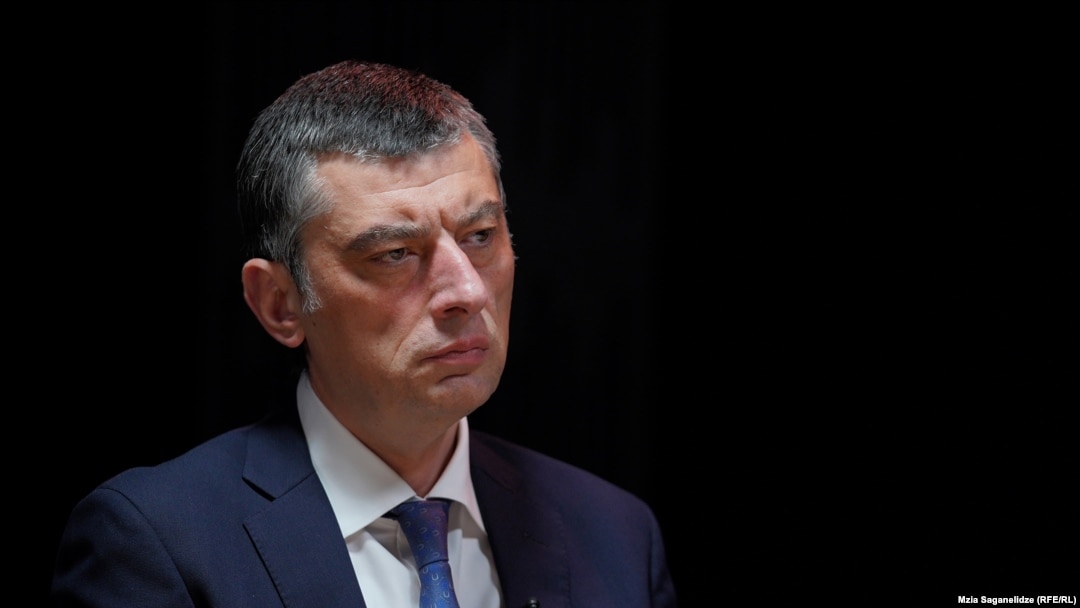
Former Prime Minister and leader of the opposition party For Georgia, Giorgi Gakharia, has sharply criticized the prosecution and Tbilisi City Court after an article published by a media outlet operating under the de facto authorities in Tskhinvali was admitted into evidence in the ongoing Chorchana case against him.
In a public statement released following the latest court hearing, Gakharia claimed that by accepting material published by the so-called State Information Agency RES, the prosecution and the court had effectively “recognized the Tskhinvali occupation regime in flagrant violation of the Constitution of Georgia.”
Gakharia claimed that RES functions as a propaganda instrument administered by the security services of the de facto authorities in Georgia’s Russian-occupied Tskhinvali region. He argued that the agency’s declared objective is to undermine Georgia’s territorial integrity and sovereignty and to promote the alleged independence of “South Ossetia.”
“Today, the prosecution and the court admitted into evidence an article published by an agency directly under the control of the de facto Tskhinvali authorities into the politically motivated case of Chorchana against me,” Gakharia wrote. “This is an act of betrayal—one that must inevitably receive an appropriate legal response once democratic order is restored in Georgia.”
The former prime minister tagged several international actors in his statement, including the EU Delegation to Georgia, the EU Monitoring Mission (EUMM), the US State Department, the European Commission, the Council of the European Union, and the European Parliament, signaling his intention to draw international attention to the development.
The Chorchana case stems from events in August–September 2019, when, as Interior Minister, Gakharia authorized the establishment of a police checkpoint near the village of Chorchana along the occupation line with the Tskhinvali region. Prosecutors allege that this decision was made unilaterally and that it was subsequently used by de facto authorities as a pretext to occupy strategic heights near the village of Tsnelisi, leading to the loss of control over approximately 100 hectares of forest land.
The prosecution maintains that Gakharia’s actions contributed to escalating tensions and created a risk of armed confrontation. He has denied wrongdoing, describing the case as politically motivated and insisting that the checkpoint was installed to prevent further “borderization” and protect Georgian-controlled territory.
The latest controversy centers on whether the use of material from a de facto Tskhinvali outlet in court proceedings carries legal or political implications. Critics of the move argue that referencing such sources may contradict Georgia’s longstanding policy of non-recognition regarding the occupied territories. Supporters of the prosecution, however, contend that courts are permitted to examine publicly available materials as part of evidentiary review, regardless of origin, without implying political recognition.
The case unfolds amid heightened political polarization in Georgia, where disputes over national security, relations with Russia, and the management of the occupied territories remain highly sensitive. Further hearings in the Chorchana case are expected inthe coming weeks.
Related story: Tbilisi City Court upholds pre-trial detention of former PM Gakharia in Chorchana Case