The steel industry has historically been regarded as one of the most resource-intensive and environmentally challenging sectors of the global economy. Yet in recent decades, technological innovation, environmental responsibility, and corporate accountability have increasingly reshaped how steel producers operate. In Georgia, one company has played a defining role in this transformation.
Geosteel, which began operations fifteen years ago, holds a unique place in the country’s industrial landscape as the first company to restart steel production in Georgia following the post-Soviet era. Over a decade and a half, the company has navigated technical, human capital, and market challenges, gradually building production capacity, trust, and technological sophistication.
2025 stands out as a particularly important chapter in this journey. During this period, Geosteel intensified its modernization efforts, implemented innovative low-carbon technologies, and strengthened its long-term commitment to sustainable development.
Geosteel’s establishment marked a significant turning point for Georgia’s industrial sector. As the first company to restart steel production after the dissolution of the Soviet Union, Geosteel entered an environment characterized by limited industrial infrastructure, a shortage of skilled labor, and widespread skepticism toward locally manufactured steel products.
The early years of operation were defined by persistence and long-term planning rather than immediate gains. Restarting steel production required not only physical assets but also the rebuilding of professional expertise, operational discipline, and confidence in domestic manufacturing capabilities.
One of the most serious challenges faced by Geosteel during its initial years was the shortage of qualified professionals. Engineers, metallurgists, and experienced technicians were difficult to source within the local labor market. This gap posed a significant risk to operational stability and product quality.
To overcome this challenge, Geosteel adopted a pragmatic and forward-looking approach. The company recruited individuals from unrelated professions and invested heavily in internal training programs.
Employees were trained directly on-site, gaining practical experience in steel production processes, quality control, and plant operations.
Over time, this approach proved effective. What began as a necessity evolved into a strategic advantage, resulting in the formation of a highly capable, loyal, and experienced workforce. The company’s emphasis on in-house skill development laid the foundation for its long-term operational resilience.
Recognizing the ongoing challenges of sourcing skilled technical professionals in Georgia, Geosteel remains committed to internal training and professional development. Through structured in-house programs, employees receive continuous training that enhances their technical expertise and career growth. This long-term investment in human capital ensures operational continuity and supports the company’s modernization efforts.
In parallel with workforce challenges, Geosteel faced skepticism from the construction sector and the general public. At the time, imported steel, particularly from Ukraine, was widely perceived as superior in quality. Convincing builders, architects, and developers to adopt locally produced steel required consistent performance and transparent quality assurance.
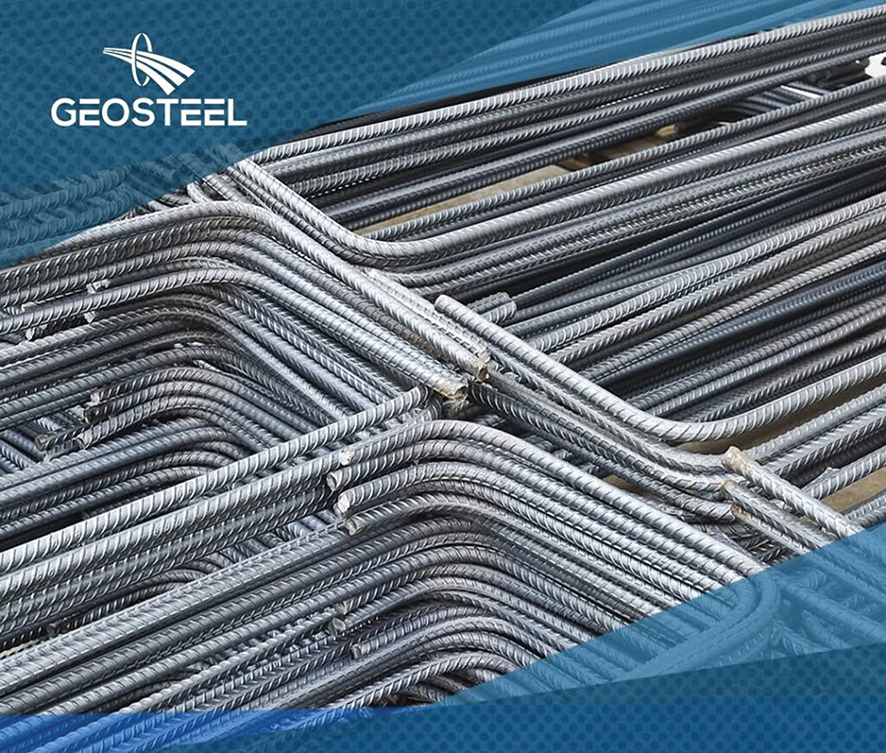
Rather than relying on marketing alone, Geosteel focused on product reliability. Stakeholders were encouraged to test and evaluate the steel based on performance rather than origin. Gradually, perceptions began to shift. Customers recognized that Geosteel’s products met and in many cases exceeded the quality of imported alternatives.
This growing confidence contributed to broader market effects, including a significant reduction in steel prices compared to the base year of 2010, benefiting the construction sector and the wider economy.
The company’s early production phase was not without technical difficulties. Initial equipment issues affected efficiency, but these challenges were addressed promptly. Through continuous investment in plant upgrades and equipment modernization, Geosteel steadily increased its production output year after year.
Rather than pursuing rapid expansion, the company adopted a measured approach focused on stability, quality improvement, and long-term sustainability. This strategy ensured that capacity growth was aligned with technical capability and market demand.
Among the many milestones in Geosteel’s fifteen-year history, 2025 represents a defining period.
“During this year, the company accelerated its modernization agenda and implemented technologies that strengthened both operational efficiency and environmental performance. In 2025, We replaced several key pieces of plant machinery with newer, more efficient technologies. This modernization initiative was aimed at improving reliability, reducing energy consumption, and enhancing product consistency. The introduction of modern equipment allowed us to optimize production processes while maintaining its established quality standards. These upgrades also supported safer working conditions and reduced operational downtime, contributing to overall productivity gains“, – said Mr. Sajeev Balakrishnan, Geosteel General Director.
According to him, one of the most significant achievements of 2025 was the commissioning of the direct charging project. This technological advancement fundamentally changed the way billets are transferred within the production chain.
Geosteel’s current strategic priority is to strengthen its presence in the growing domestic market. By focusing on local demand, the company aims to ensure reliable supply and maintain close relationships with Georgian customers.
While domestic growth remains the primary focus, Geosteel continues to serve its existing export clients in neighboring countries. The company’s export strategy emphasizes stability and reliability rather than rapid expansion into new markets.
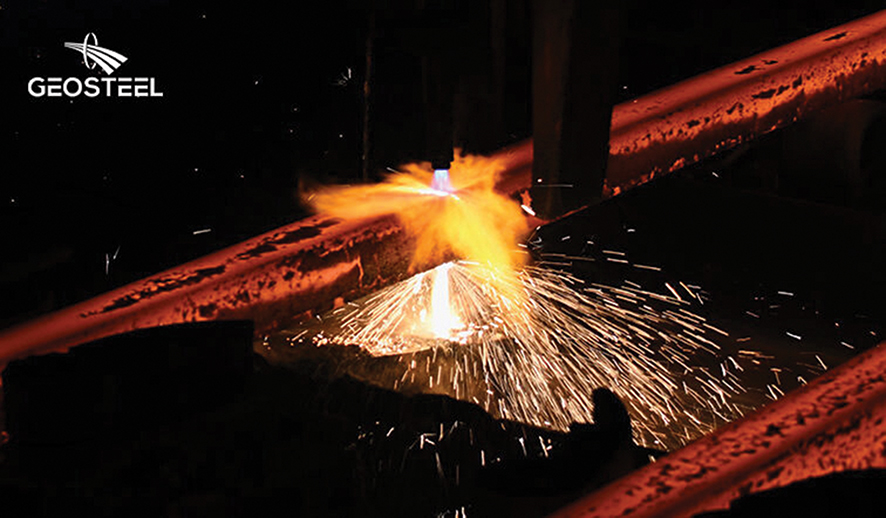
Traditionally, billets are cooled after casting and later reheated in a billet reheating furnace before rolling a process that consumes substantial energy and generates carbon emissions. With direct charging, billets are transferred directly from the steel melting shop to the rolling mill while still hot, eliminating the need for reheating.
The benefits of this innovation are substantial:
- Significant reduction in carbon emissions
- Improved energy efficiency
- Lower fuel consumption
- Enhanced process integration
The direct charging project represents a concrete step in Geosteel’s transition toward greener steel production, demonstrating how technological innovation can align environmental responsibility with operational efficiency.
Environmental responsibility has been integral to Geosteel’s operational philosophy since its inception.
In 2010, the company became the only steel plant in the region to commence operations with a modern fume exhaust system, setting a benchmark for environmental compliance within the industry.
This early investment reflected management’s understanding that sustainable operations are essential not only for regulatory compliance but also for long-term competitiveness and community trust.
Over the years, Geosteel has expanded its environmental initiatives beyond emission control. One of the most notable achievements has been the installation of rooftop solar panels on all factory sheds, supplemented by ground-mounted solar power plants.
To date, the company has successfully commissioned approximately 11 MW of solar power generation capacity. This renewable energy is integrated into plant operations, reducing dependence on conventional power sources.
Looking ahead, Geosteel has set an ambitious target to increase its solar generation capacity to 50 MW within the next few years. This initiative underscores the company’s long-term vision of transitioning toward cleaner energy and reducing its overall environmental footprint.
In line with this strategy, Geosteel plans to commission an upgraded fume exhaust system in the coming year. This advanced system is expected to elevate emission control standards further, positioning the company’s operations ahead of many leading European steel plants in terms of environmental performance.
Technological innovation has consistently been at the core of Geosteel’s management strategy. Current initiatives focus on renovating and refurbishing existing plants with energy-efficient technologies that enhance sustainability while improving operational effectiveness.
These projects are not isolated upgrades but part of a broader effort to modernize production systems in line with evolving industry standards.
One of the most significant strategic investments underway is the erection of a new wire rod mill. This facility will allow Geosteel to diversify its product mix, enabling the company to respond more flexibly to market demands.
The addition of wire rod products will broaden Geosteel’s offerings and enhance customer choice, reinforcing the company’s competitive position within the domestic market.
The wire rod mill is scheduled for commissioning in 2026, marking a major milestone in the company’s next phase of growth.
Geosteel’s is also well known to its approach to corporate social responsibility that is rooted in the principle of inclusive growth. The company believes that its success should contribute directly to the development of the communities in which it operates and to the progress of Georgia as a whole.
This philosophy is reflected in a wide range of social initiatives, particularly in the city of Rustavi.
Key CSR Initiatives in Rustavi, Geosteel’s social engagement includes:
- Tree Planting Campaigns in schools, promoting environmental awareness among young people
- Support for Vulnerable Groups, including children’s homes, old age homes, and socially vulnerable families
- Promotion of Sports and Healthy Living through the construction of sports complexes and provision of sports equipment
- Educational Infrastructure Development, including renovation of classrooms and libraries
During the COVID-19 pandemic, Geosteel demonstrated exceptional social responsibility by operating its oxygen plant continuously to produce medical oxygen for the citizens of Georgia. This was done despite significant financial losses, underscoring the company’s commitment to public health during a national crisis.
Over fifteen years, Geosteel has evolved from a pioneering steel producer into a modern industrial enterprise defined by technological innovation, environmental responsibility, and social engagement.
The achievements of 2025 represent a critical step in this journey, highlighting the company’s transition from heavy metal production to green steel manufacturing.
As Geosteel looks toward the future, its strategy remains grounded in sustainable growth, continuous improvement, and a deep commitment to the communities it serves. In doing so, the company continues to shape the future of Georgia’s steel industry with responsibility and resilience.
The commissioning of the wire rod mill in 2026 will expand Geosteel’s product range and strengthen its market position.
The upgraded fume exhaust system and expansion of solar power generation will further solidify Geosteel’s position as a leader in environmentally responsible steel production.
By Kesaria Katcharava