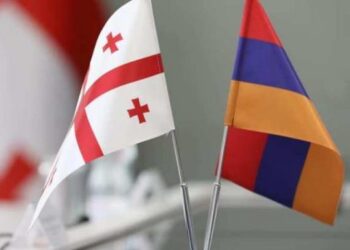
The European Union has introduced a major change to the way Georgia can participate in Erasmus+, the EU’s flagship program for education, training, youth, and sport. According to the newly released Erasmus+ 2026 roadmap, the EU will no longer finance projects in Georgia that involve government bodies or state-affiliated institutions. This includes ministries, municipalities, state agencies, and state-owned enterprises. The document states that this shift is directly linked to Georgia’s current political environment and follows the EU Council conclusions adopted in December 2024. Citing Article 20 of the Erasmus+ Regulation, the roadmap notes that “direct financial assistance from the program to Georgian authorities … is not considered in the Union’s interest.” With this change, the EU clarified that no representative of Georgian authorities will be eligible for participation in Erasmus+ activities.
This adjustment marks a notable turn in EU–Georgia cooperation. For years, Erasmus+ has been one of the most visible points of connection between Georgian society and the European Union. Against this backdrop, the decision reads as a clear political message from Brussels, reflecting its growing concerns over Georgia’s democratic trajectory. But its practical implications have been widely misunderstood in the public debate, prompting clarifications from within Georgia.
Shortly after the roadmap became public, the Erasmus+ National Office in Georgia issued a series of statements aimed at explaining what the decision actually means for institutions and individuals. The message was unequivocal: “Georgia continues to be an active and valued partner in the Erasmus+ program,” the office said, stressing that “all planned and ongoing actions remain fully supported and operational.” In other words, the change affects the government, not the education sector at large. The office reminded universities, vocational institutions, NGOs, and private organizations that they remain fully eligible for Erasmus+ mobility and cooperation initiatives. “Educational institutions in Georgia continue to take part in Erasmus+ mobility and cooperation activities, following the rules in the Erasmus+ Program Guide,” it noted in its clarification.
At the same time, the National Office cautioned organizations to rely on official channels as the situation evolves. “As with any EU program, rules and eligibility may change over time. Institutions are advised to consult the latest Erasmus+ Program Guide … and to rely on official channels for accurate and up-to-date information.” The office also urged students, parents, universities, and civil society not to rely on speculation or politically charged interpretations, saying: “We urge institutions, students, and stakeholders to rely only on official channels for accurate information.”
These reassurances come at a moment of expanding cooperation in another crucial branch of Erasmus+: Capacity Building in Vocational Education and Training (CB VET). In October, the Erasmus+ program unveiled 73 new CB VET projects worldwide, backed by more than 27 million euros. Georgia is not only included, but has deepened its engagement. 11 project participations by nine Georgian institutions have been confirmed for 2025 alone. Since 2022, Georgia has been part of 10 CB VET projects, reflecting both growing institutional capacity and the confidence of European partners.
Among these new projects, several stand out for their relevance to Georgia’s priorities. One of the most ambitious, Hubs for Change, coordinated by partners in Greece and Lithuania, aims to transform vocational institutions in Georgia, Azerbaijan, Moldova, and Ukraine into entrepreneurial hubs. The initiative focuses on young people, unemployed adults, women, and NEETs, helping them access innovation, incubation, and local economic networks. Another large-scale project introduces precision agriculture training to Georgia and Ukraine, a significant development for countries where smallholder farms dominate the agricultural landscape. By modernizing curricula and linking VET institutions more closely with agricultural industries, the project promises to support productivity, sustainability, and rural livelihoods.
Georgia has also joined VET Caucasus, coordinated by Latvia with support from Belgium and Italy. This project is aimed at aligning Georgia’s vocational qualifications more closely with EU standards—a critical step given the country’s EU candidate status, granted in 2023. Curriculum development, teacher training, and labor-market alignment all form part of the reform package. In addition, a project coordinated by the University of Peloponnese focuses on strengthening women’s entrepreneurship in Georgia’s agricultural sector through targeted vocational education and training.
These efforts are part of a broader regional picture. Erasmus+ is also supporting transformative vocational reforms in Moldova, Ukraine, and Azerbaijan, ranging from digital and environmental training to cultural heritage entrepreneurship and mental health education in vocational settings. This demonstrates the EU’s ongoing commitment to strengthening skills systems and widening opportunities across the Eastern Partnership region, even during politically challenging times.
Throughout all these developments, the National Erasmus+ Office in Georgia has consistently emphasized that the country’s place in Erasmus+ remains secure and meaningful. It has highlighted the program’s “transformative role” in improving digital and green competencies, updating outdated curricula, and strengthening the link between education and the real economy. Although Georgian institutions currently participate mostly as partners rather than project leaders, their rising engagement is increasingly viewed as a foundation for future leadership within international partnerships.
In practical terms, the EU’s recent restrictions apply only to state bodies. They do not affect universities, colleges, vocational institutions, NGOs, or the thousands of Georgian students and educators who continue to participate in Erasmus+ each year. Erasmus+ remains one of Georgia’s strongest and most effective bridges to Europe—a program that, even during the political friction, continues to bring tangible benefits to individuals, institutions, and communities. Through ongoing projects and expanding cooperation, it continues to move Georgia’s education system closer to European standards, one classroom, curriculum, and partnership at a time.
By Team GT