In early February, a filing submitted to Georgia’s Business Registry confirmed that DMG Group has acquired Neo City Development, the company that owns the centrally located Laguna Vere sports complex and the former Tbilisi Silk Weaving Factory site. According to the registry documents, DMG Group will pay $64 million for the company and assume its outstanding loans of about $21 million and $20.4 million. The transaction marks a major shift in ownership of some of Tbilisi’s most notable urban properties.
DMG Group is controlled by Kakhi Zhordania, the son of businesswoman Maka Asatiani, who owns the Mercedes Benz dealership Aka and holds a controlling stake in Black Sea Petroleum’s refinery project in Kulevi. The properties were previously owned by former Member of Parliament Marika Verulashvili, and before that by billionaire Bidzina Ivanishvili’s Cartu Foundation until 2025. The company also owns adjacent land on Kostava Street, where a five star Hilton hotel is currently under development.
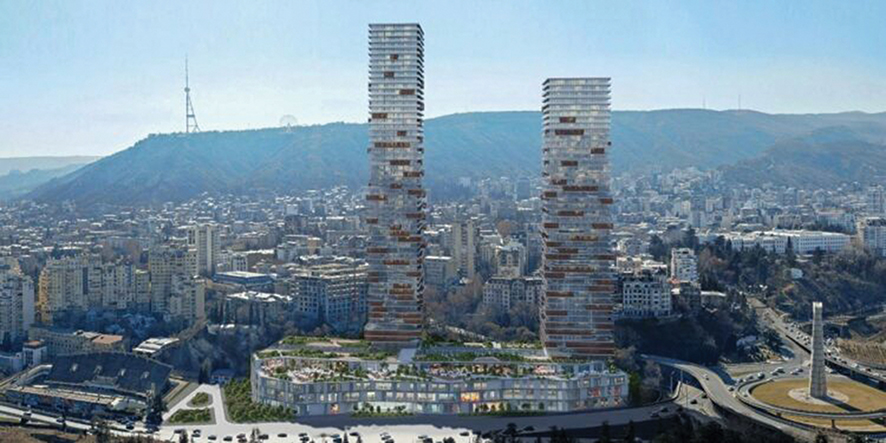
It is not yet clear whether DMG Group will move forward with Neo City Development’s earlier plan to build two high-rise towers near Heroes’ Square, roughly 40 and 52 stories tall, with an estimated investment value of more than $200 million, as that project has not yet received a construction permit from the Tbilisi Architecture Service.
A Deep Urban History
The Heroes’ Square area of Tbilisi boasts a rich mix of industrial, recreational, and cultural history. Its story spans more than a century, combining economic development, social memory, and architectural heritage.
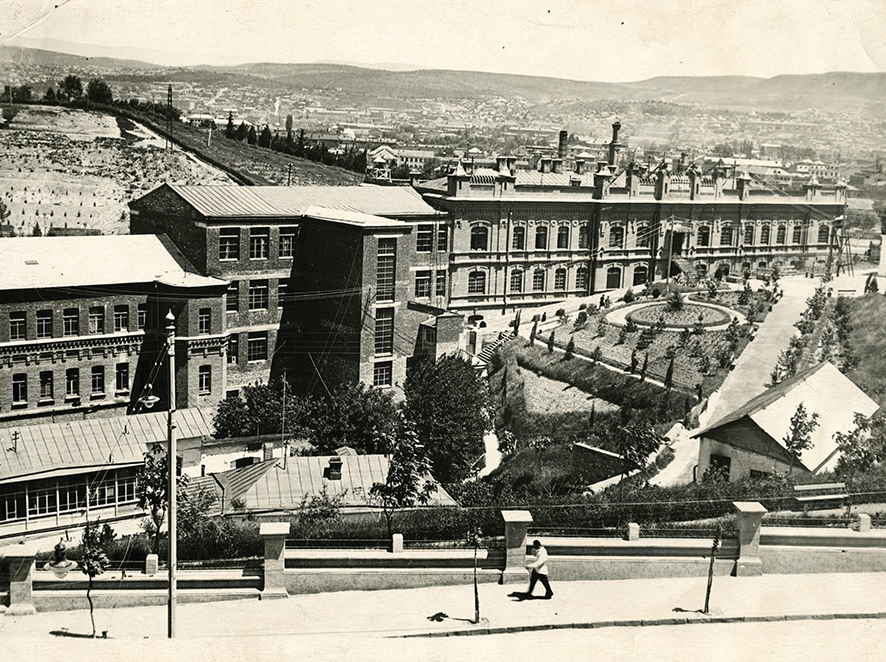
In 1883, a tobacco mill was built on what is today Kostava Street, as part of Tbilisi’s early industrial expansion under the Russian Empire. It became a key site for production of goods both for local consumption and export.
In 1928, the building was repurposed to house the Tbilisi Silk Weaving Factory, highlighting Georgia’s important role in silk production during the Soviet era. The factory added larger windows to increase natural light for workers, and a vocational textile school was established to train technicians. Silk thread came from spinning mills in Telavi, Samtredia, and Zugdidi. Workshops previously located near today’s G. Chitaia Square moved to the right bank of the Mtkvari River to feed into the factory’s output.
After the 1970s, the factory became part of the Silk Production Association, which brought together silk weaving, jacquard, and pile textile production. By 1977, it produced more than 16.3 million meters of fabric annually, a high point in Georgia’s textile history. Production declined sharply in the 1990s with the collapse of Soviet-era industry, and the factory eventually ceased operations. Today, the former tobacco and silk factory building is being demolished to make way for future development.
Laguna Vere
and Social Memory
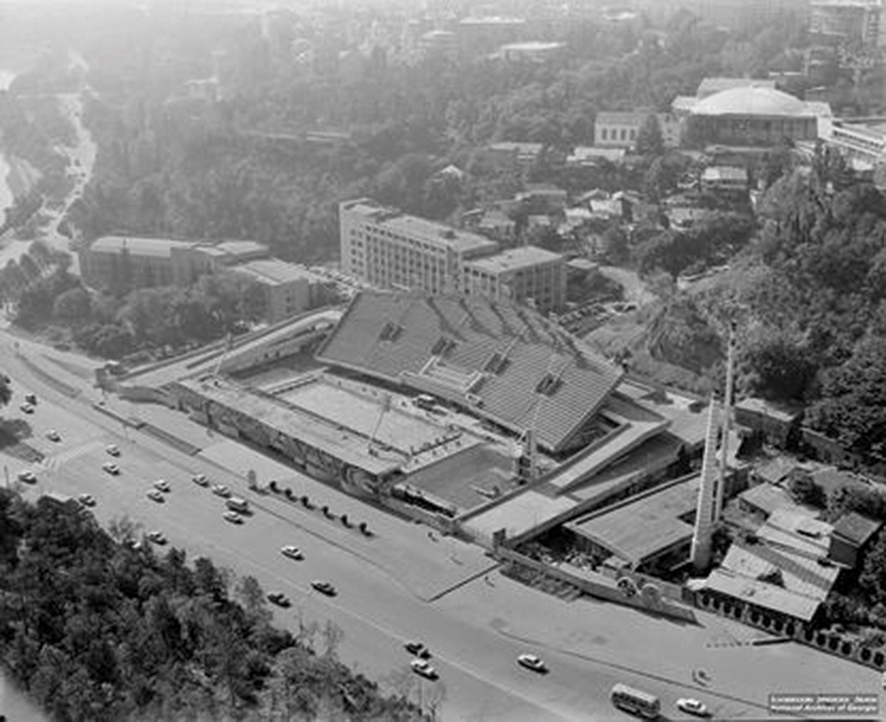
Adjacent to the old factory was Laguna Vere, a beloved public swimming complex. Designed in the 1960s by architect Shota Kavlashvili and opened in 1978, it was the first open-air competitive swimming facility in the Caucasus. It drew families, children, and amateur athletes from across the city and became a vital recreational space for Tbilisi residents.
Privatized in 2000, Laguna Vere was closed in 2014. Officials cited outdated infrastructure and financial issues, but many residents disputed this, emphasizing the complex’s social value. In 2015, a group of professionals petitioned the National Agency for Cultural Heritage Preservation of Georgia to grant Laguna Vere Cultural Heritage Immovable Monument status. The Tbilisi Development Fund also recommended it as part of an urban planning competition.
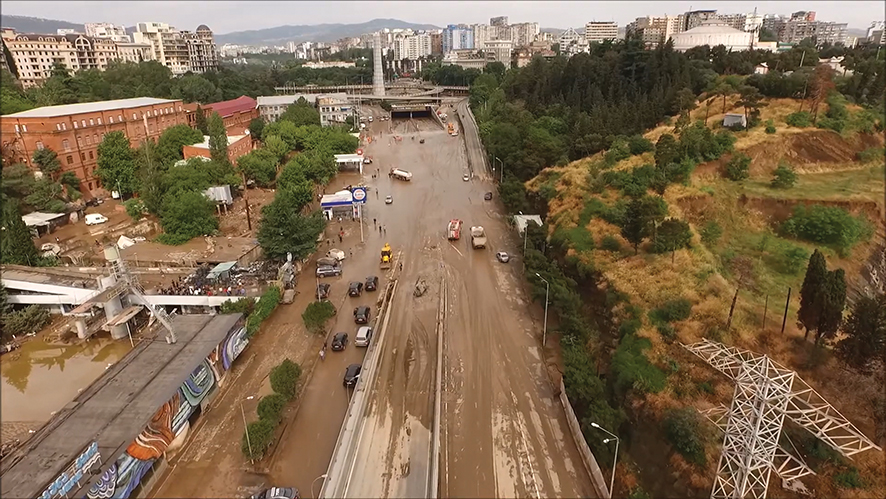
In June 2015, a flood left silt and debris across the site, and despite repeated promises, it was never reopened.
Zoo, Circus and the Cultural Landscape
The surrounding area includes other long-standing institutions, such as the Tbilisi Zoo and the Tbilisi Circus, adding to the neighborhood’s cultural and recreational significance. Together with Laguna Vere and the former factory, these landmarks formed a key part of Tbilisi’s urban fabric.
Skyscrapers, Zoning Battles and Public Debate
In late 2023, the Tbilisi City Council approved a draft plan for a multifunctional complex on the Laguna Vere property, which included two high-rise towers. Opposition voices expressed strong concern. MP Saba Buadze said, “This is one of the most difficult projects in the history of this city in recent years, and the construction of two 50-story skyscrapers in the vicinity of Laguna Vere will cause irreversible and huge damage to the historical appearance of our city. This is a project that carries a lot of risk overall. It is a truly dark day in the history of our city when this unfortunate project was approved in a historic part of our city, with huge risks from a safety, traffic and historical-cultural point of view.”
This is one of the most difficult projects in the history of this city in recent years
At the same time, municipal leaders defended the goal of modernizing the Laguna Vere neighborhood. Mayor Kakha Kaladze said in 2023 that development of Laguna Vere was “critical for the capital” and that the area could become “a new center of attraction.” He also pledged improvements to infrastructure around Laguna Vere and Heroes Square, including road widening, pedestrian crossings, and upgraded lighting, which was carried out in 2025.
What Lies Ahead for Heroes’ Square
With DMG Group now owning this strategic tract of land, Tbilisi is at a crossroads. Residents who fondly remember Laguna Vere have lost hope that the site will be restored and reopened, and the voices of preservation advocates speaking out for the protection of Tbilisi’s industrial heritage have been silenced by developers and city officials who see an opportunity to transform the area into a modern mixed-use hub. Demolition and development proceeds.
It is clear that decisions about this land will shape the city’s skyline and civic identity. It is a debate that highlights Tbilisi’s ongoing challenge of balancing economic growth with cultural memory and public interest.
By Team GT