Georgia’s updated Nationally Determined Contribution (NDC 3.0) places equality and a just transition at the center of the country’s climate strategy, emphasizing the role of women and girls in adaptation planning and equal access to green opportunities.
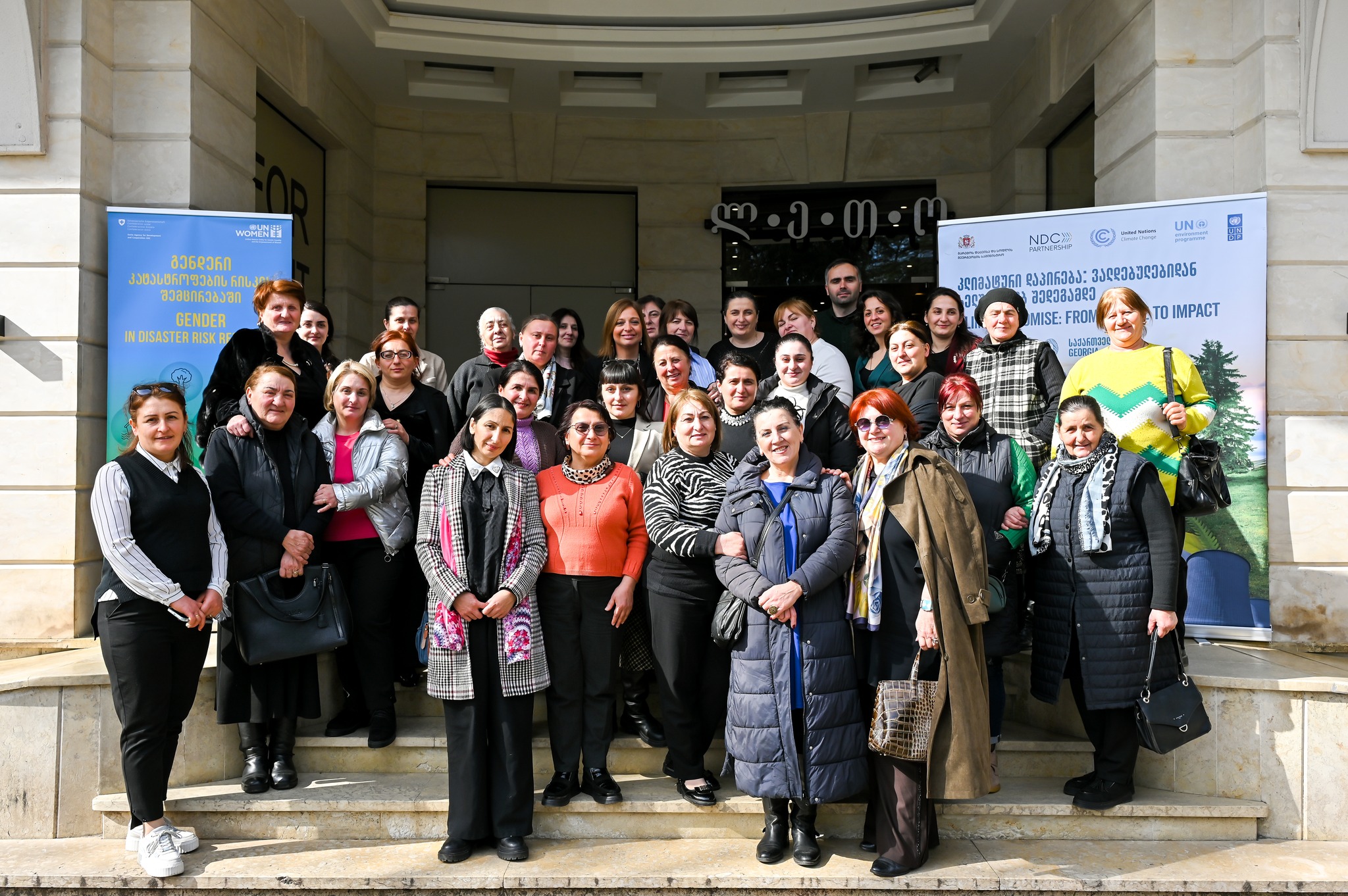
The priorities mentioned in Georgia’s revised climate pledge were recently reflected in a regional meeting held in Zugdidi where up to 35 women farmers from Samegrelo gathered to discuss climate commitments and explore how women can contribute to climate-centered decision-making.
The meeting was organized by the United Nations Development Programme (UNDP) in partnership with UN Women Georgia under the flagship Climate Promise initiative.
Climate action with a gender lens
Georgia’s NDC 3.0 aligns with the goals of the Paris Agreement, which limit global temperature rise to below 1.5°C, strengthen adaptation to climate impacts and mobilize adequate climate finance.
In its updated contribution, Georgia stresses the importance of integrating gender equality into climate adaptation efforts. The plan promotes inclusive policies that ensure women, particularly those in rural and agricultural communities, have access to knowledge, resources and green economic opportunities.
The climate framework
The Climate Promise is the framework for UNDP’s support to developing countries in implementing their national climate pledges. Through this initiative, UNDP assists countries in designing and delivering ambitious climate actions defined in Nationally Determined Contributions (NDCs), National Adaptation Plans (NAPs), long-term development strategies and green recovery plans.
Globally, UNDP manages the largest climate portfolio in the UN system, supporting climate action in more than 140 countries with over $2 billion in grant financing. The program integrates expertise in gender equality, energy transition, biodiversity protection, poverty reduction, climate finance and security.