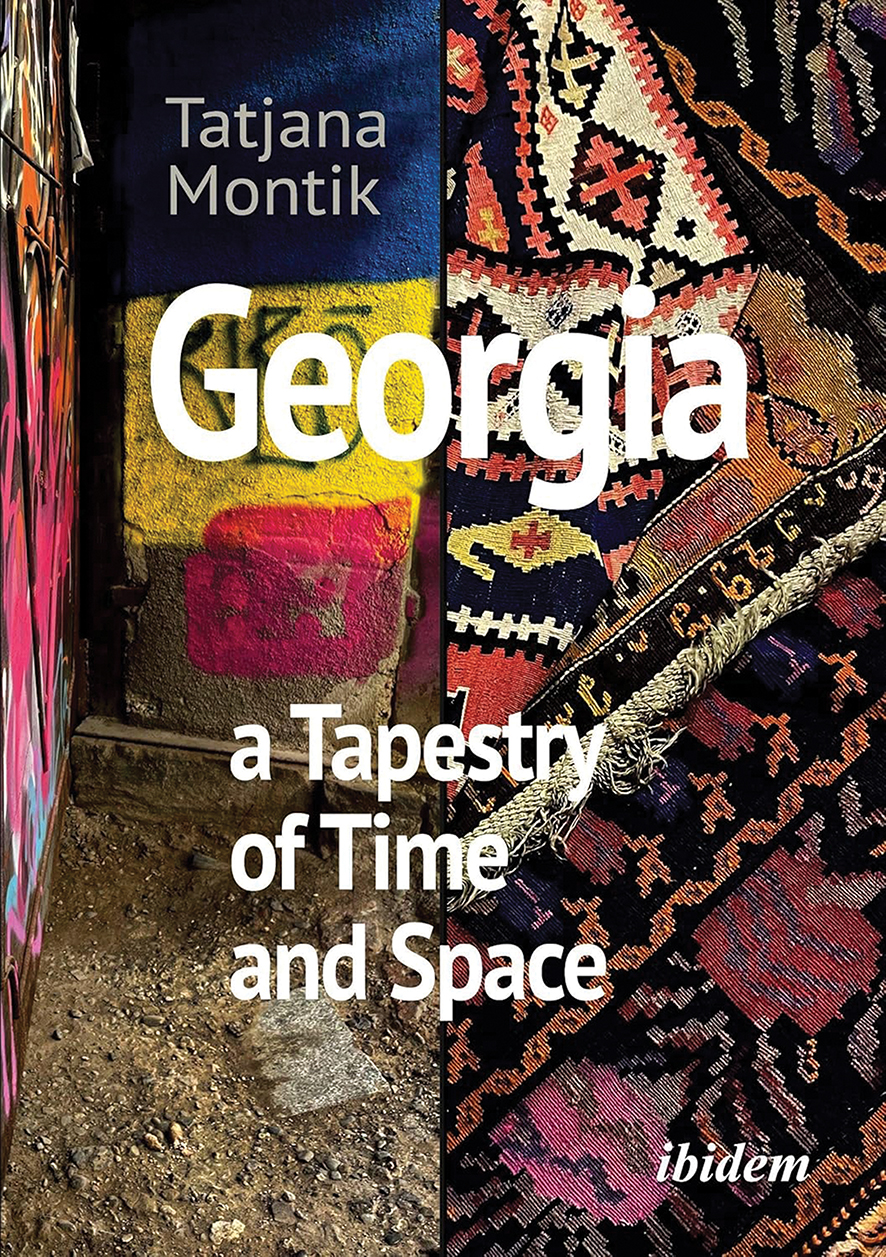
Tatjana Montik – journalist, author, and passionate admirer of Georgia – has spent the past 15 years living in and reporting on this captivating South Caucasus country. With the upcoming release of her new travel diary and cultural guide, Georgia: A Tapestry of Time and Space, GEORGIA TODAY sat down with Tatjana to learn more about her journey, her inspiration, and what makes this book stand out.
Georgia: A Tapestry of Time and Space is far more than a traditional travel guide. As Tatjana explains, “This isn’t a tourist manual filled with clichés or surface-level tips. It’s a journey through Sakartvelo across time and space—an attempt to uncover the soul of Georgia.”
Drawing on years of journalistic experience and deep research—including consultations with ethnographers, historians, and local experts, and hours spent poring over ancient texts at the National Library—Tatjana weaves together a collection of stories that explore Georgia’s hidden corners, rich traditions, diverse subethnic groups, and national minorities.
But at its heart, the book is a tribute to the Georgian people—their warmth, creativity, and unwavering love for their homeland.
“I hope this book inspires you,” Tatjana says, “and helps you fall in love with Sakartvelo as deeply as I have.”
How did you come to Georgia and end up falling so in love with it?
I had longed to live in Georgia for a long time, even before I first visited. For me, Georgia was a fairytale land, full of miracles. When I came here to work and live with my children in 2010, my feelings were proven right: Georgia is a miracle, and discoveries are waiting for you at every turn.
Tell us about your book – the moment (or place or person) that inspired you to start writing.
I started writing from my very first day in Tbilisi. Everything and everyone around me was an inspiration: the nature, the landscapes, and the views (back then, we lived near the road to Turtle Lake), the incredibly warm-hearted people, especially their ability to love and be friendly, Georgia’s rich history (I’m a huge history fan!), and the feeling of excitement before great discoveries.
Which is your favorite region or location in Georgia? Why?
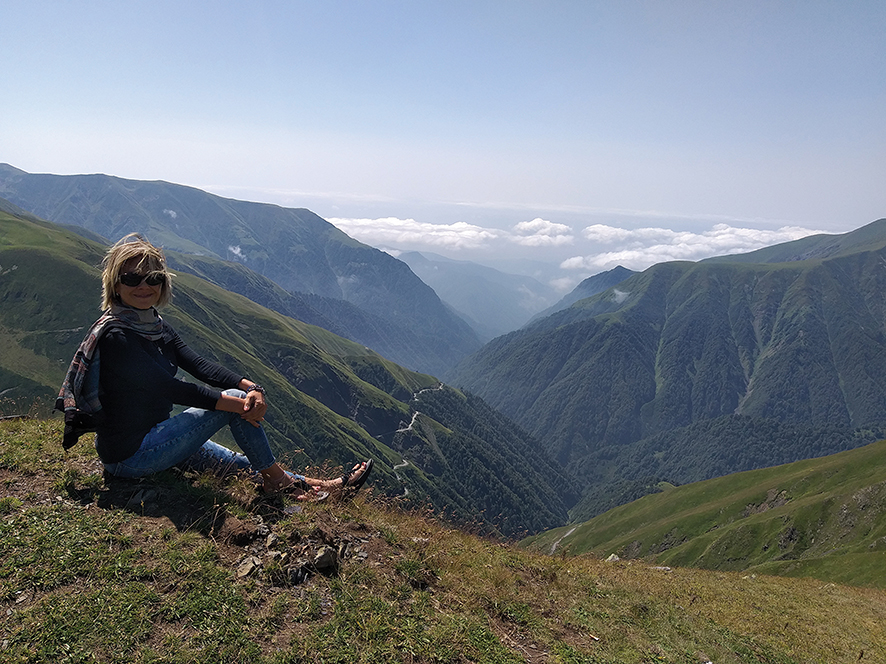
As I come from a country with no mountains at all, I love all of Georgia’s regions. Almost everywhere you go, you can see the mountains and feel their strong spirit. My favorite mountain regions are Tusheti and Svaneti. I admire their unique natural beauty, culture and traditions. My conversations with ethnographers have allowed me to peer even further behind the curtain of local customs and traditions. This is something I have tried to capture in my book.
What have been your most incredible, most surprising, and most difficult experiences while traveling in Georgia?
I’ve found so many incredible and surprising things here. What I’ve always loved is the readiness of Georgians to help, to show you the way, tell you a story, or invite you into their homes.
I quickly learned that you can’t thoroughly prepare for a trip here, because something will always come up to change your plans. Someone will give you a hand unexpectedly, and you’ll find new friends and fresh experiences. I say that Georgia is so close to heaven that you should be careful what you wish for—it will most likely come true.
What was difficult at times was dealing with certain men who were disappointed to learn that I wasn’t looking for a romantic affair during my travels.
As a professional explorer, in what aspects do you find Georgia excels/is still in need of some improvement?
I think Georgia should further specialize in family-run hospitality, a sector that’s really blossoming here. The true essence of Georgian hospitality lies within its families. I recently stayed at a family hotel in the village of Balda in Samegrelo, where every member—right down to the grandchildren—was involved in making our stay as pleasant as possible. I loved the hostess’s attitude: “We consider our guests to be part of our family.” In my opinion, that says a lot.
I also really wish that summer holidays by the sea in Georgia were as high-quality and positive as they are in other resorts around the world, like in Turkey, Cyprus, or Greece. For now, I’m hesitant to go on a summer holiday to the Black Sea, because all my past experiences have been a disappointment.
How do you rate the hospitality sector in Georgia, based on your experience?
I don’t want to judge the sector as a hotel expert, but based on my personal experience as a guest, I can say that I prefer staying in small family-run hotels, guesthouses, or rented apartments rather than in larger hotels. For me, staying with families offers, as a rule, a much richer and more authentic experience, as well as a higher quality of hospitality.
Are regional (small/family) businesses booming here, in your experience? What kind, in particular?
Yes, I believe small, regional businesses are definitely on the rise. I see a lot of growth in sectors like small wineries, family-run hotels and guesthouses, and small travel agencies. I’m not as familiar with other types of small businesses, but I have a strong feeling that SPA tourism all over Georgia has a lot of potential to develop well in the near future.
I also have a personal wish for the future of tourism here. I would love to see more agricultural eco-tourism developed, with special programs to help farmers build and support these ventures. It would be a fantastic way to both preserve local traditions and create new opportunities for rural communities.
What (if anything) does Georgia lack in terms of tourist infrastructure that could improve its standing?
I love the idea of the Transcaucasian Trail, and I truly admire the people, especially the youth, who are involved in it. I wish we had many more hiking trails for all levels of fitness, from easy routes for families with children to challenging trails for adventurous and sporty people.
I also believe that the tourism infrastructure is not developed evenly across the country. For example, I was recently surprised by the huge difference between the Martvili and Chkhorotsku regions in Samegrelo. While tourism businesses of all kinds are flourishing in Martvili, there is almost no tourism in Chkhorotsku. This is a shame, as Chkhorotsku is no less beautiful, with old fortresses, churches with amazing views, fantastic canyons, and exciting caves, and even lakes hidden inside caves. I’m not sure what the reason for this disparity is, but it’s a missed opportunity.
I also wish to see the topic of Georgia’s ancient sites developed more quickly, as it has huge potential. Promoting Georgia as a country with a rich ancient history—by highlighting the relationships of Colchis and Iberia with the Greeks, the Roman Empire, and Persia—would attract more tourists, including a significant number from highly educated backgrounds. To achieve this, the government would need to invest much more in archaeology and collaborate with experienced experts worldwide.
Latest stats have it that fewer westerners are picking Georgia for their holidays, and more Middle Eastern and Asian tourists are flooding in. Would you say the places you have explored are adapted to the difference in styles and travel tastes of these relatively new markets?
I don’t have extensive knowledge of the specific demands of travelers from the East, but based on what I’ve observed and learned from guides, I believe there are significant differences. Tourists from the Middle East and Asia often travel in larger groups and tend to prefer services offered by bigger hotels and restaurants. Their travel style sometimes focuses less on independent, “off-the-beaten-path” exploration and more on convenience and organized tours. For them, a key factor seems to be the overall quality of service, especially in larger establishments, as well as the availability of specific cultural amenities, like Halal food and prayer facilities. In this sense, Georgia still has some catching up to do in consistently meeting these expectations.
I think the main issue isn’t the lack of sophisticated tours, but rather the general quality and consistency of service. The mentality of “the client is king” isn’t universally applied, and this can be a major hurdle for attracting and retaining these markets, which often have high standards for hospitality.
What are your top-pick destinations for autumn in Georgia?
For September and October, I love going to Kakheti and the upper regions of Racha. It’s the most beautiful time there, with picturesque scenery of forests and mountains ablaze in vibrant autumn colors. I especially enjoy hiking from the villages of Chiora and Ghebi, where the landscape is truly breathtaking.
Also, Batumi and the surrounding area are a great choice. The summer crowds have thinned out, making it more peaceful. The sea temperature remains ideal due to seasonal currents, making it perfect for swimming well into October. The weather is still warm and pleasant, and you can enjoy the seaside atmosphere without the summer rush.
For November, as long as the weather is good, my top picks are hiking trips to Zemo and Kvemo Kartli. I especially recommend places like the Rkoni monastery, Dzama Gorge, and Bertvisi Canyon. I also love exploring the beautiful areas of Samtskhe-Javakheti during this time of year. The crisp air and quiet trails make for a perfect late autumn adventure.
Which Georgian legend do you find most poignant/inspiring?
I find a few legends particularly powerful. I love the stories of Dali, the Svan hunting goddess, as a personification of fierce, untamed female power. The legends about her, often dark and compelling, show a deep connection between humanity, nature, and fate.
I also find the legend of the Tmogvi Fortress very strong and poignant. It tells a story of betrayal and justice, teaching a harsh lesson: a traitor who deceives their own people and leads them to defeat should not be shown mercy, even by the winning side. It’s a powerful reminder of the value of loyalty and the severe consequences of treachery.
What do you hope readers will take away from exploring your stories?
I hope my readers would see that Georgia is more than the usual clichés. It’s not just about dancing, singing, wine, and khachapuri, and it’s not even just about my beloved mountains or other irresistible landscapes. Georgia is about ancient history and fascinating connections with other world cultures. It’s about deeply rooted traditions and values—ones that have explanations in complex historical phenomena, but not those being shared now by certain social influencers.
Georgia is also about its many cultural layers, diverse subethnic groups, and unique minorities, and above all, its tolerance. This, and so much more, is what makes Georgia so precious, unparalleled, and invaluable.
Where/How can readers buy your book?
Currently, you can order it worldwide on Amazon. It will also be on sale here in Georgia during my book presentations, which we’re planning for the autumn. I’m hoping some local bookstores will also order copies from Germany (IBIDEM Publishing House) to sell here.
Interview by Katie Ruth Davies